By J.C. Correa
I’ve long theorized that grunge was the last historical moment when rock ’n’ roll was truly interesting. Or, at the very least, the last time it expressed itself in a wholly original and innovative way that pushed the genre forward while also keeping it in the zeitgeist. Hard as it may be to believe at this point, the movement was at its cultural zenith a good 35 years ago, which for some may probably seem like another lifetime. And yet, for those of us who were in the midst of our adolescence during that period, grunge likely holds a special place in our hearts, effectively having soundtracked those oh-so-crucial years.

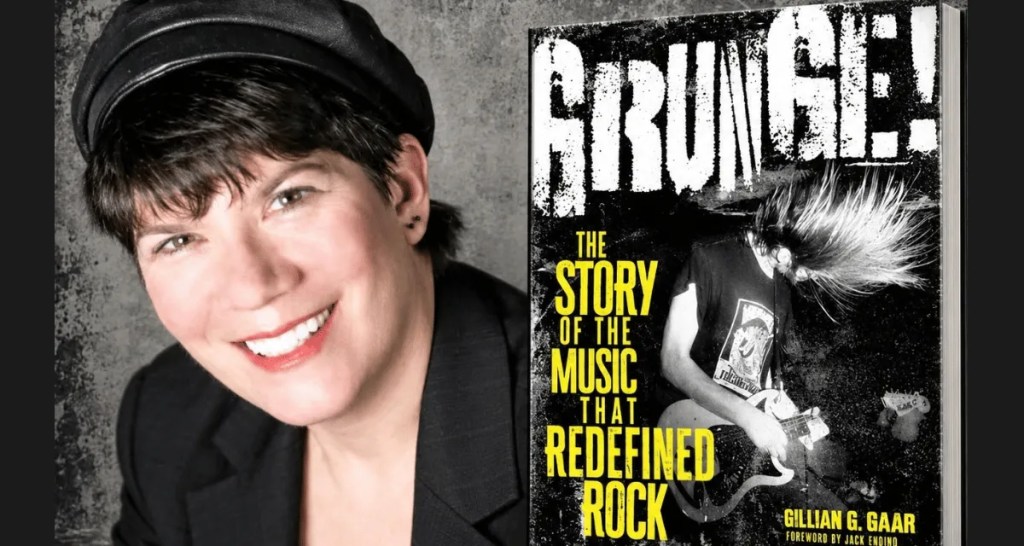
As it happens, last month saw the publication of Grunge!, a fascinating tome dedicated to, as its subtitle proudly states, “The story of the music that redefined rock.” Written by Gillian G. Gaar, one of Seattle’s preeminent music journalists over the past few decades, the book offers a comprehensive, yearly chronological account of her city’s music heritage, and how it ultimately spawned an aggressive, impassioned style of rock that aimed to find the sweet spot between punk and heavy metal, all the while embracing the singular enjoyment that comes with loving to play and making music with your friends.
But where did the term “grunge” come from? According to a brief sidebar in the hardback, none other than legendary music critic Lester Bangs apparently used the word as far back as 1971. “If I had read it at the time, I would have thought it probably meant gnarly,” confessed Gaar, during a recent conversation with Generation X Wire. “Grunge is something that’s dirt and filth. You just think of something gnarlier, and a dirty sound, which actually still kind of applies to what it is.”
Gaar, who aside from authoring books on the likes of Elton John, Bruce Springsteen, and Tom Petty, has also contributed to Mojo, Rolling Stone, and Goldmine, admitted that she structured her project chronologically across eleven years (1986 – 1996) in part because of the natural narrative arc that would generate. “I’d been thinking about this idea for a long time. Originally, if I’d had my way, it would have been completely different,” she recognized. “It wouldn’t have been a visual history so much as a narrative history. I always wanted to do the Seattle scene version of England’s Dreaming, Jeff Savage’s book about the punk scene there. And I never quite got there. Though I have thought if you did a mashup of Grunge! and my book on Sub Pop, World Domination: The Sub Pop Records Story, and Entertain Us: The Rise of Nirvana. If you put them all together, that might be close.”
As I referenced earlier, it is widely understood that the genre of grunge was born out of the intersection of punk and metal, partly because both camps despised each other due to what they each represented, which in this case was the exact opposite of the other. Though her compendium certainly delves into this, when discussing the musicians that went on to form the Pacific Northwest movement, Gaar also offered that “these kids that were born more in the ‘60s, they often started with the pop stuff, like the Beatles and the Monkees. They all mentioned listening to the Beatles, who laid the groundwork there. And then they moved on to metal acts like KISS. But then they discovered punk. And maybe because they were a bit younger, they didn’t necessarily see them as warring camps. They saw there were things they could like about each of them.”
For a style of music that is known primarily for its dreary sound, one aspect of it that less attuned listeners might not pick up on is its pervasive sense of humor, which Gaar emphatically highlights in Grunge! “I think that was always there from the beginning and not just, say, in Sub Pop. You look at labels like PopLlama, and with bands like the Young Fresh Fellows that were always jokey, or Mudhoney most obviously. In one sense, you could almost view them as a comedy group because their songs were just so ridiculous,” she observed. “There was also a self-deprecating side that you saw in all the bands – maybe in Nirvana and Soundgarden more than Pearl Jam and Alice in Chains – but in the others, certainly I think there was sort of a strong sense of self-deprecation. Partly because we weren’t in the mainstream, and no one expected that.”
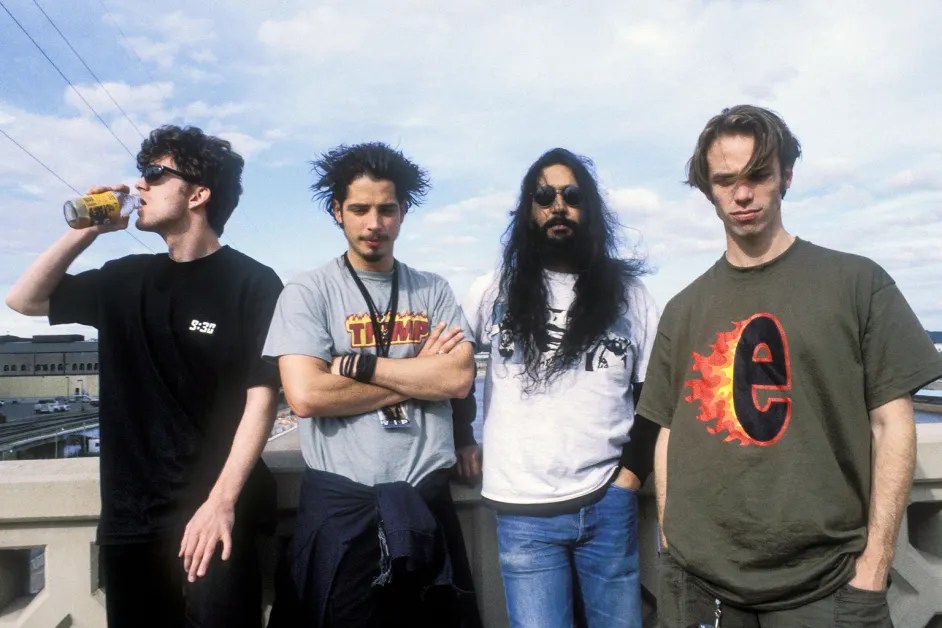
Naturally, the aforementioned “Big Four” of Alice in Chains, Nirvana, Soundgarden, and Pearl Jam are given extensive coverage in the text. Conversely, equally famous bands of the era like Stone Temple Pilots and the Smashing Pumpkins, for instance, are omitted entirely, mainly due to the fact that they were actually not products of the Seattle scene, per se, which is the specific thrust of Gaar’s book. The author, on the other hand, devotes a fair amount of coverage to popular female-fronted bands from the region, namely Bikini Kill, 7 Year Bitch, and The Gits, none of which ever achieved mainstream success. “When Bikini Kill put out the ‘Rebel Girl’ single that they recorded with Joan Jett producing, that was great. I thought this is what they could sound like if they had more of a budget to work with. I think it would have translated to a major label,” Gaar enthused. “But they really did not want to go that route. Tobi Vail (drummer), in particular I believe, she just wasn’t interested in having anything to do with the mainstream music industry, perhaps seeing what happened with Nirvana. I think The Gits might have had a shot because of Mia Zapata’s voice. I think hers would probably be more acceptable on a mainstream level than, say, Selene Vigil’s (7 Year Bitch vocalist), who was a compelling singer, but I don’t think it would have gone over.”

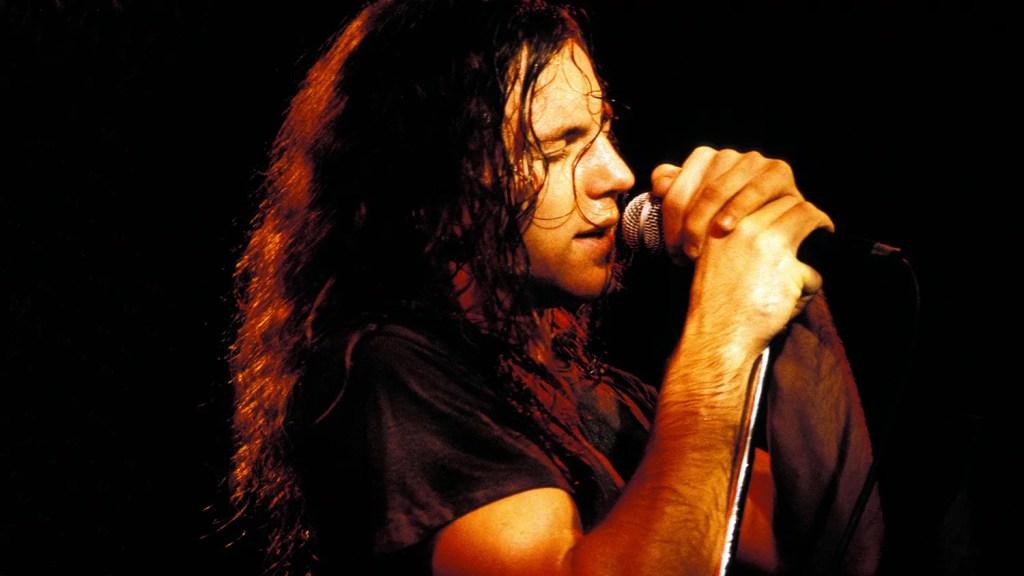
A similar fate awaited trendy regional bands like Mudhoney, and even the highly influential Melvins, who are often credited with pioneering not just sludge metal, but also having a critical role in the development of grunge. “Mudhoney was never really going to translate to big mainstream success. They were never going to be a Pearl Jam or a Nirvana,” Gaar declared. “You look at Mark Arm (lead singer/guitarist) and Mudhoney, and Buzz Osborne (guitar) and the Melvins, you know, they’re not an Eddie Vedder or Layne Staley. And they were never going to be. And, in fairness, they never wanted to be. They were happy doing what they were doing.”
Sadly, Staley was just one of several casualties of the heroin epidemic that ravaged the Pacific Northwest music scene during that time, and whose dark specter has always ominously loomed around the culture of rock ’n’ roll. Gaar’s book does not shy away from this tragic constant, and, if anything, it puts some statistics into perspective. “I know there’s the lure of heroin within rock culture. The wasted look of Keith Richards or Lou Reed, or even Sid Vicious, you know, that it was cool that he did it ‘my way,’ he went out ‘my way,’ so it has that association,” she proclaimed. With some of the big ones, I’m thinking of Andy Wood (singer of Mother Love Bone), and Kurt Cobain, and Layne Staley. A person’s background seems to have a lot to do with it. You know, if they came from a troubled background, you’re more prone to become addicted to something. Certainly, that seems to be true in Andrew’s and Kurt’s case. Right before he died, Andy Wood talking about getting out of rehab, and how at first you feel fine, but then everything starts coming back in, and you’re hanging on a minute at a time. And I thought that’s pretty tough. But it seems some of that is rooted in your background, how you were raised, that kind of thing.”

Despite these tragedies, the impact and footprint of grunge is surely beloved enough by its fans to look back on it as much more than just an inevitable veil of gray skies. In fact, the last page of Gaar’s book makes it a point to highlight that the ultimate legacy of that time and place was how fun the music was to play for those who had a chance to do so. “For all the transcendent highs and unfathomable lows of the grunge years, it was the music that always provided solace and kept us going,” the author states at the conclusion of her tome. “It still does.”
Order Grunge!: The Story of the Music That Redefined Rock:
Amazon
Barnes & Noble

