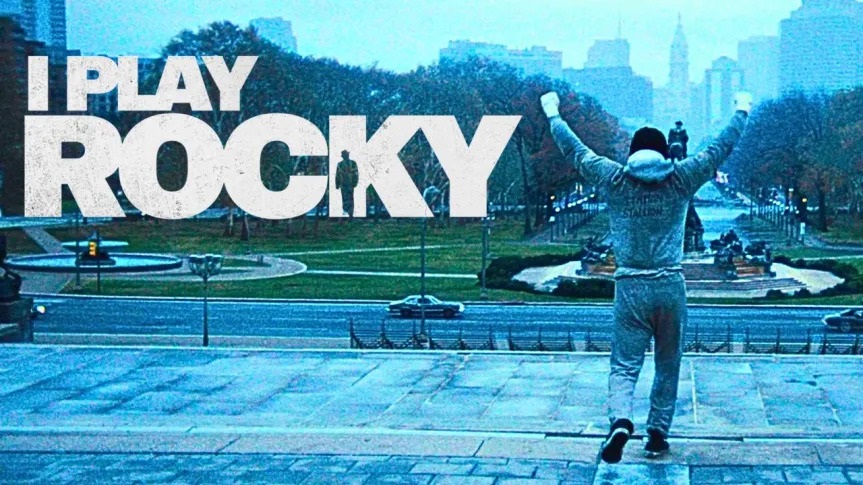
I Play Rocky
3.5 out of 5 stars
By J.C. Correa
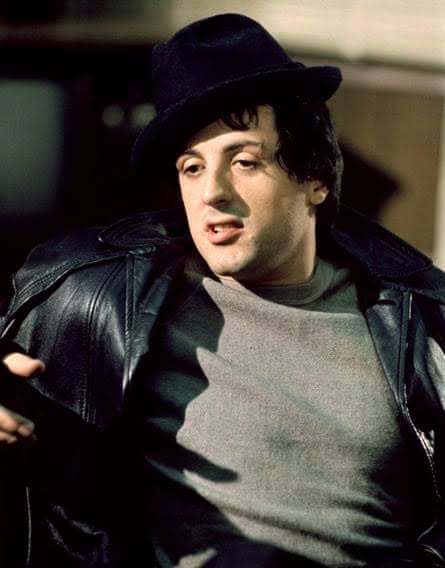
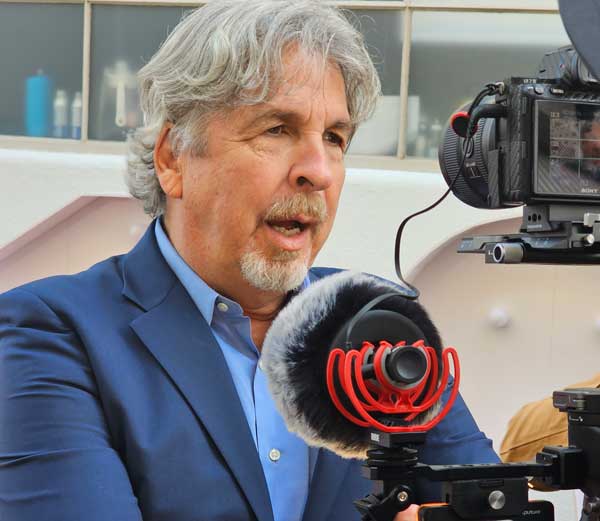
With this year marking the 50th anniversary of when perennial audience-favorite Rocky was first unleashed into our culture, it is no surprise that several big endeavors have been carefully timed to coincide with the milestone. Chief among these is writer/star Sylvester Stallone’s recently published memoir, The Steps, in which he details, among other things, the rough road that went into the making of the film that would go on to win the Oscar for Best Picture and turn him into an overnight success story. Almost in tandem, now also arrives Peter Farrelly’s I Play Rocky, which is in essence a dramatization of young Stallone’s struggles to get the seminal flick made, not least of which included the condition that he be allowed to star in it.
Having just read Stallone’s personal account, I went into a screening of I Play Rocky with very fresh impressions of how his life’s saga unfolded. And it wasn’t long into the movie that I began to realize that these two products, despite detailing virtually the same thing, are not entirely aligned, at least as far as timelines and the telling of facts go. Of course, it’s common knowledge that the primary intent of Hollywood pictures is to entertain an audience through a story that its creators feel has all the makings of a gripping, crowd-pleasing drama. The latter description certainly applies to Farrelly’s film, a characteristic that is also one of its strengths. Needless to say, if you, like me, are at all familiar with the harsh details of Stallone’s life story, you’re better off not festering too much on the many celluloid liberties that are taken here and just accept them as part of the deal.
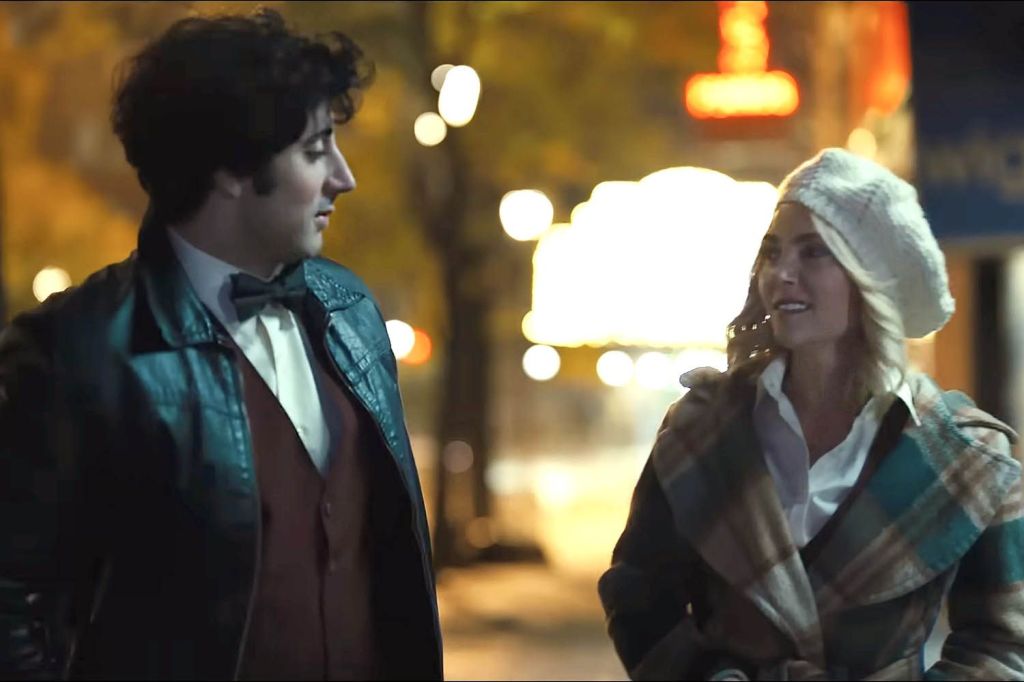
As the title implies, the film is less a biography of its star than it is a reenactment of the arduous process of bringing Rocky to life, with just enough backstory about its stubborn creator to allow us to properly care. In this regard, it devotes a prologue to young Sly’s struggles as an out-of-work actor in New York, before properly centering its narrative on his continued trials in Los Angeles, all of which would culminate in his impassioned pitch to make a movie about a down-on-his-luck boxer that functioned as a not-so-secret metaphor for his own hardships. The film’s last half hour is devoted to the actual production of Rocky in Philadelphia.
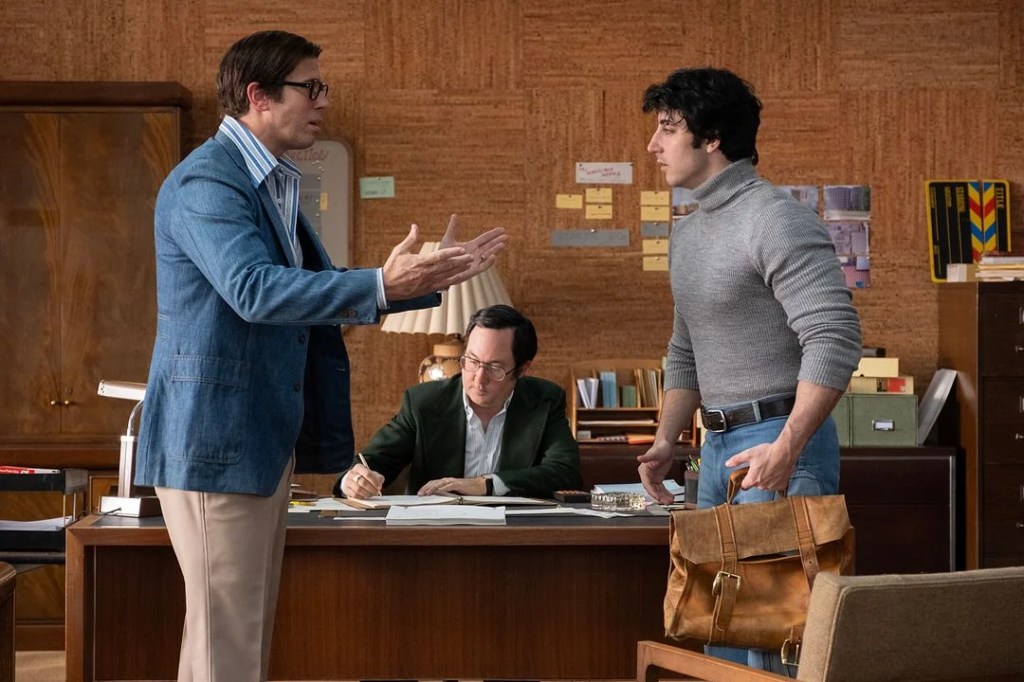
Two of Stallone’s adversaries, at least initially, were the producing team of Robert Chartoff and Irwin Winkler, played here by Toby Kebbell and P.J. Byrne, respectively. While the duo steadfastly believes in the potential of Stallone’s screenplay, his insistence on playing the lead part puts them through increasing bouts of exasperation. These grueling negotiations are all played for very efficient laughs (the movie is surprisingly much funnier than you may imagine), and it is here that Farrelly, the man behind such lighthearted fare as Dumb and Dumber and There’s Something About Mary, proves to be a sensible choice for the material. With their good cop/bad cop dynamic, Kebbell and Byrne are effective in the roles of the producers, even if they are both portrayed in a much gentler light than how Stallone seems to recall them in his own pages.
Similar to the film’s treatment of Chartoff and Winkler, a significantly lighter touch is given to who was undoubtedly the biggest foe in Sly’s life – his father, Frank Stallone Sr. Played with expected tough-guy aura by Matt Dillon, it is clear that Frank is a perpetual thorn in his eldest son’s side, and that Sylvester is willing to look away more often than not in the hope of receiving the elusive necessity that is parental acceptance. Still, it’s a shame that the screenplay by Peter Gamble often feels the need to tell us what a monster Frank is – usually by Sasha (AnnaSophia Robb), young Sly’s love interest and eventual wife – as opposed to displaying the grotesqueness in all its ugliness to better make the point.
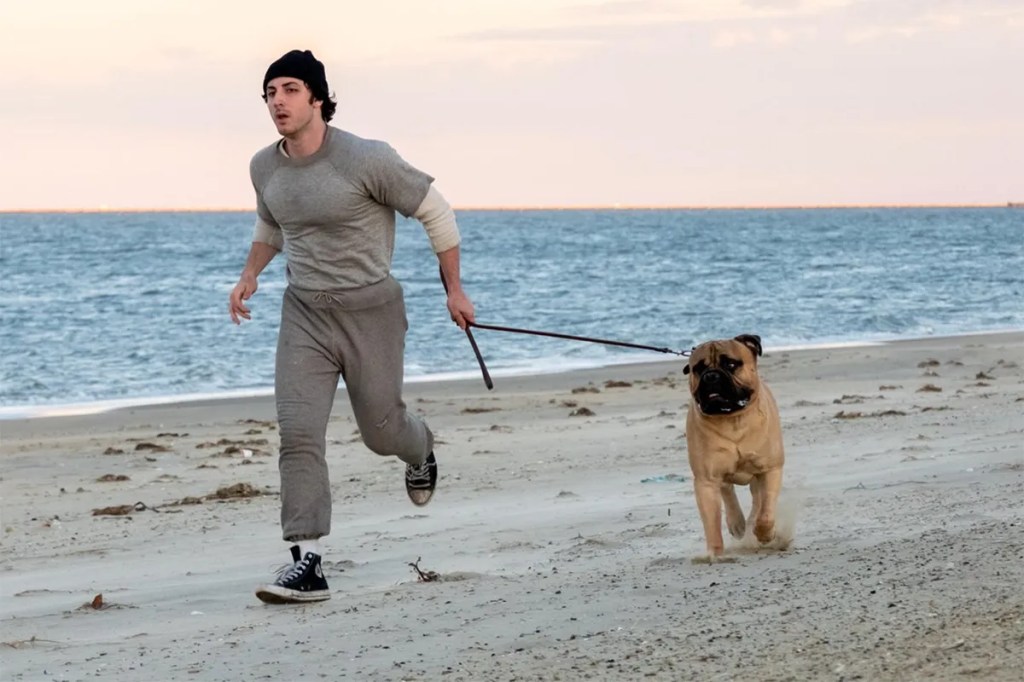
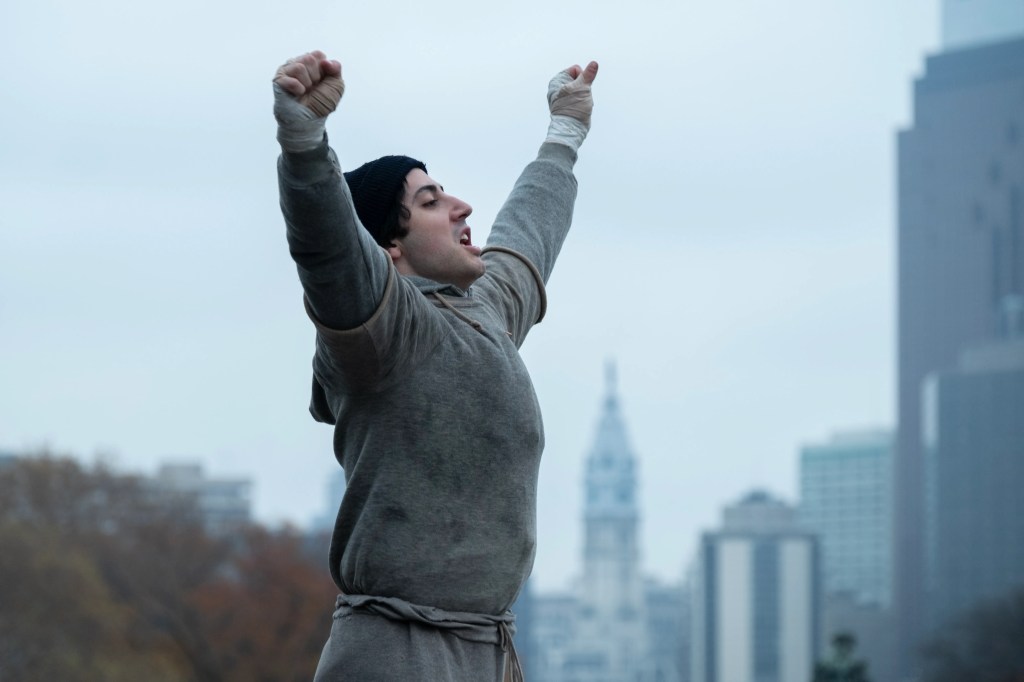
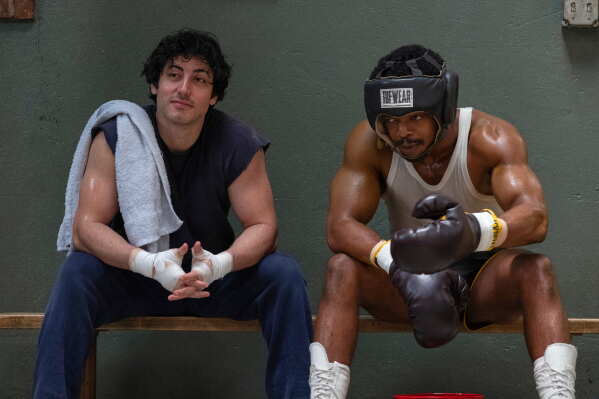
During the production portion, fans of Rocky will surely relish the detailed, uncanny recreations of certain iconic scenes like the training montage or Rocky’s first date with Adrian at the ice-skating rink. The same goes for the casting of Kiki Seto and Stephan James in the roles of Talia Shire and Carl Weathers, respectively. Awarded more screen time than Seto, James imbues the young Weathers with a cockiness that is not only fit for his alter ego Apollo Creed, but would probably also be right at home in Super Fly T.N.T. His scenes are among the more comical in the picture. It’s also clear that the filmmakers themselves revere the source material being as how, beyond recreating the expected stuff faithfully, they go to some length to include more subtle nods in the form of camera angles used for Stallone’s story that directly mirror those in Rocky. It’s a case of blunt suggestion through subtle homage.
Of course, you can’t talk about this movie without highlighting the starring turn of Anthony Ippolito as the struggling Sly. The young actor not only facially looks the part, but obviously also ensured that his buff physique would prove a correct match. Naturally, I expect most will be thoroughly impressed by how he carefully replicates the emblematic mannerisms and slurred, gravelly-voice speech patterns to an astonishing degree. But here’s where this all gets tricky for me. If you grew up with the Rocky films as I did, you surely understand that Stallone intentionally portrayed Rocky as a slow, somewhat dimwitted pugilist whose verbal rhythms are just a bit behind the average Joe. Done clearly by design, Stallone exaggerated his own speech peculiarities to create a compelling portrait. The problem I have with Ippolito’s performance is that across the duration of the picture he is decisively playing Rocky Balboa, and not Sylvester Stallone. And there is a difference, and dare I say, a huge one. Stallone, despite his handicaps, has always possessed an articulate, well-spoken manner befitting of an accomplished writer, which he certainly is. It seems to me that in a story that devotes much time to showing his challenges in convincing the powers that be to take him seriously, that verbal eloquence would be fully on display to better his chances. Instead, the underdog persona is embraced to such a degree that it inexplicably seems to have morphed into that of his signature character. For all his valiant effort, Ippolito’s choices forsake crucial specificity, and at the very least, Farrelly himself should have known better.
Those gripes aside, I Play Rocky snuggly fits among the long tradition of films about the making of movies. For one thing, I appreciated seeing the acknowledgment of the Steadicam’s then-revelatory use toward the success of the picture, as well as the portrayal of its inventor, Garrett Brown, as the consummate nerd, which undoubtedly adds to the humor. Robb’s Sasha injects Sly’s life with much-needed positive energy, and her role here functions similarly to Adrian’s in Rocky. By the time it’s over, even with its mostly by-the-numbers approach, it’s impossible to deny the movie’s charm and irresistible nature as an inspirational crowd-pleaser in its own right. And while it may not achieve or even aspire to the same artistic heights as the film that inspired it, it has enough earned, genuine emotion to make me suspect that its effect on an audience won’t be entirely dissimilar. At the very least, I Play Rocky can one day make a great double feature with the movie whose making it so jovially brings to life.
I Play Rocky will have a limited theatrical release on November 6 before expanding nationwide on November 20.

