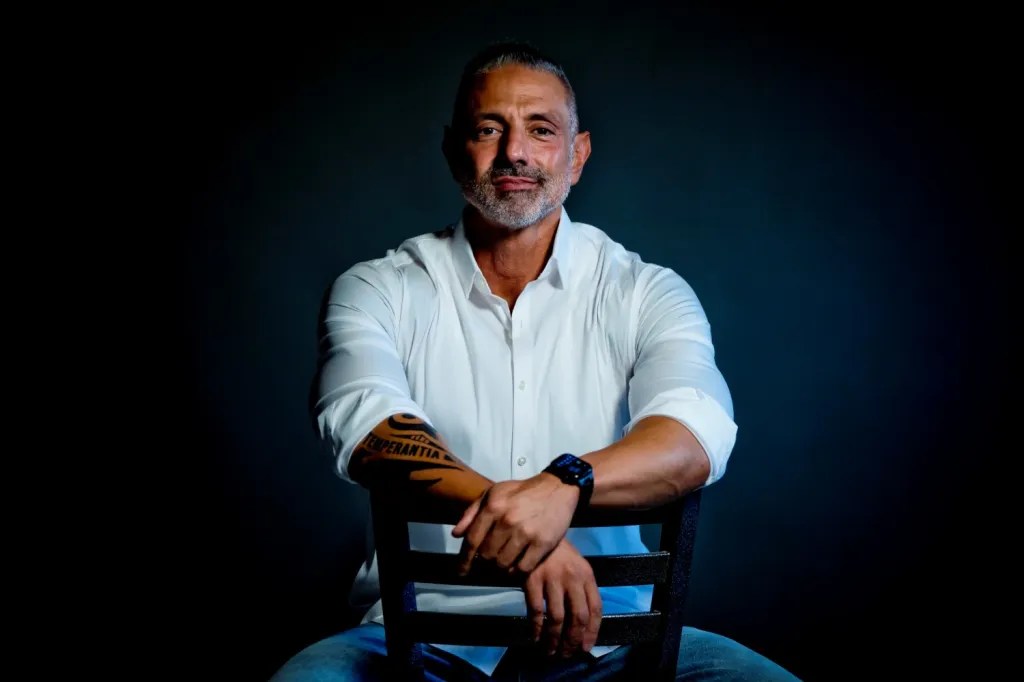
By Joe Puccio
Although the draw of the spotlight may seem like a perk that those in show business would be reluctant to give up, there are quite a few notable examples of actors who quit Hollywood in exchange for a simpler life. Home Improvement breakout star Jonathan Taylor Thomas opted for a quieter existence out of the public eye, studying philosophy and history at Harvard, spending a year abroad at the University of St. Andrews in Scotland, and graduating from Columbia University, while prolific Single White Female actress Bridget Fonda – with a family that includes father Peter, aunt Jane, and grandfather Henry – stepped away from the glitz and glamour of the big screen nearly a quarter of a century ago.
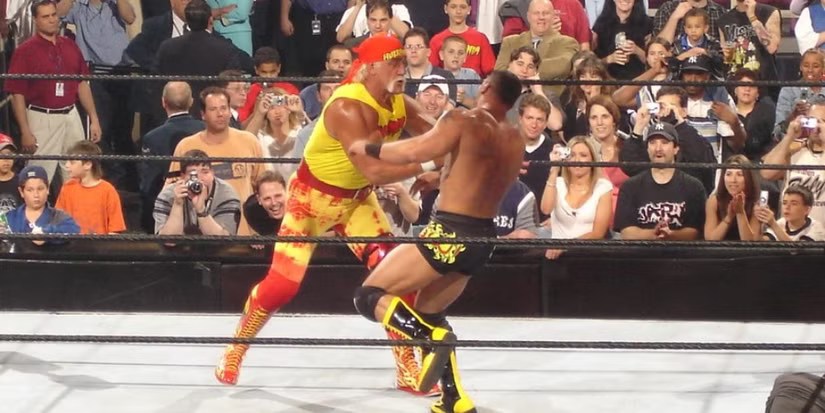
Professional wrestling is no different. Take Marc Copani, better known by his Arab American ring name Muhammad Hassan, for example. In 2004, the Syracuse, New York-born performer was on top of the sports entertainment world as a headliner in WWE (World Wrestling Entertainment), feuding with the likes of Jerry “The King” Lawler, Chris Jericho, Shawn Michaels, and even Hulk Hogan. Fast forward 20 years and Copani is the Director of Human Resources for the Fulton City School District in Oswego County. His circumstances, however, came about uniquely.
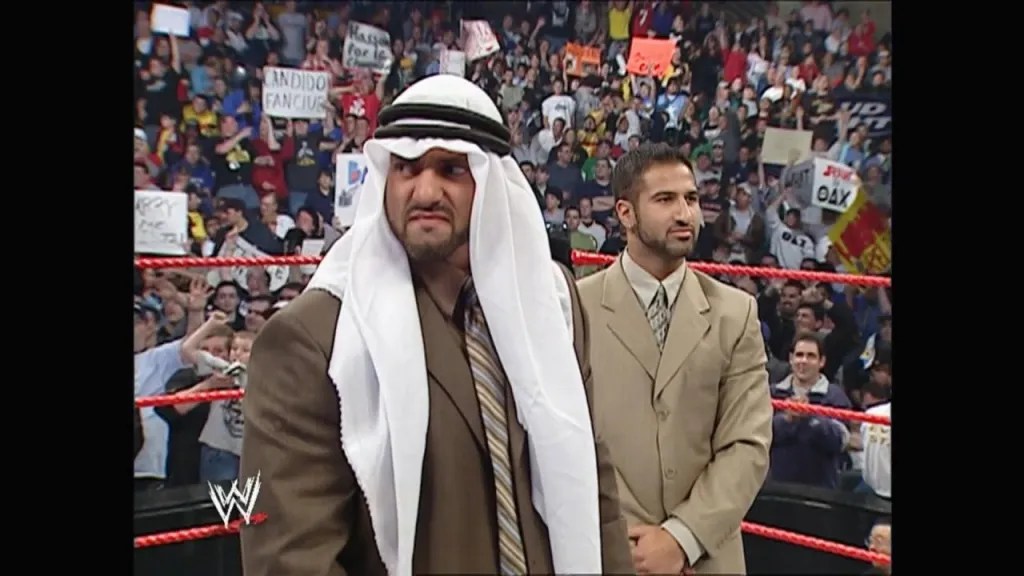
In one of the most controversial angles, or storylines, in the Connecticut-based juggernaut’s storied history, the Allah-praising villain summoned a group of masked henchmen, armed with piano wire, to beat down beloved veteran The Undertaker. This was followed by the hired thugs lifting Hassan cohort Shawn Daivari above their heads, carrying him away in a manner reminiscent of a martyr’s funeral. Perhaps not overly contentious on its own but the scenario occurred on July 4th, Independence Day, of 2005 and aired on July 7th – the exact same day as the series of devastating terrorist bombings in London, resulting in 52 civilian deaths and more than 700 injuries.
The terribly timed narrative elicited national attention from a plethora of major media outlets, including the New York Post, Variety, and TV Guide, and in response, the once promising career of the charismatic athlete, who was actually of Italian descent, came to an abrupt halt. Roughly two months later, the Hassan character would be written off television, never to be seen in the company again. But rather than become embittered and focus on his misfortune, Copani managed to turn the unfortunate incident into an advantage and he’s now thriving in a very contrasting profession – education.
“My favorite quote is ‘You can’t let adversity define you; you can only use it to refine you.’ It’s really the difference in how you approach a situation after a defeat,” surmised Copani, during a recent conversation with Generation X Wire. “During my time as a teacher, I spoke about my wrestling past openly with my students and I used examples of things that I learned about prejudice from my years traveling the world. I would bring that into the classroom to make learning more engaging and fun for the children.”
An avid fan of the colorful sport as a youth, Copani’s interests veered away from it as he got older, with school athletics and dating claiming his attention elsewhere. But a college roommate’s enthusiasm for the art form reignited the initial spark that the history major at the State University of New York at Buffalo once felt. “He was into everything around at the time – WWE, WCW (World Championship Wrestling), ECW (Extreme Championship Wrestling), the Japanese promotions – and that’s when I really started watching all the different styles and presentations. I fell in love with it and viewed it as something that I wanted to do. And I worked out regularly and took acting classes at the school, so I appreciated the theatrical aspect of wrestling too. It seemed to encompass all of the elements of a career that would be fulfilling to me,” he explained. “This was in the late ‘90s, when WWE was starting to rebuild with incredible new personalities like The Rock (Dwayne Johnson) and ‘Stone Cold’ Steve Austin. It was a great time.”
Compared to many of his peers, Copani’s tenure as a wrestler was relatively brief, learning the game in developmental territory Ohio Valley Wrestling (OVW) before transitioning into his two-year stint as Hassan. After that, a fleeting handful of appearances on the independent circuit almost a decade ago, as well as a match run-in earlier this year seemingly ended his in-ring activity for good. “I took a bump for the first time in six or seven years,” he admitted. “And I actually felt okay and didn’t hurt myself.”

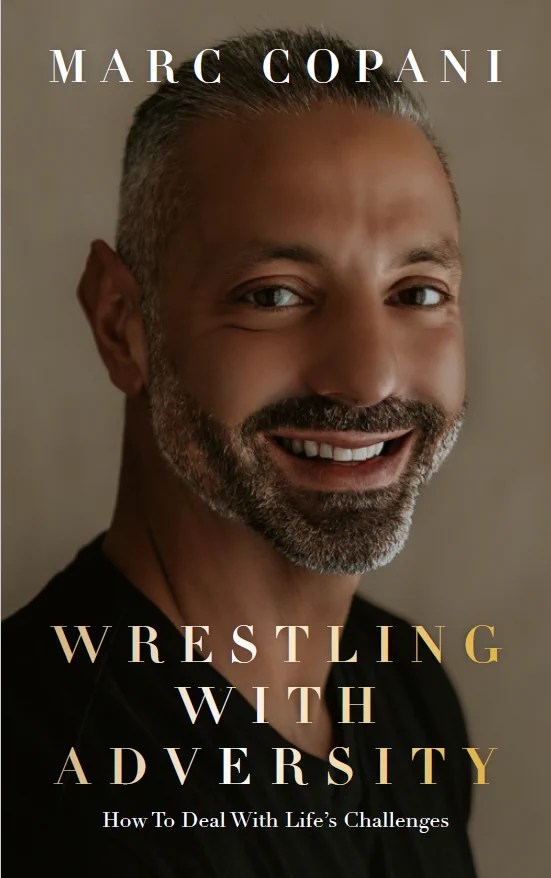
While Copani now embraces his former life, he fully admits to not always feeling comfortable speaking – or writing – about it. His newfound contentment was one of the primary factors in his decision to write Wrestling with Adversity: How to Deal with Life’s Challenges. The newly released book naturally covers the infamous Hassan gimmick, of course, including the provocative story arc that he’s most known for. But it goes way beyond the somewhat superficial element of television grappling and takes a deep dive into the impressive journey that Copani has traveled in the years since.
“I started pursuing a career in education over 15 years ago, which is funny since I tell kids all the time that I actually hated school when I was younger,” he revealed, smiling. “I was smart and capable, but I was also lazy. I didn’t feel like academics were worth my time and effort and fortunately, I was able to turn things around. The book traces my path from the darkest parts of my life to realizing what it was going to take to pull me out of it and feel better about myself and to help others.”
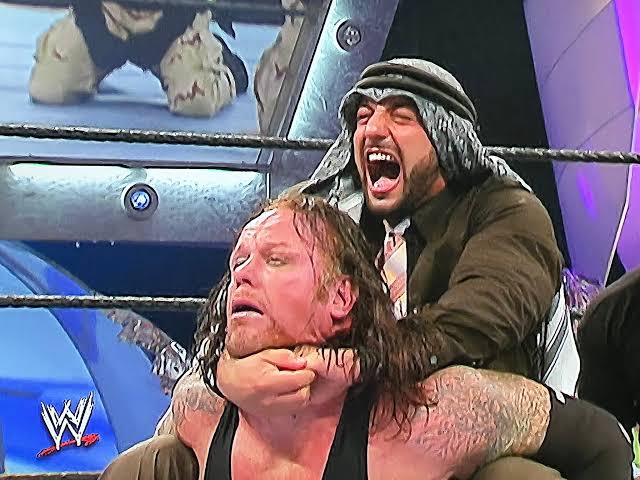
Being the subject of a 2025 episode of the acclaimed documentary TV series Dark Side of the Ring provided further motivation for penning the memoir. Titled “Becoming Muhammad Hassan,” Copani was pleased with the research and care taken by show producers Evan Husney and Jason Eisener. “Although there was a period when I felt Muhammad Hassan was contradictory to trying to be a role model for kids, the Dark Side episode really helped me see things differently. They obviously covered the controversy, but they focused on how I shifted it into something positive. Don’t misunderstand me, I’m by no means perfect and I still make mistakes, but I always aim to use the lessons I’ve learned to grow and be better.”
While Copani’s post wrestling life started with teaching world history, his trajectory saw him evolve into an assistant principal and eventually a principal before settling into his current position as a Human Resources director. And although it’s been a long and sometimes difficult road, he is clear about his feelings for his one-time vocation. “I don’t regret getting into wrestling at all. They were some of the greatest years of my life and some of my closest friends came from that era,” he surmised. “I miss it, but life goes on. It doesn’t matter how your last beginning ended because you still have a chance for another successful beginning.”
Order Wrestling with Adversity: How to Deal with Life’s Challenges on Amazon here.
Order Wrestling with Adversity: How to Deal with Life’s Challenges on Barnes & Noble here.

