By Joe Puccio
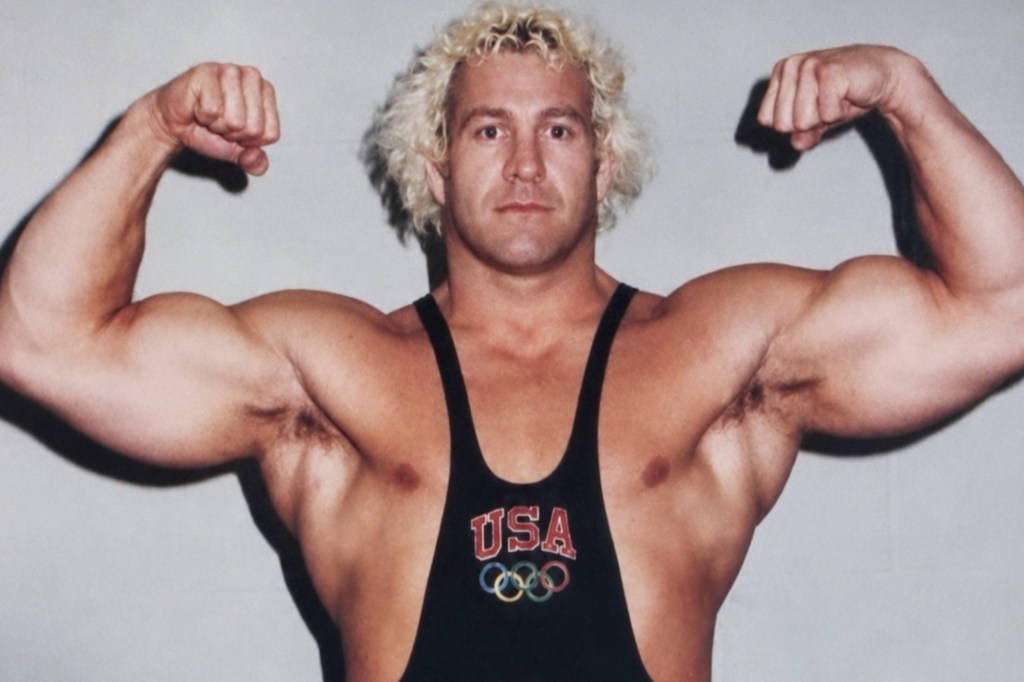
When a legitimate athlete in a demanding competitive contest hangs up the cleats, skates, or, in this case, boots, it is both understandable and expected that said individual will completely retire from their respective sport in all related facets. This would seemingly entail much more than merely abstaining from the regular rigors of throwing a pass, shooting a puck, or “taking a bump,” an expression that, in layman’s terms, means to deliberately fall with considerable impact because of an opponent’s attack. For Ken Patera, former Olympic weightlifter, strongman, and professional wrestler, the concept of “calling it a career” is clearly not something he ever truly embraced.
“I broke my damn back four months ago,” the outspoken octogenarian shared during a recent chat with Generation X Wire. “I was at the gym and decided to do deadlifts. The bar slipped out of my right hand, I lost my balance and stepped back, and I fell hard right on my ass. The force shattered my L1 (first lumbar vertebra) into twelve pieces. All because I had to go and lift some weights.”
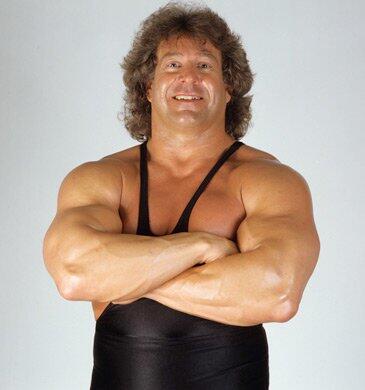
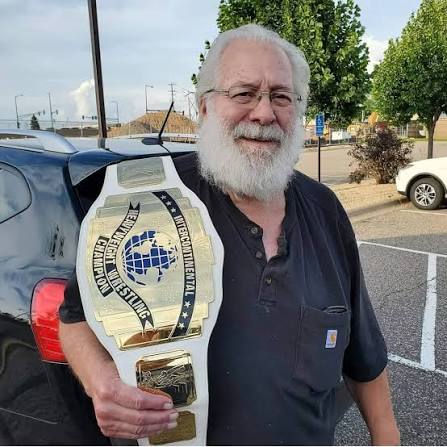
At nearly 84 years old, the one-time World Wrestling Federation (WWF, now World Wrestling Entertainment, or WWE) Intercontinental Heavyweight Champion has the mindset of a man half his age. Still active on the convention circuit, where he revels in signing autographs and taking photographs with his still devoted fans, Patera’s penchant for working out hasn’t waned as much as one would rightfully assume for someone who has not wrestled a match in 15 years. And living up to his tough guy reputation, he initially didn’t even consider the injury serious enough to warrant a trip to the hospital. “After about three weeks, my legs wouldn’t work and I couldn’t stand up properly. My youngest daughter then convinced me to get checked out,” he admitted. “After that, they sent me to a rehab center for a month. I’m still in pain but I’m no spring chicken so it is what it is.”
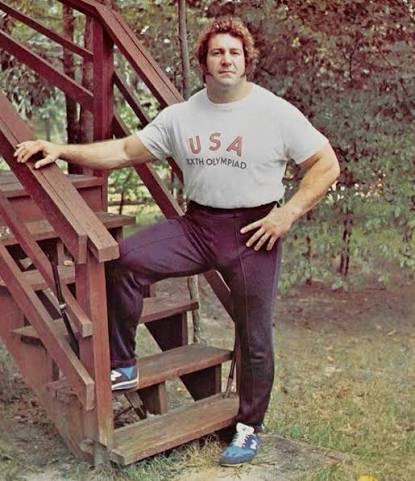
Patera’s prowess in athletics is not a surprise considering his family tree. The Portland, Oregon-born Czech American’s brother Jack played football for the Baltimore Colts and was the head coach for the Seattle Seahawks while other brother Dennis played for the San Francisco 49ers. Although track and field was his first love, a significant ankle injury forced him to pivot to the shot put and discus in high school, before turning his attention towards Olympic weightlifting, where he notably won several medals at the 1971 Pan American Games. From there, he split his time between performing feats of strength in various exhibitions, including finishing third in the inaugural World’s Strongest Man contest in 1977, and the endeavor he’s most recognized for, pro wrestling, entering the Minneapolis, Minnesota-based American Wrestling Association (AWA) in the early ‘70s.
While Patera enjoyed his stint in the AWA, it wasn’t long before he departed the midwestern territory for Mid-Atlantic Championship Wrestling, and subsequently, greener pastures in the World Wide Wrestling Federation (WWWF, the precursor to the WWF), challenging luminaries such as Bruno Sammartino and Bob Backlund. “After being there around a year, the old man (Vince McMahon Sr., promoter) told me that he was going to make me their next world champion and that I would be beating Bruno. I said I’d love the chance to represent the company,” he remembered. “But Eddie Graham, who was the promoter down in Florida and good friends with Sr., convinced him to have “Superstar” Billy Graham win it instead. Eventually, Backlund beat Graham for the belt, and I again asked why I was passed over. Sr. said he could control Bobby and even though I told him I wouldn’t get out of line with him, he still went with Backlund.”
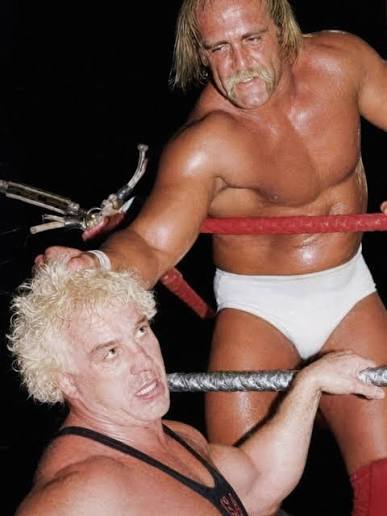
Despite never being afforded the opportunity to be the WWF’s primary kingpin, Patera was awarded the next best thing – the company’s secondary prize, the Intercontinental title. Created in 1979, Canadian grappler Pat Patterson is technically recognized as the maiden champion. But as mat historians know, Patterson didn’t actually defeat another competitor for the gold; he was simply crowned the winner after a phantom Rio de Janeiro tournament that never occurred. Patera is, in fact, the first man to acquire the coveted “secondary belt” in the ring, pinning Patterson in New York City’s fabled Madison Square Garden in 1980. “They decided to have me hold it because they knew I deserved it,” he remarked. “The events that I was appearing on were selling out so they figured I’d be a good fit with it.”
Patera’s run with the IC championship was relatively brief, not because he did anything wrong, but due to him wanting to return to Mid-Atlantic, which doubled as his home base at the time, in Charlotte, North Carolina. “My family was there and I had a beautiful home,” he clarified. “I wound up working for the AWA again for a few years, where I was managed by Bobby Heenan and then went back to the WWF, where I wrestled Hulk Hogan and feuded with Andre the Giant. Bobby was one of the greatest managers of all time, alongside “Captain” Lou Albano, “Classy” Freddie Blassie, and The Grand Wizard (Ernie Roth). Just phenomenal,” he continued. “Bobby and I traveled together in those days and we were good friends.”
Patera has nothing but praise for both Hogan and Andre as well. “When I returned to the WWF, before I had a permanent place to live, Hulk invited me to stay with him and (ex-wife) Linda. I thanked him but I declined, not wanting to intrude on his marriage,” he recounted. “Andre is the guy who I have wrestled more than any other opponent. Between battle royals, single matches, tags, six-man, eight-man, you name it. I estimated it around 400 times, and I mentioned it to someone in the locker room and Andre was sitting there, playing cribbage with Arnold Skaaland, and said, ‘No, boss, it was more than 600 times over 16 years.’”
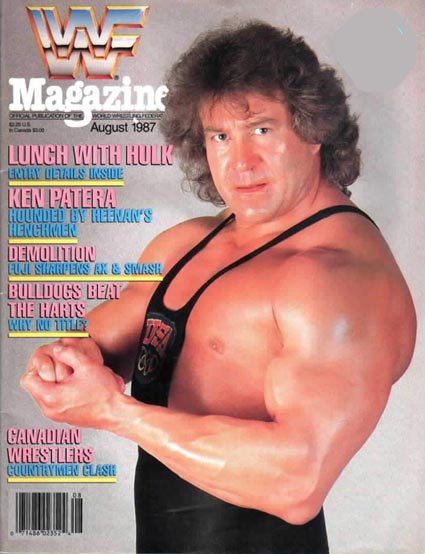
Never one to shy away from trouble, Patera’s second run in the WWF ended prematurely after an incident involving being denied service after hours at a McDonald’s restaurant in Wisconsin. While the details are murky, the powerhouse was sentenced to two years in prison after being convicted of assaulting the police officers sent to arrest him. When he returned for his third and final term in 1987, he found a business very different than the one he left behind, in a new role as a “babyface,” or good guy, and being booked to lose more often than not. “I always preferred being a ‘heel’ (bad guy) because they control the match. But that wasn’t it. I didn’t want to do it full time anymore,” he confessed. “I had enough. I was sick of the business, the bullshit, and Jr. (Vince McMahon) was a jackoff.”
With just as many downs as there were ups throughout his lengthy career, Patera has no regrets and is satisfied with how everything turned out – even with his current injury. “My back is completely destroyed,” he acknowledged. “But if something like this is going to happen to anyone, it’s going to be Ken Patera,” he added, with a smile.

