By Joe Puccio
As Roger Daltrey wrapped up his penultimate 2026 United States performance at the Tilles Center in New York on October 2, playing a raucous rendition of Neil Young’s “Rockin’ in the Free World,” a trio of thoughts came to mind. One, despite the prevailing opinion of many, rock and roll is not dead nor is it only a young man’s game. Two, of the countless VH1 Storytellers-inspired artist treks that have occurred over the last 30 years, from Ray Davies to Dave Grohl, this is undoubtedly one of the most engaging. And three, while The Who are virtually retired from full scale touring, the charismatic frontman’s phenomenal current band will provide you with significant peace for not seeing the legendary outfit rounded out by Pete Townshend, John Entwistle, and Keith Moon.
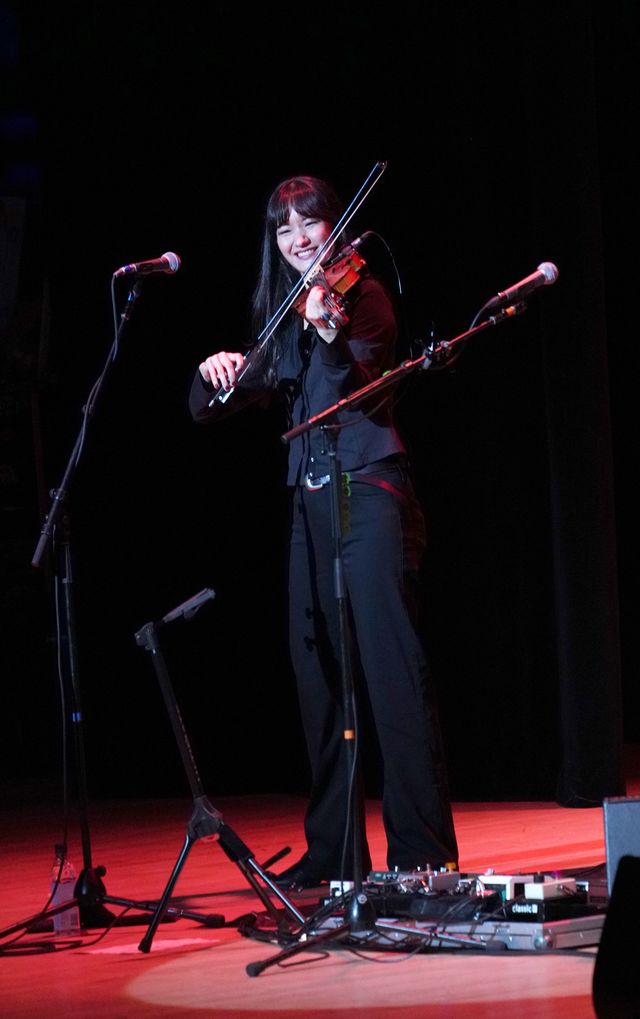
Although every single member of Daltrey’s nine-piece ensemble shined in their own respective way, one would be hard pressed to not consider acoustic and electric violinist Katie Jacoby as the standout. Her subtle yet rich backing textures on “Who Are You” perfectly complemented the singer’s vocals without overpowering them. But it was her frenetic, relentless playing of the orchestral fiddle on “Baba O’Riley” that created what was certainly one of, if not the, pinnacle of the night. The virtuoso’s fusion of classical rigor and raw force allowed her to seamlessly substitute the studio version of the revered track’s synthesizer sound with a blistering aural solo – resulting in a rousing standing ovation from the sold-out theater.
And speaking of substitutes, Daltrey’s humorous recounting of his temporary firing from The Who in 1965 – “I didn’t care because I figured I’d just start another band but five weeks later we were back together. I was almost a substitute for myself” – led to “Substitute,” which was announced as having one of rock’s best lines in “I was born with a plastic spoon in my mouth.” Notable was Steve Weston’s polished harmonica manipulation that was prominent during the upbeat ditty.
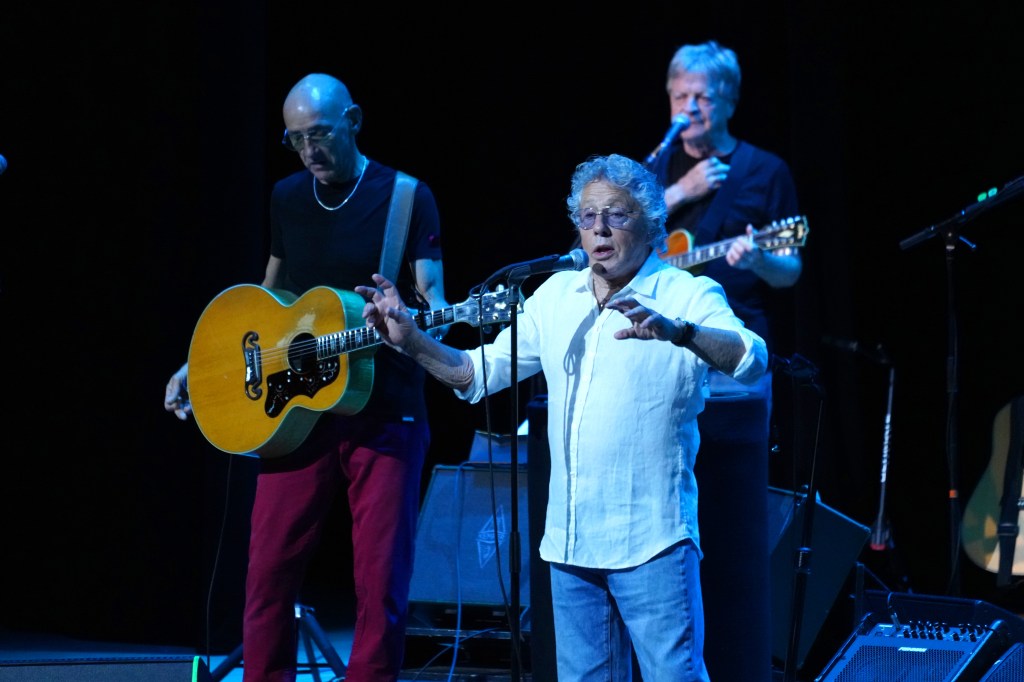
Daltrey’s choice to open the over two-hour set was an interesting one, giving “Let My Love Open the Door” the honor. What made it so intriguing was the fact that it is, of course, a Townshend solo hit single but on this night, it didn’t matter. “This one should’ve been a Who song, but it wasn’t,” he kidded, illustrating both his keen sense of humor as well as his obvious close-knit relationship with his yin to his yang who he first met in the 1950s in grammar school in West London. Simon Townshend, Pete’s talented younger brother and one of Daltrey’s guitarists, along with the equally as adept Doug Boyle, found his groove immediately during the catchy number. However, it was on Who’s Next’s “Going Mobile” that Simon was able to fully play his cards as he tackled lead vocal duties, the job that Pete handled on the album.
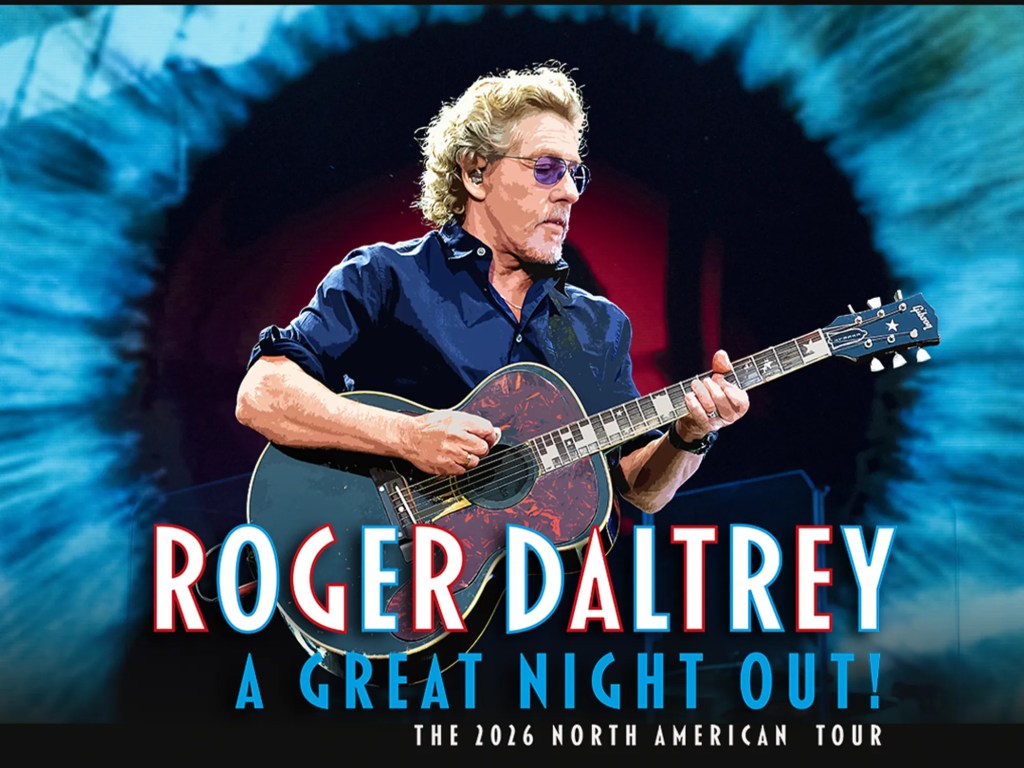
As the unique tour, labeled a “A Great Night Out!” wasn’t meant to merely be comprised of only Who material, instead focusing on deep cuts and tunes that influenced the iconic vocalist, covers were plentiful. “Freedom Ride,” originally recorded by blues musician Taj Mahal, was prefaced by an intricate backstory of its history as a composition about a journey on a railway train across America in the railroad’s infancy. The prophetic “The Boy in the Bubble” by Paul Simon, off what Daltrey called “probably the best album of the ‘80s, Graceland,” was preceded by a wonderful tale about the potent singer-songwriter. Simon, the man responsible for The Who’s break in the U.S. – “Paul gave our record to a radio station in Detroit and they played it for the first time” – traveled to South Africa during the era of apartheid to collaborate with local South African musicians – something unthinkable at the time. Daltrey expressed his deep admiration for him and did a beautiful variation of the song.
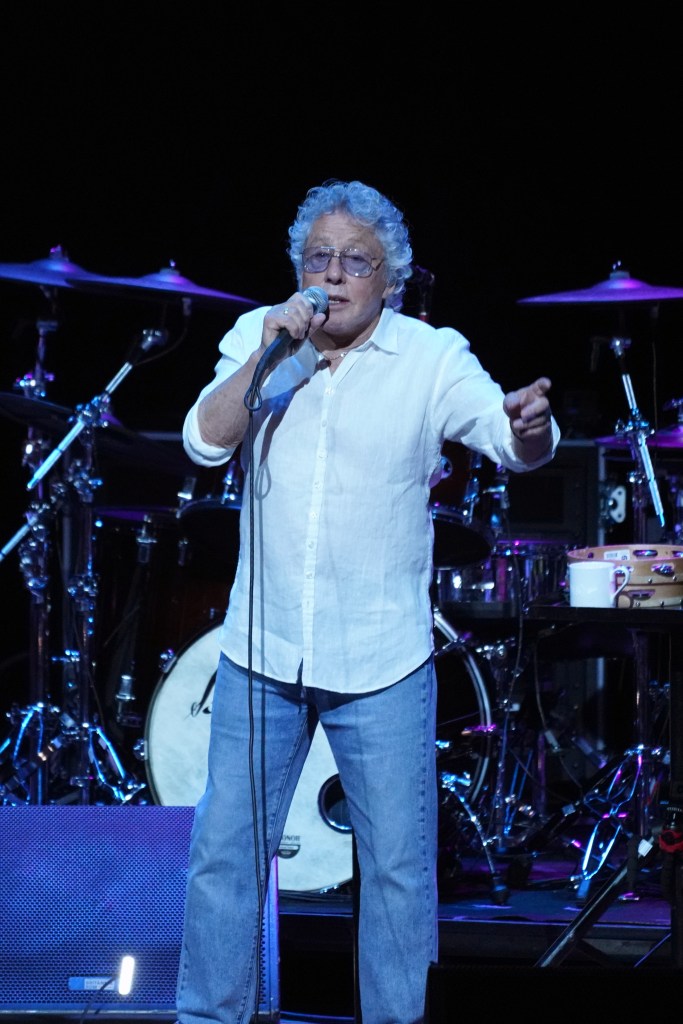
A crisp version of Johnny Nash’s reggae tinged “I Can See Clearly Now” was quickly followed by the underappreciated “Without Your Love,” a Billy Nicholls-penned semi hit for Daltrey in 1980 that, unsurprisingly, sparkled during its mandolin moments played by Nicholls himself, a component of the group. Daltrey’s captivating story about John Fogerty before singing Creedence Clearwater Revival’s “Have You Ever Seen the Rain” was met with all ears as he explained Fogerty’s struggles with losing the publishing rights to his own songs for almost 50 years before finally reclaiming them.
In an amusing anecdote, Daltrey marveled that the double entendre laden “Squeeze Box” was so successful in America. “What is it about this country that you made “Squeeze Box” such a hit,” he mused, rhetorically. Encouraging audience participation, he had the females in attendance sing the chorus first, followed by the male attendees doing the same in the following one. “The lyrics are very profound,” he joshed. “In and out, in and out, in and out, in and out – as many times as you’d like.” It wasn’t the only laugh out loud moment of levity as a recurring theme throughout the evening centered on complaining about – and mimicking – the current music scene, while the social media obsession didn’t get away unscathed either. In introducing “Waiting for a Friend,” Daltrey mocked the hollow digital tool and the modern generation’s overreliance on ‘likes’ and ‘friends,’ hypothetically asking who’s really going to be there for them when companionship is needed.
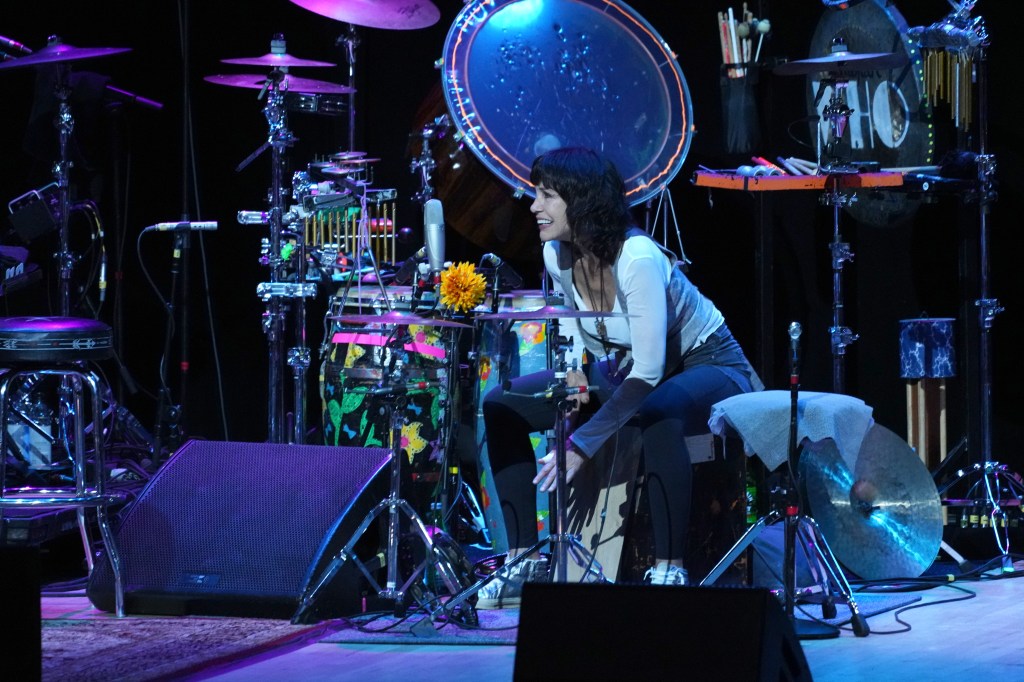
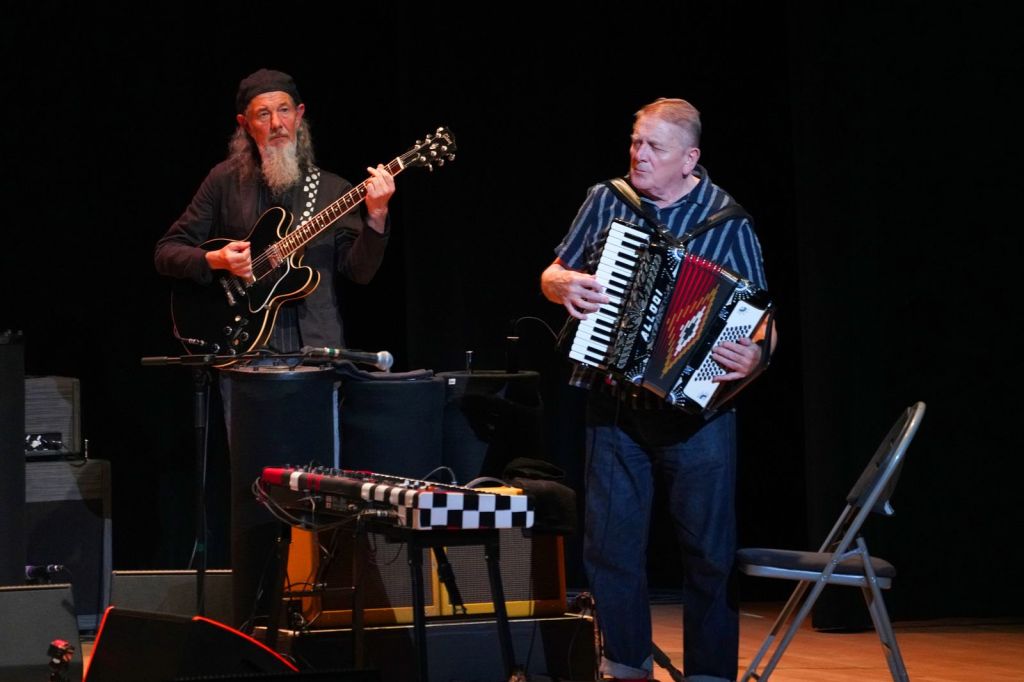
The anthemic “Won’t Get Fooled Again” provided the entire nonet backing Daltrey with the opportunity to display their specific gifts to the crowd, notably the tight rhythm section of Jody Linscott (percussion), Scott Devours (drums), and John Hogg (bass), accordionist/keyboardist Geraint Watkins, and group MVP Jacoby. And although the octogenarian has retired from uttering the tune’s trademark scream, the Brookville, Long Island faithful received the next best thing, being tasked with recreating the melodic shout in his place. “The day after I recorded that scream in 1971, I woke up and thought “What the fuck did I do that for? Now every time we play that song, everyone’s going to expect it,” he laughed.
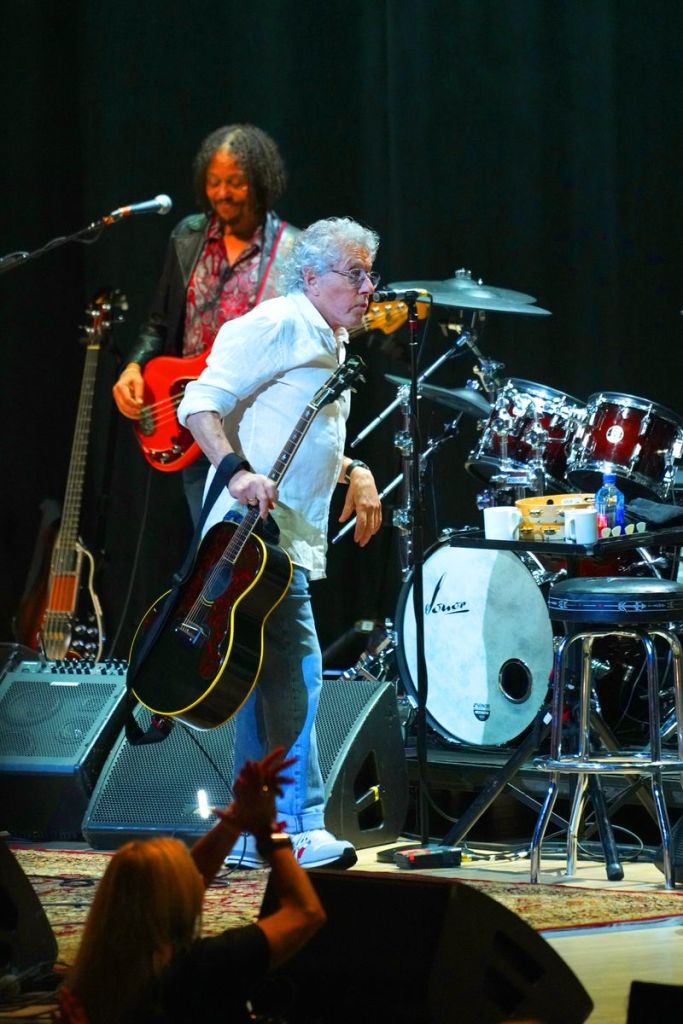
At 82 years old, Daltrey is, simply put, a marvel. It’s difficult to comprehend how a performer born in 1944 can still sing as well as he does, remember stories as vividly as he does, and, well, rock as hard as he does. At one point even getting down on his hands and knees to rip off an awkward, taped down rug from the stage – “Carpet? Who needs carpet?” – the British wonder showed no signs of slowing down. And with similarly ageless peers such as Mick Jagger (83) and Paul McCartney (84) still leaving others in the dust, the following lyrics may need to be revisited from another point of view:
“Why don’t you all fade away
Don’t try to dig what we all say
I’m not trying to cause a big sensation
I’m just talkin’ ’bout my generation”

