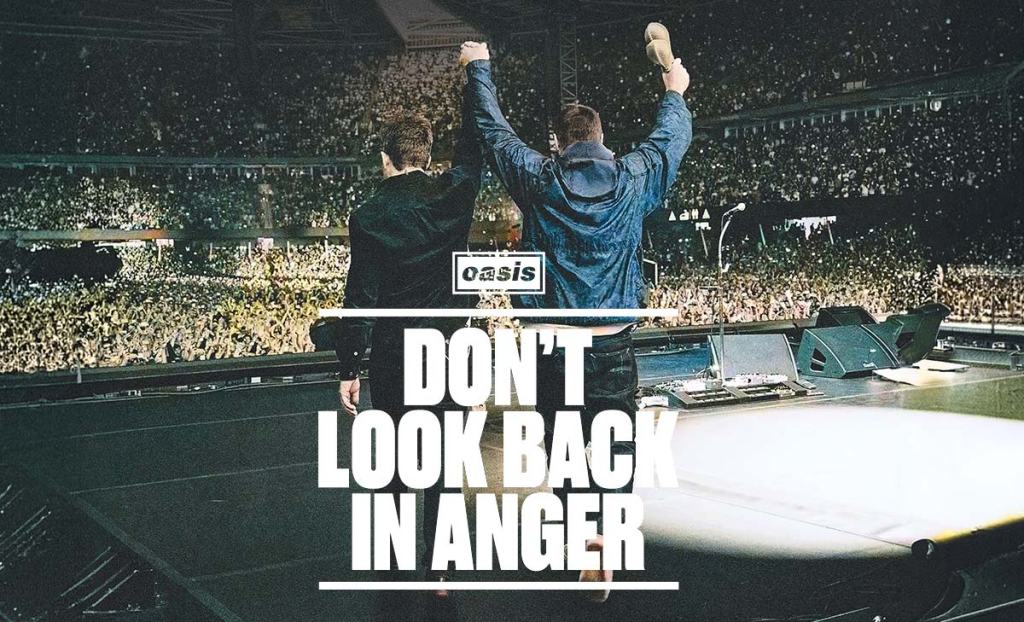
Oasis: Don’t Look Back in Anger
4 out of 5 stars
By J.C. Correa
The acrimonious split between brothers Noel and Liam Gallagher of the legendary Britpop band Oasis is one of the most famous rifts in rock and roll history. Of course, part of the reason for that was the generous serving of public insults that each party unleashed on the other, usually via a ravenous press that was just waiting to eat that sort of meal up. It is fair to say that their contentious relationship is truly as famous as the stadium-ready anthems that rocketed their group to the top of pop culture in the mid to late ‘90s.
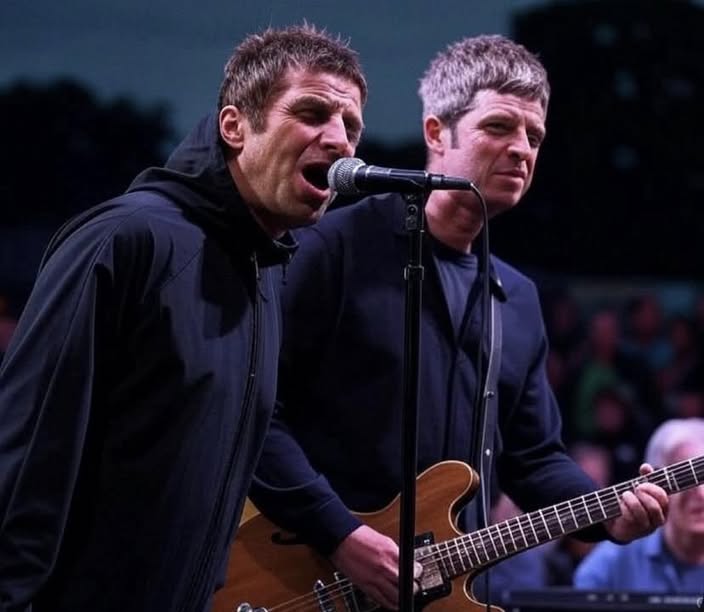
Because of its notoriety, this very component was the enormous elephant in the room when the brothers suddenly decided to put their differences aside after 15 years of no communication and launch a massively successful reunion tour last year. It is also the key dramatic angle that the new documentary Oasis: Don’t Look Back in Anger is framed around, as it covers the impact of that tour, starting with the near-certain unlikeliness of it ever happening. The results of the account are often excellent and compelling, and always entertaining.
Part of the chronicle, which was written by Steven Knight and directed by the team of Will Lovelace and Dylan Southern (helmers of the thematically similar Blur: No Distance Left to Run doc), zeroes in on the vastly disparate personalities that separate the brothers. Even now, lead singer Liam is brash and abrasive, getting by on sheer charisma (and a healthy dose of witty contradictions worthy of Yogi Berra, most of which are undeniably funny). Noel, the band’s lead guitarist and principal songwriter, seems reasonably more grounded, but is also willing to admit that he’s never been able to apply forgiveness in his life. Despite their stark contrasts, their evident passion is a fundamental shared point.

The concept of forgiveness itself is arguably the main theme of the piece, even going as far as to include a priest openly preaching about it. If it weren’t so central to the success of the Gallaghers’ story, it might risk coming off as a bit trite. Fortunately, the nature of the personal stakes on display is enough to actually lend it a winning quality. Though the narrative centers primarily on the recent reconciliation and subsequent tour, enough archival footage is used throughout to properly establish the context.

Besides the brothers, however, the film sets its focus on the band’s fanbase, and the enormous impact that this miraculous reunion had on it. There is a fascinating account of how crowds without tickets to the Manchester outfit’s hometown gigs endearingly forced themselves into parks so they could climb up trees in the hope of getting better vantage points to the shows taking place nearby. With the sort of images that recall the intensity of Woodstock, the movie amplifies the complex emotional experience that it is to be an Oasis fan.
The group’s global reach is stressed by dedicating small sections of the doc to a trio of followers from places like Brazil, Korea, and Argentina. In addition to the impassioned interviews they (and many others) give, the camera frequently captures the reactions of crowds during several of the shows on the tour, and these range from absolute ecstasy to complete exhaustion to, in some cases, a trance-like state that suggests momentarily searching for the meaning of life in the immediate aftermath of one of these historic concerts. Besides boundless expressions of joy, the other constant are tears, no doubt born out of that same joy. To that end, the shows take on a cathartic quality that is poignant to witness.

The movie devotes some of its time to the performances of beloved tunes like “Rock ’n’ Roll Star,” “Champagne Supernova,” “Supersonic,” “Cigarettes and Alcohol,” and, appropriately, “Don’t Look Back in Anger.” This concert footage is very kinetic, and especially so when it cuts from the band directly to the crowd. Seeing the audience at River Plate Stadium in Buenos Aires sing in unison to something as iconic as “Wonderwall” gives off an effect greater than the seismic one you might already be expecting. That moment is matched by the moving sight of the countless number of folks openly crying as Noel sings lead on “Don’t Look Back in Anger,” bringing its blunt message full circle.
Other than the less-than-two minutes dedicated to rhythm guitarist “Bonehead,” I wish the documentary had devoted at least a little time to shining a light on the other members of Oasis, all of whom, I suspect, are complete unknowns to the general public. While we see them at rehearsals, as well as performing onstage – with the occasional soundbite thrown in here and there – it is evidently clear, however, that this is and has always been the Gallaghers’ story, and the film makes no attempt at disputing that.
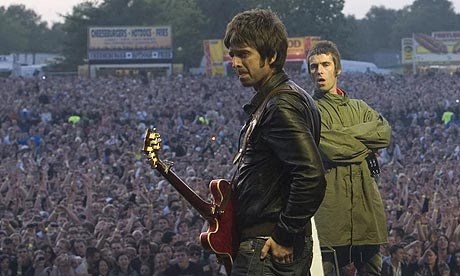
In the end, the doc’s undeniable through line is the recognition that these songs definitely connected and greatly mattered when they needed to, as one generation passed its reverence for them onto the next. We really get the sense of what this reunion meant to so many people in terms of the pent-up anticipation and outpouring of emotion. As such, the movie’s greatest strength is its ability to, even if you aren’t necessarily a fan of Oasis, sort of make you wish you had been there last year to witness it all. And that’s just as good being that the group, just mere days after the film’s premiere, strategically announced another tour for 2027. Those cheeky lads!
Oasis: Don’t Look Back in Anger is currently playing in theaters.

