By J.C. Correa
Hard as it may be to believe, but 2026 marks the 59th consecutive year in which classic rock legends Chicago have toured in some capacity. For practically six decades, the Rock & Roll Hall of Fame inductees have brought their unique brass-heavy brand of rock to stages everywhere with no signs of slowing down, despite multiple lineup changes over the years. And, if you’ve ever attended one of their live shows, you couldn’t have missed the token jersey at the merch stand that proudly displays the number corresponding to that particular tour. At their July 23 concert at the Jones Beach Theater in Wantagh, New York, many fans sported the #59 on a garment whose aqua and orange colors seemed a littlemore at home with the Miami Dolphins football team than with the seminal Windy City outfit.
In fact, the “Second City” angle is crucial to the band’s current trek as it is packaged as a co-headlining jaunt with fellow Chicagoans and classic rock mainstays Styx. Appropriately labeled the “Windy Cities Tour,” the pairing is an attractive one for many reasons that go beyond both groups’ shared birthplace. Officially originating in 1972, on paper Styx dates almost as far back as Chicago, though those roots were put in place a full ten years before. And, like Chicago, they continue to barnstorm their way through the live music circuit, having already entered their second decade of averaging 100 shows a year. These are laudable stats for bands who each have members well into their 70s.
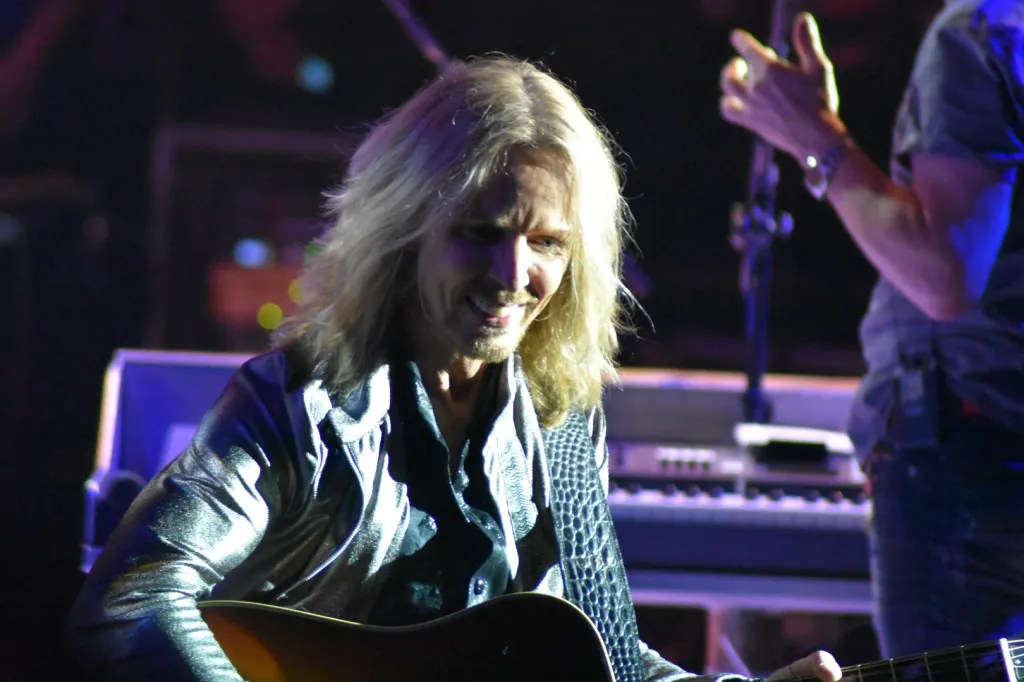
Beyond their obvious similarities, though, part of the appeal of this tour lies precisely in how the groups diverge. Where Chicago leans heavily into jazz by way of its brass prominence, Styx frequently veers off into prog territory. Both bands can be very experimental and improvisational – especially on stage – but they go about it in highly different ways. Unlike Chicago, however, Styx is inexplicably not in the Rock & Roll Hall of Fame, and if last week’s concert was any indication, you might be forgiven for thinking that, at the very least, it might have been the other way around.
Embracing their status in their heyday as a staple of AOR, Styx began their show with graphics of precisely that: A car radio tuning into a station. From there, they stormed their way through an 88-minute set that was high on energy and crowd-friendly appeal. The band intentionally forwent popular ballads like “Babe,” “Don’t Let It End,” and “Show Me the Way” in favor of more upbeat material, and the decision proved to be a wise one as evidenced by the audience’s reaction.
Keyboardist/lead singer Lawrence Gowan, sporting a shiny silver jacket with matching shoes, injected the performance with much dynamism and showmanship that instantly got the public on his side. With a keyboard that spun 360 degrees on a swivel, Gowan frequently made this a bit of a spectacle, and the contraption even allowed him to occasionally strike the ivories behind his back as he leaned his head and torso straight out into the audience in a display of equal prodigiousness and bravado. His brother Terry, Styx’s bassist and newest member as of two years ago, enthusiastically thumped his instrument (he threw out guitar picks to the crowd from the very first number) with a smile on his face that rarely disappeared throughout the set.
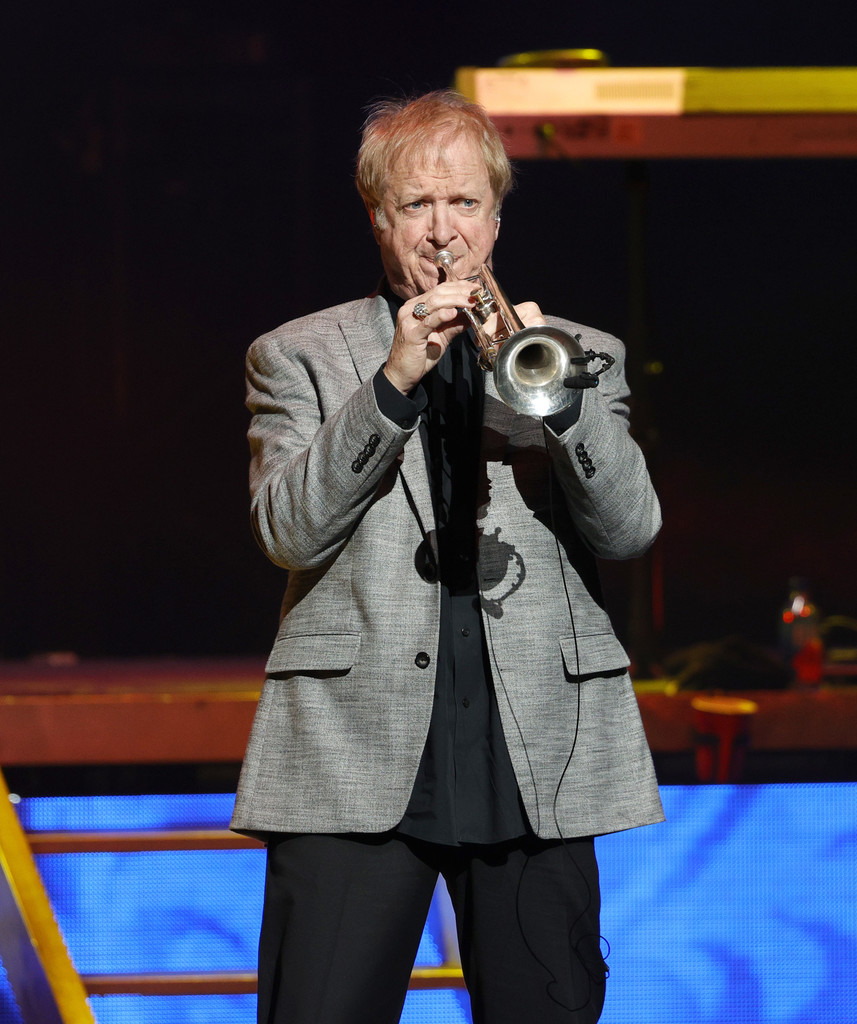
Tommy Shaw, the group’s longtime guitar wizard and lead singer, provided a slightly more subdued contrast to his keyboard player, while still being very much in the zone with an evident exuberance. Displaying an arsenal of guitars that seemed to change for every song, he delivered terrific vocals on crowd-pleasers like 1981’s “Too Much Time on My Hands,” “Blue Collar Man” from 1978, as well as the title track to 1976’s Crystal Ball, which he introduced as being a highlight of the first album he ever recorded with Styx. In fact, only “Light Up,” “Lorelei,” and the ballad “Lady” (which was originally sung by Gowan before Shaw joined in) were chosen to represent the band’s pre-Shaw era.
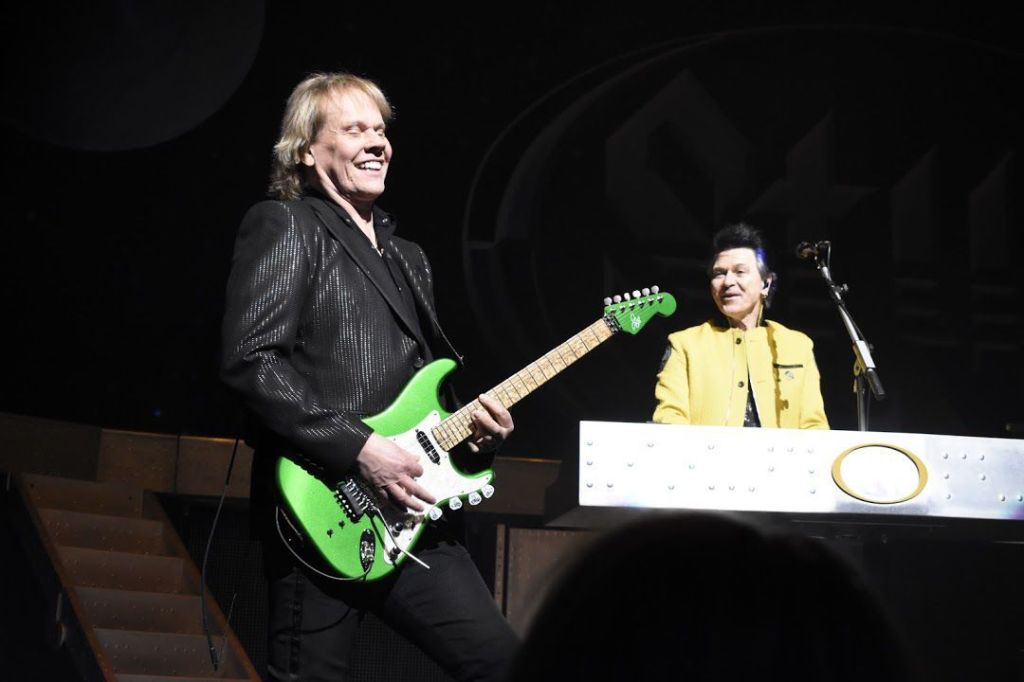
Contrasting greatly with Shaw, guitarist/vocalist James “JY” Young, who is also Styx’s most tenured member, displayed a much more demure stage presence. Playing occasionally from a stool that stood in front of the drum riser, the 76-year-old founder also stuck to one axe for the majority of the evening: A modified green six-string made to look like a Fender Stratocaster. He only swapped it for a red version of the same thing during the outfit’s second encore, the fan-favorite “Renegade.”
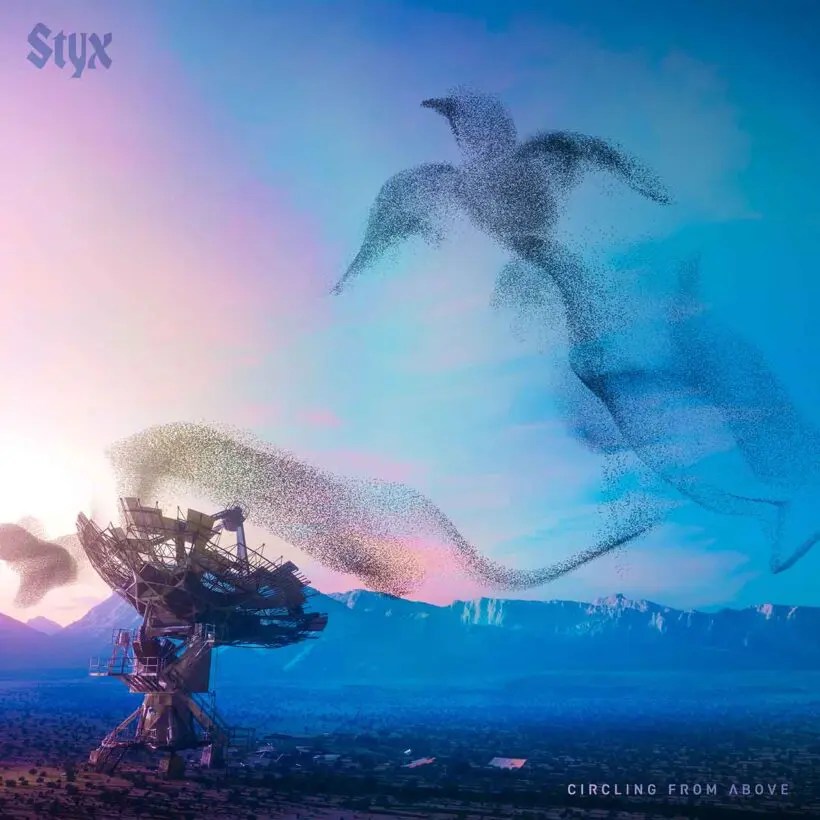
Either through Gowan or third guitarist Will Evankovich (previously the group’s producer, and now a full-time member), the band made it a point to remind the audience on more than one occasion of their records’ chart success across the decades. When introducing a more recent number like 2021’s “Our Wonderful Lives,” which Shaw played on a banjo that was unfortunately lost in an otherwise stellar mix, Evankovich chose to highlight how big a deal it is that they even still make albums. To that end, this current jaunt is in support of their latest LP, last year’s Circling from Above, of which only its leadoff single, “Build and Destroy,” was played early in the set, as its music video projected on the large screen behind the musicians.
With a catalogue as deep as theirs, there as so many ways that Styx could have constructed their show into what is essentially a 15-song set. Thankfully for their fans, whether through the anthemic “Come Sail Away” (which featured a great vocal interplay between Shaw and Gowan and also allowed for the participation of original bassist and founder Chuck Panozzo), the rocking grandeur of the appropriately titled “Rockin’ the Paradise,” or the singalong qualities of “The Best of Times,” Styx never really seemed to let up. Only on the first encore, the intentionally comical “Mr. Roboto” (also with Panozzo), did the band’s thrust appear to dip somewhat. Perhaps that’s the inevitable price you pay when having to follow up an all-timer chorus like the one from “Come Sail Away,” which closed out the main set.
As expected, Chicago took the stage just under a half hour after the conclusion of Styx’s performance. But there were two immediate surprises on display for those who may have gone into the gig without staying up to date on the group’s status. Longtime stalwarts and founding members Robert Lamm (keyboards) and James Pankow (trombone) were nowhere to be found – both quietly retired from touring at the end of last year – and if you’ve had the experience of seeing Chicago live over the years, the sight of their absence was probably a jarring one. The other instant impression made on the audience was the presence of five female string players sporting sequined dresses. These ladies, it turns out, are known as The Cover Girls, and they would go on to trade in those outfits later in the show for jeans and t-shirts adorning different versions of Chicago’s iconic logo.
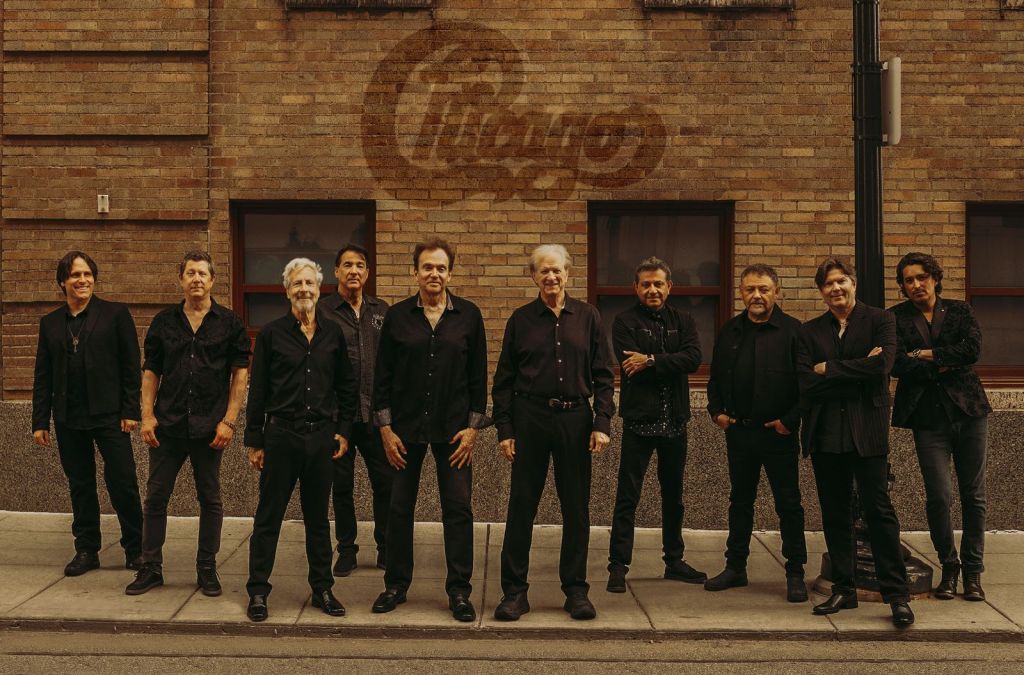
Perhaps most surprising of all, however, was the fact that it became instantly evident how much the band initially struggled to generate momentum; a point that may have had to do as much with their inner workings as with having to follow up the highly intense manner in which the gauntlet was dropped by their Windy City counterparts. In fact, it wasn’t until trumpeter Lee Loughnane, the group’s sole remaining original member, introduced a cover of Jackie Wilson’s “(Your Love Keeps Lifting Me) Higher and Higher” a good hour into the set that the Long Island audience truly got on its feet, beyond the die-hards situated in the first few rows of the orchestra.
Until that crucial moment, Chicago’s set list was a slight variation on a fixed structure that they have tailored to live settings for many years now. And, in fairness, it’s one that is designed to successfully balance the jazzier, more experimental works of their first decade with the pop-friendly and commercially leaning ballads they churned out in the early ’80s on the strength of original bassist Peter Cetera’s revered tenor voice. This allowed for cherished love songs like “If You Leave Me Now” and “You’re the Inspiration” to blend nicely with much older material like the “Ballet for a Girl in Buchanan” suite from Chicago II, as well as Lamm’s timeless composition “Does Anybody Really Know What Time It Is?” from the group’s 1969 debut album.
Speaking of Lamm, while his and Pankow’s retirements were never formally addressed on stage, they were each given special mention in a manner that certainly nodded to that. At the conclusion of “Dialogue (Part I & II),” the words “thank you Robert Lamm for another of your great songs” appeared on the huge screen next to an image of the songwriter, much like they did for Pankow after the band performed the beautiful “Just You ’n’ Me.” Short of actually acknowledging it, it felt like a more-than-fitting way to honor two men without whom Chicago simply would not exist. But the tributes didn’t end there. Halfway through the show, Loughnane addressed the recent passing of founding member Walter Parazaider less than a month ago, with the visage of the group’s original saxophonist projected onto the screen.
For an outfit conducive to so much personnel change (6 of their 10 members took up their current slots within the last ten years), extra care should surely be given to the selection of lead tenor vocalist, the distinction once held by Cetera way back in the day. That role now belongs to Rudy Cardenas, the band’s newest recruit, who debuted with Chicago less than two months ago. At 48, the Venezuelan-born singer is likely younger than the rest of the troupe, and he chose to give an edge to the proceedings by wearing a black motorcycle jacket throughout the evening. Cardenas does indeed have a great voice, and much like his immediate predecessor, Neil Donell, he does a more-than-competent job at handling Cetera’s emblematic parts. The problem, if there is one, has exclusively to do with the overt facial theatricality that Cardenas tends to display whenever he opens his mouth. His lips seem to only know two positions, either a wide smile or an exaggerated pucker. And though the former is a welcome sight, and probably indicative of the enthusiasm that comes with having gotten this gig, the latter is unfortunately a visual distraction much harder to forgive on a giant screen set on amplifying the effect.
Much more successful in his stage demeanor and overall duties was bassist Eric Baines, now in his fifth year with the group. His singing responsibilities entailed handling all of the tunes originally sung by Lamm, as well as those by original guitarist Terry Kath like “Make Me Smile.” He did an admirable job trading verses with Cardenas on the Cetera staple “Hard Habit to Break,” and gave the crowd what it wanted on a lively rendition of perennial favorite “Saturday in the Park” toward the end of the main set. Elsewhere in the rhythm section, drummer Walfredo Reyes Jr. and percussionist Ramon “Ray” Yslas embarked on simultaneous solos, but they skirted the cliché of such a thing by swapping instruments for a portion of it which kept things fresh and lively.
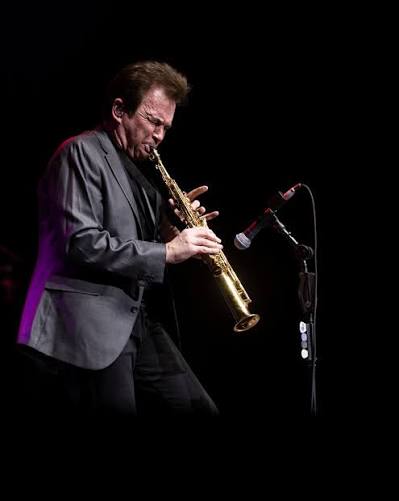
Curiously, it wasn’t until the late performance of “Hard to Say I’m Sorry” (arguably Chicago’s best ballad) that the cell phone flashlights finally came out at Jones Beach. Fortunately, “Get Away,” that love song’s terrific outro, really got the crowd going with its sharp-left vibe shift, which trombonist Nick Lane and saxophonist Ray Herrmann, along with Loughnane, executed to exhilarating perfection. In fact, a highlight of the evening was undoubtedly the inclusion of “Street Player,” the funky and swinging opening number from 1979’s Chicago 13. It was enthusiastically sung by newly recruited keyboardist Justin Avery. After one encore, the band expectedly closed out its 98-minute show with what is undoubtedly the best tune of their career – the towering “25 or 6 to 4.” Not only does it continue to be a pillar of classic rock, but guitarist Tony Obrohta’s faithful take on Kath’s iconic leads only served to confirm its status as one of the greatest guitar solos in history.
The Windy Cities Tour is currently trekking across North America through September 6.

