By Joe Puccio
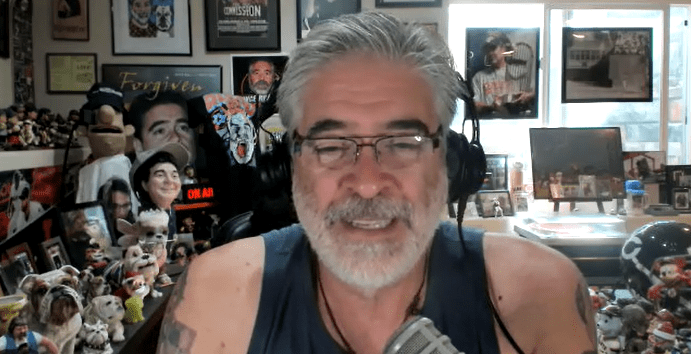
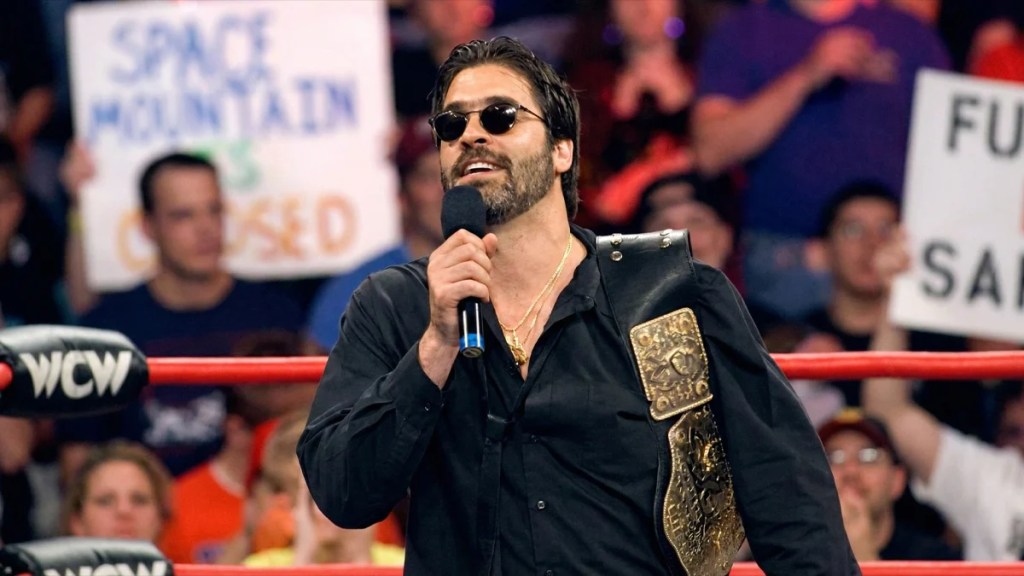
Few personalities in modern professional wrestling have evoked more controversy than Vince Russo. From the pundit’s early days covering the sport as a radio show host in the suburbs of New York, to his tenure as head writer for the World Wrestling Federation (WWF, now World Wrestling Entertainment, or WWE) in the late ‘90s, through his “Crash TV” booking style for chief competitor World Championship Wrestling (WCW) following his WWF departure, one thing is certain regarding the Long Island-born utility man: love him or hate him, his success – and subsequent longevity – is undeniable.
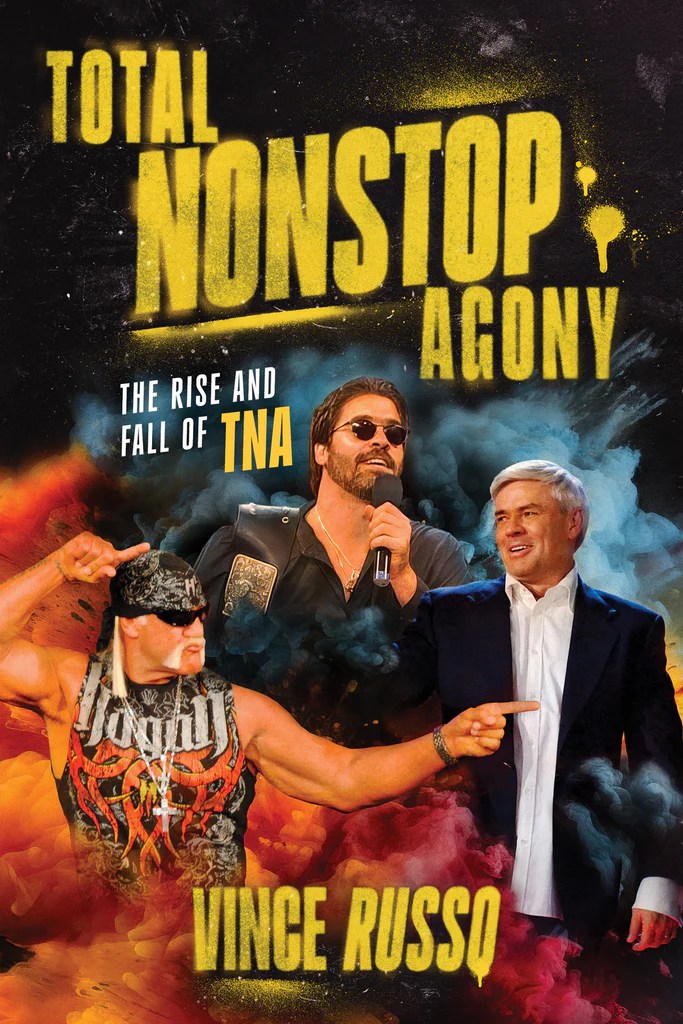
Russo’s latest endeavor, a book on his involvement with the Nashville, Tennessee-based Total Nonstop Action Wrestling league, has found him in familiar territory, having previously authored two autobiographies, one in 2005 heavily focused on his newfound born-again Christian faith, and another five years later, primarily detailing his tumultuous experience with WCW.
Titled TOTAL NONSTOP AGONY: The Rise and Fall of TNA (ECW Press: July 14, 2026), the publication documents Russo’s time with the upstart promotion, chronicling a 12-year period in his life which, unsurprisingly, was loaded with a significant amount of turmoil – even concerning something as innocuous as the company’s legal name, a double entendre moniker that can be credited to Russo himself.
“When I suggested the name to Jeff (Jarrett, TNA co-founder), the show was going to air on Tuesday nights, so I told him that if anyone questioned it, our ‘out’ was that it stood for Tuesday Night Action,” Russo recalled, during a recent conversation with Generation X Wire. “It was what it was. Make no mistake, that is what the show was supposed to be. It was an adult-oriented product on pay-per-view each week.” While the TNA/T&A variation definitively succeeded in gaining eyes on the commodity, the semi-crass label had its detractors, which didn’t phase its creator, believing it wasn’t a detriment – until circumstances later changed. “Two years after TNA was formed, they landed on Fox Sports (FSN), a legitimate cable television station. They absolutely should have changed the name at that point,” he affirmed. “The TNA name was when it was a pay-per-view product. I mean, come on. How could they not realize that?”
A lifelong fan, Russo’s introduction into the frenetic pro wrestling industry loosely came about by training with grappling mainstay Johnny Rodz at the legendary Gleason’s Gym in Brooklyn. But it wasn’t until the one-time video store owner joined forces with mat promoter/photographer John Arezzi in the early ‘90s to launch the Pro Wrestling Spotlight radio show that his foray into the game really began to take shape. An acrimonious split between the pair, sparked by a difference of opinion on how to most efficiently cover the WWF sex and drug scandals of the era, led to Russo forming his own terrestrial program, which took on a more lighthearted approach to the squared circle. Estranged from Arezzi for over 20 years, the two reconciled in 2018, putting an end to any bad blood that remained. Possibly an effect of his discovered spirituality or merely a simple desire to let bygones be bygones in an industry in which grudges are all too common – or maybe a combination of both – Russo is thankful for the accord. “Let’s face it, when I entered the business, I didn’t know about the seedy side, and I wasn’t interested in it. I was a fan who loved the entertainment aspect of it,” he explained. “When I got involved with John and saw that side, I wanted no part of reporting on that. But it was very important for me to talk to him again. I consider us friends today.”
Although Russo wore (and continues to wear) many hats in his responsibilities, he is undoubtedly best remembered for his time in the WWF at the height of the Attitude Era, an approximate span of five years that was arguably the most financially lucrative and mass appealing period in wrestling history. Originally hired as a freelance writer for WWF Magazine, the empire’s premier publication at the time, his commitment and work ethic eventually led to an editor promotion, before eventually finding his groove as a key member of the creative team in 1996 – a year that saw flagship program Monday Night Raw hit an all-time ratings low. But Russo’s involvement quickly saw the tide change and in just one year, he was the head writer, resulting in the company becoming a surefire juggernaut.
As for WWE’s output today, a quarter of a century later, Russo feels it leaves a lot to be desired. “One of them, WWE, or any of the other companies like TNA and AEW (All Elite Wrestling) are going to figure out that they need to get the old fans who stopped watching wrestling back. If they did their research, they’d see that it is much easier to get a former viewer back than it is to convert a new one. But there hasn’t been one company who’s done that,” he contended. “Millions and millions of casual fans stopped watching wrestling 25 years ago and WWE has disregarded those people. The fan base that they currently have are the lifers – the ones who will watch it forever. They’re not going anywhere. But they need to bring back all the ones they lost.”
In Russo’s opinion, the key to the physical art form enjoying another hot period as it did during both the Attitude Era and the Hulk Hogan-led Rock ‘n’ Wrestling stretch in the mid to late ‘80s, is character development and storylines that the public can relate to. “There must be a personal connection with the audience. That’s why it was so easy with Steve Austin. Austin said and did everything to Vince McMahon that every blue-collar worker wanted to say and do to their boss,” he insisted. “It’s that simple.”
Russo doesn’t hesitate when asked to name his proudest moment as a scribe for the sport. “The Rock joining the Corporation in the WWF, for sure,” he answered. “It was such a well thought out storyline that we were able to tell for many months. It was very rewarding.” As for an angle traced to him that he doesn’t look back on quite as fondly, it’s not one that many followers might assume it would be, when he booked himself to defeat Booker T for the WCW World Heavyweight Championship, a reign that admittedly lasted only a few days. “People are so stupid, bro,” he laughed. “For those who were offended by it, they have no idea of the creative process. We’re writing 116 shows per year so unless you do stuff like that, you’re going to keep repeating the same stuff over and over again until people get sick of it. Some ideas work and some don’t, but I’d rather take a chance and try out a new idea than just do what was already done,” he continued. “The one I would take back is when we mocked Jim Ross’ Bell’s Palsy in WCW. I wish we hadn’t done that. I love J.R.”
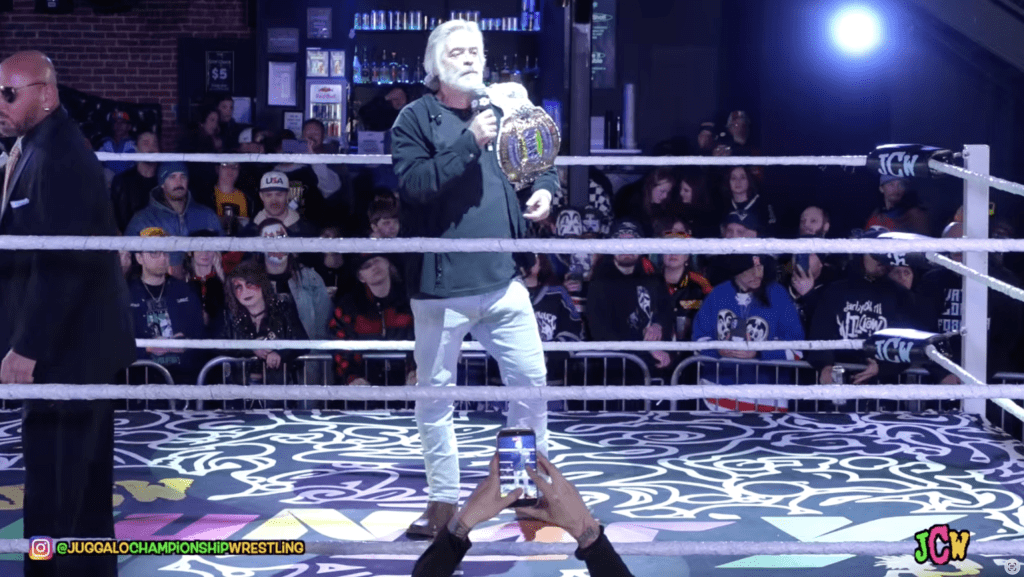
Russo is currently affiliated with independent wrestling promotion Juggalo Championship Wrestling (JCW), both appearing for the group as an on-screen authority figure on their weekly show Lunacy as well as maintaining an investment behind the scenes. Part of his attraction to the buzzworthy league, owned by Michigan-based hip hop duo Insane Clown Posse, stems from just what he believes the major companies are lacking. “Our show is basically the Attitude Era of 2026. But like anything else, we need a strong TV deal, a streaming deal, a cable deal, something. We have a great team that is out there selling our show, so we’ll get something,” he promised. “JCW is doing things that no other wrestling company is doing today. We just need the platform.”
Russo will also soon be seen on the new season of Dark Side of the Ring, Vice TV’s critically acclaimed documentary series on the business’ often-bleak underworld, specifically during the show’s TNA-centric episodes that begin to drop on July 7. Russo welcomed the opportunity to speak about his former employer, especially with the installments coinciding with his book. “I’ve got nothing to hide about my history with TNA and everything that went down,” he offered. “There was nothing they could ask me that I’d be afraid to answer.”
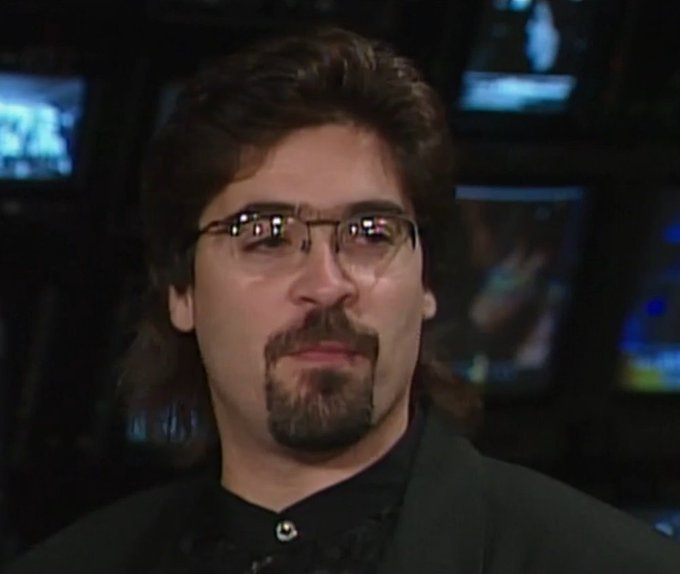
Still active with a plentiful plate of projects, could a return to WWE after 27 years (save for a brief two-week stint in 2002) be in the cards for the 65-year-old? “It’s just not realistic because of my age,” he conceded. “I wouldn’t be able to put myself through that level of stress at this point in my life. The travel alone would be too much. With JCW, I’m only on the road a couple days each month. It’s so political in WWE. I wouldn’t last through lunch,” he joked.
Although it’s an unlikely one nowadays, perhaps another of Russo’s former occupations could see a comeback, leading to a return to one of his pre-wrestling vocations. “I think video stores are going to make a comeback,” he attested. “I loved owning my two stores and if things had turned out differently, I probably would still be doing that today. I enjoyed talking about movies with all the regular customers. If you think it can’t happen, look at what happened with vinyl! I’m holding out hope,” he added, with a smile.
For more information on TOTAL NONSTOP AGONY: The Rise and Fall of TNA, click here.
To order TOTAL NONSTOP AGONY: The Rise and Fall of TNA on Amazon, click here.
To order TOTAL NONSTOP AGONY: The Rise and Fall of TNA on Barnes & Noble, click here.

