
Revisiting Def Leppard’s Underrated and Forgotten Masterpiece
By J.C. Correa
In a Loudwire article from three years ago, writer Joe DiVita aimed to highlight cases in which rock and metal bands followed up “classic albums with a total dud.” Even though most of what he listed made some sense, one of the examples that he gave was Def Leppard’s Slang, released 30 years ago in the spring of 1996. The album was indeed a commercial failure, especially in light of following up 1992’s multi-platinum Adrenalize. However, DiVita attempted to make his argument by claiming that the latter represented a continued evolution toward pop for the Sheffield rockers, while Slang embraced too much of an alternative/grunge style. For anyone who is even mildly familiar with the band, they will know that hardly anyone would bestow the label of “classic” on Adrenalize, and that its pop-centric antics were already in full bloom on its predecessor, Hysteria, the group’s all-time best-seller. Slang, on the other hand, was an entirely different matter, and the band’s first (and some might say, only) effort to truly tread new ground. 30 years later, it is also, at least artistically-speaking, the farthest thing from a dud.
It is true that when Def Leppard were on the road in 1992-1993, the group started off in their Hysteria-era regalia, but by the second year they basically looked like Ugly Kid Joe, a band they were incidentally touring with. Grunge and alternative rock were indeed encroaching on everyone’s space, and it was impossible then for rock acts who had dominated throughout the ‘80s to not have to adjust, or at the very least, react to what was going on. Def Leppard were no different in this, and by the time Slang was released, their sound had been massively overhauled. Correspondingly, the succeeding tour stripped everything down to basics, with singer Joe Elliott trading in his colorful stage garb for all-black attire. It was a fitting choice in terms of establishing contrast, but also highly representative of the new music’s mood.
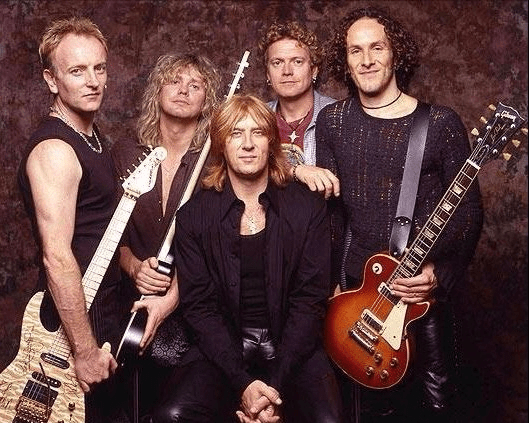
For many, Def Leppard had not only been one of the premiere acts of the ‘80s, but also, understandably, purveyors of a feel-good brand of heavy rock. This aesthetic had been successfully packaged in a glossy production style (the brainchild of acclaimed producer Robert John “Mutt” Lange) that took full advantage of the group’s gift for catchy riffs, earworm melodies, and three-part harmonies that became their trademark. All of this is the reason why Hysteria, along with its 1983 predecessor, Pyromania, are still considered among the most lucrative and culturally dominant records of their decade. Likely tired of being slaves to a formula, and sensing the need to diversify, the band practically did away with all of this upon approaching Slang, choosing instead to make an honest record that was informed by introspection and artistic ambition, as opposed to an eye on the charts. Commercially, they paid a price for the gamble. Artistically, however, revisiting the album 30 years on pays off some handsome dividends.
To change things up in 1996, Def Leppard hunkered down in a house in the south of Spain to record the songs with Pete Woodroffe, who co-produced the project with them. Woodroffe had previously worked with them on Retro Active, a stop-gap album made up of B-sides and previously unreleased recordings that dropped at the end of 1993. Being that that record already displayed a rawer approach that did away with Lange’s penchant for massive production, it served as a foreshadowing of sorts of the path that the band wound next choose to go down. Slang doubled down on this, and that gambit became clear from its opening song, the aptly titled “Truth?” (the question mark is itself a telling statement). By doing away with the band’s signature harmonies, and instead saturating the backing vocals, and implementing drum loops that recall U2’s own mid ‘90s experimentation, it is immediately clear that Def Leppard were making a sharp left turn. It’s an exciting veer, though, one that displays an urgent energy that, even across the varying styles of all the songs that follow, doesn’t ever let up.
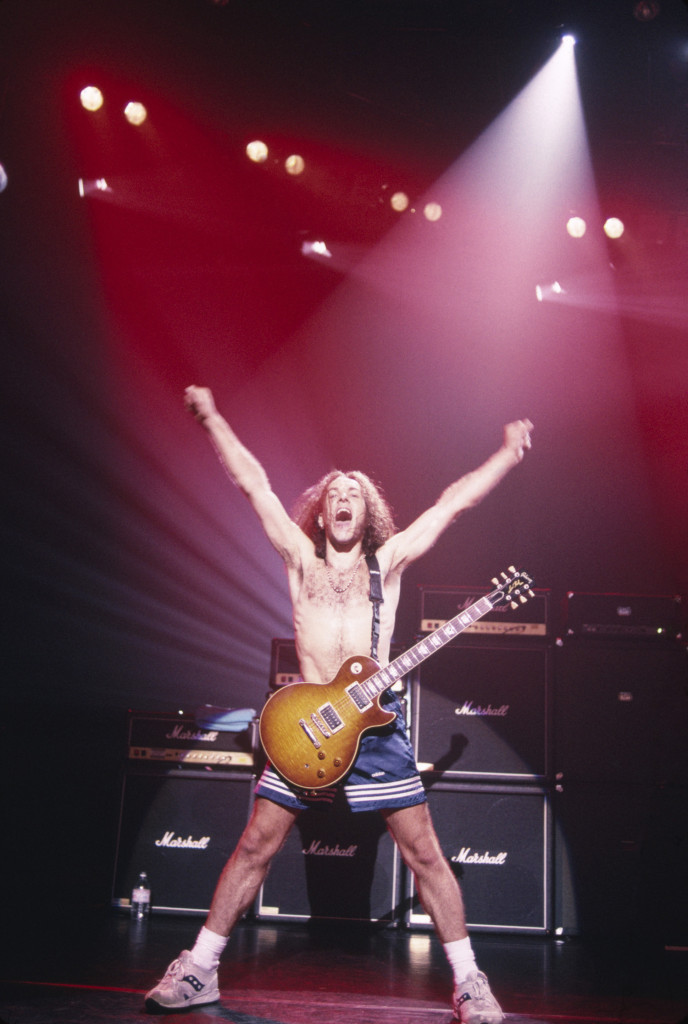
Drummer Rick Allen, who famously lost an arm in a car crash in 1984 that forced him to play an electronic drum kit on the band’s subsequent recordings, made it a point to return to a semi-acoustic kit for the recording of Slang. It’s a wise, artistic choice that instantly grounds the album, but also allows him to play around and adjust his snare drum to varying levels of intensity. As such, while his drums sound thunderous on tracks like “Work it Out” and “Gift of Flesh,” they conversely award an intimate feeling to songs like “Breathe a Sigh,” “All I Want is Everything,” and “Blood Runs Cold.” The second number, “Turn to Dust,” already announces the acoustic nature of his drum sound, and perfectly accompanies Rick Savage’s wonderfully adventurous bass line. The song uses a sarangi to invoke an eastern feel – one that is also reflected in the crimson cover art – supporting lyrics that are both introspective and bleak, and at times even fitting for a band like Nirvana. Perhaps the only misstep is the inclusion of the thick harmony vocals for the chorus that are so associated with the band, as they somewhat clash with the overall vibe. At the same time, despite the deliberate changes, I suspect this was group’s way of reaffirming their brand to their listeners, and if so, who could blame them?
On that note, it is not hard to find the moments on the album that most closely resemble the Def Leppard of old, as they are effectively condensed into a single song – the third number and title track. “Slang” is a playful and funky jive in a style that recalls Prince, and the band taps into its “Pour Some Sugar on Me” mindset by musing on the delectable pleasures of phone sex. It’s all fun and light, with a very catchy chorus that grooves as good as any other pop confection they’ve ever put together. The Spanish setting of the recording sessions even seeps its way into the song by the inclusion of random spoken words. The lightness I referenced is also essential at this point because the album is about to take a serious dip into dark territory for most of its remaining run time.
The record’s tone officially shifts with “All I Want is Everything,” the fourth song. It’s a very emotional and disheartening composition by Elliott, whose effect is augmented by beautiful, complementing dual guitars from Phil Collen and Vivian Campbell that are very much in the style of the times (something that the simple guitar solo also underscores). Elliott sings earnestly on the tune, never once choosing to scream. It’s a refreshing approach that he maintains throughout the entirety of the album, which also helped to further distance it from their previous recordings. Even though it sounded right then, three decades later, it’s a decision that only emphasizes its timeless quality.
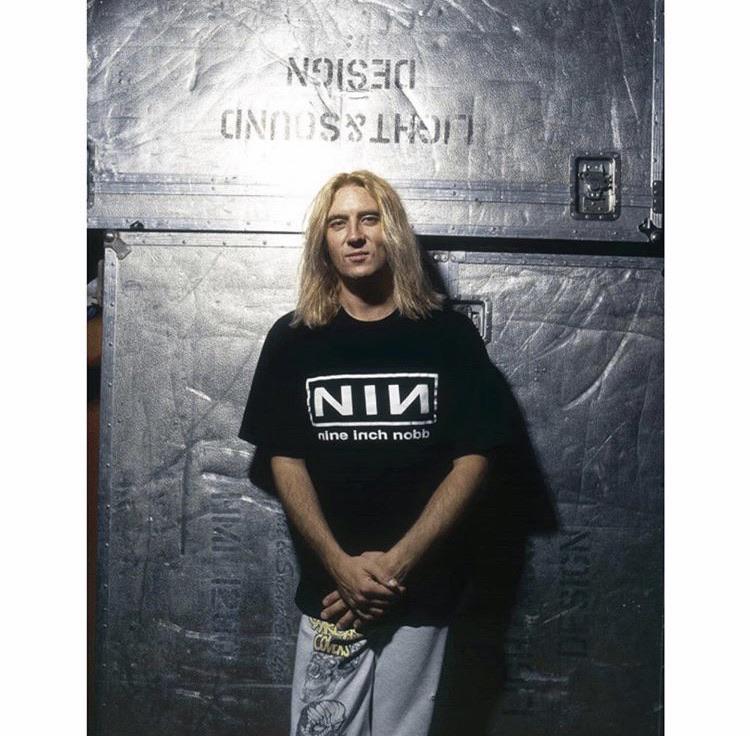
“Work It Out,” the record’s first single, which was composed by then still-new guy Campbell, allows Elliott to continue to croon in a lower register. The huge drums keep the track upbeat, and the lyric seems intentionally autobiographical when he sings, “We show the world a brand-new face, it’s taken us all this time.” Lyrically, the effect is not dissimilar to what Metallica achieved on “Nothing Else Matters,” and probably for the same reason. “Breathe a Sigh” exudes an R&B flavor which befits the most soulful vocal on the album. The song builds to an excellent crescendo before letting the air out (pun intended) during a terrific outro where the cynicism behind the lyrics comes into full focus.
It was wildly reported that the band members were collectively experiencing personal turmoil in their lives in the form of divorces, grief, and crises of identity, all of which strongly informed the songwriting found throughout Slang. One of the darker examples is “Deliver Me,” with Elliott menacingly intoning from the start, as he pleads in a tired-sounding baritone about his need to find peace after a toxic relationship. It’s one of the heavier tracks on the album and is followed by an all-out stomper entitled “Gift of Flesh.” Exploding out of the gate in a very punk rock fashion, the tune is another dark exploration of the human condition and is probably the best example of the natural progression the group began to establish on Retro Active.

From here on in, though, we enter the final stretch, and things take an absolute nosedive as the record invades a terrain of gripping emotion and haunting intensity. “Blood Runs Cold,” written as a lament about the loss of original guitarist Steve Clark five years earlier to addiction, is immensely sad, and carries with it a lingering feeling of desperation and grief. It offers Elliott a chance at another great, soulful vocal, which is accompanied by impassioned background wails during the middle eight. With just a bass drum and a tambourine jangle to support it, the almost-exclusively acoustic “Where Does Love Go When It Dies” takes the formula established on the hopeful, earlier hit “Two Steps Behind” and uses it to create the opposite effect. It’s a beautifully poignant song, one that this writer has loved since he first heard it 30 years ago; enough to have even gone on to record and release a faithful cover of it a few years back.
Part of the strength of “Where Does Love Go When It Dies” is the late inclusion of an electric guitar in its closing moments that allow for the blunt transition into what follows. What that turns out to be is in fact not only the album’s pinnacle, but also the crown jewel of the band’s distinguished recording career. “Pearl of Euphoria” is eerie and fantastic from the get-go. There are no guitar olympics here (and seldom throughout the rest of the album to be fair), only sparse instrumentation aimed at creating a sinister atmosphere. The result is a sprawling, slithering classic rock dirge in the vein of Led Zeppelin’s “When the Levee Breaks.” It also features an amazing, slow fade-out across its final two minutes that suggests a drug that won’t let go, a high unable to end, a prison whose gates refuse to open.
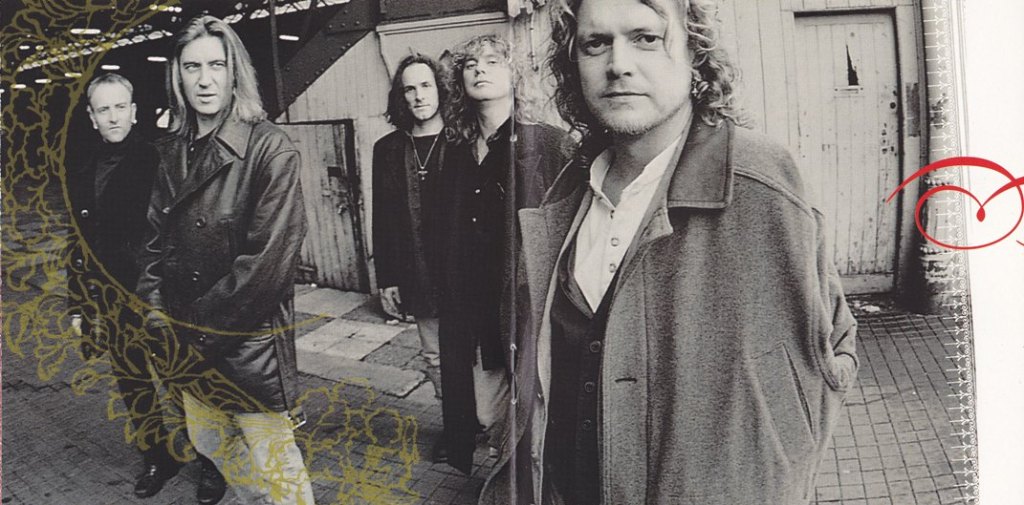
I would argue that one of the album’s greatest strengths is its designed cohesion. There is a lovely transition between “Truth?” and “Turn to Dust” by way of a rain effect, and also another seamless one between “Gift of Flesh” and “Blood Runs Cold.” As I mentioned earlier, the one that bridges “Where Does Love Goes When It Dies” and “Pearl of Euphoria” chases the opposite effect by being intentionally jarring, but it’s no less thought out, and is just further proof of how well designed the whole project is. Eschewing their usual set up, the band famously set themselves up in that Spanish house to be able to record Slang in a live setting, playing in the room together. The authenticity and energy of that approach clearly shows, and it is augmented by the warm, analog sound with which it was recorded, and which begs to be listened to at a loud volume. Most of all, the record made clear that Def Leppard were making a change by prioritizing the actual writing of songs as opposed to recording techniques. The end result shows that in spades, and by breaking the sequencing into what I consider to be four clearly defined quadrants, they were able to shape it into a listening experience worthy of the term masterpiece.
Six years after its release, during a chance meeting with Allen, I was able to express my deep appreciation for the album to him directly. During our conversation, he professed to me his belief that Slang was, up to that point, the best record that Def Leppard had ever done. Of course, he may have simply done so then as a courteous acknowledgment of a type of rare comment not usually made to him by fans. Still, I somehow believed him when he said it. After thrillingly revisiting this unique gem of an album on vinyl via a 30th anniversary limited edition released for Record Store Day, I still do, and now surely more than ever.
Slang is available to stream on all major platforms.

