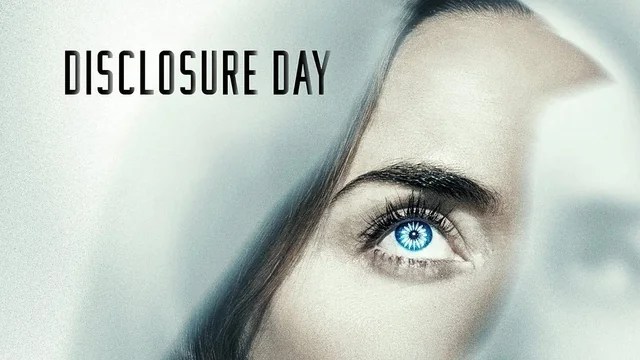
Disclosure Day
4 out of 5 stars
By J.C. Correa
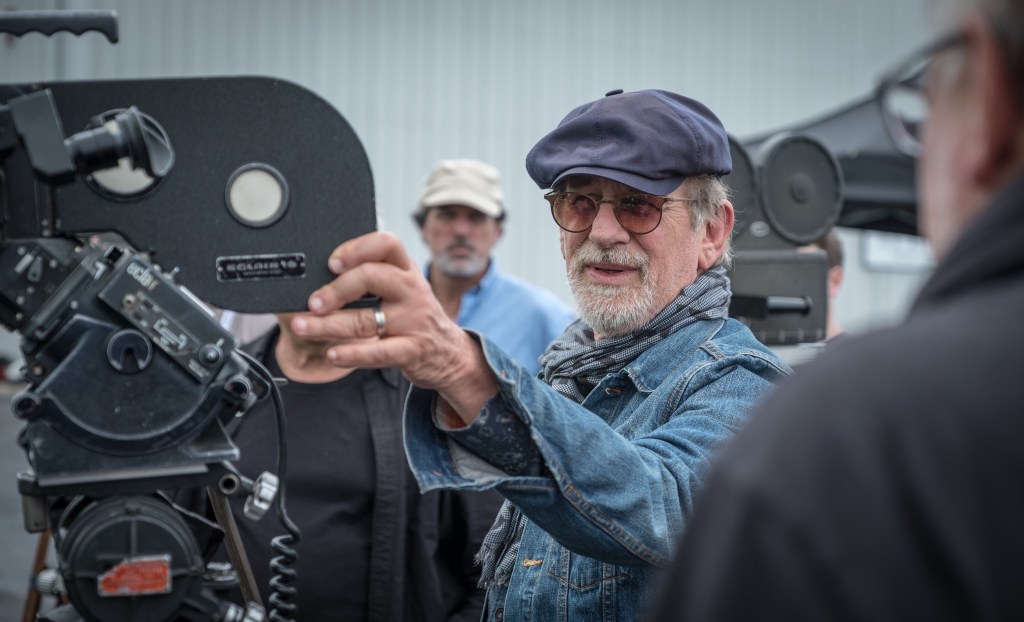
It’s been a while since Steven Spielberg made a movie about aliens. For that matter, it’s been some time since he released a film, period; 2022’s largely autobiographical The Fabelmans being his last offering. If you remove the sizable impact of Jaws and Raiders of the Lost Ark, it’s fair to say that he also became Hollywood’s boy wonder in the late ‘70s and early ‘80s by turning his gaze upward and channeling his fascination for beings from other planets with the one-two punch of Close Encounters of the Third Kind and E.T. the Extra-Terrestrial. Along these lines, it’s perhaps both surprising and fitting that he would return to this arena all these years later with his latest picture, Disclosure Day.
Much has been made in the build-up to this release about how, if you slot in Disclosure Day next to Close Encounters and E.T., it serves as a kind of third part in Spielberg’s unofficial trilogy about pod people. And, to a large extent, I suppose that is very much true, and also part of the reason for the movie’s appeal. However, it’s also imperative to note that the one making this is a post-Schindler’s List Spielberg, and certainly not the filmmaker in his early 30s whose only agenda at the time was to entertain and delight. For that matter, his last feature primarily about aliens was the grim and intense War of the Worlds, so it helps to remember that his perspectives have, if not changed, at least evolved. In this respect, Disclosure Day, while still a throwback, is informed by experience and made with a modern lens. Perhaps most encouraging of all is the fact that it’s up to snuff with both The Fabelmans and the director’s remake of West Side Story; his other two projects from this decade.
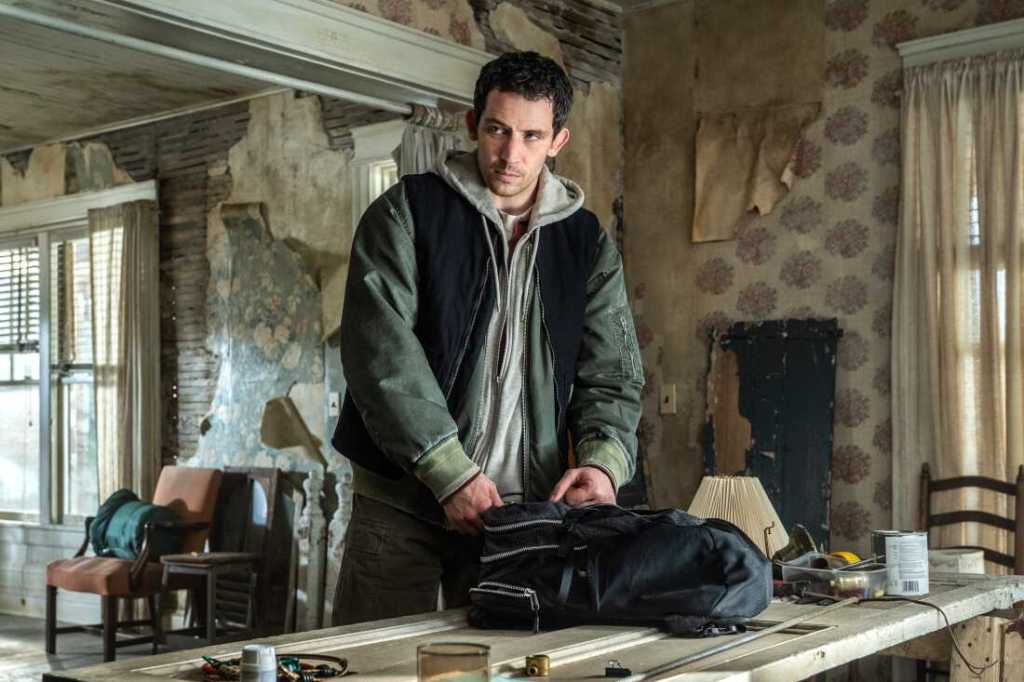
Where Close Encounters encouraged us to make contact, and E.T. taught us that extraterrestrials can fill familial voids, the new picture takes on a more dire and direct tone. It’s essentially out to tell us that not only are we not alone in the universe (again), but that we better start acknowledging that and fast. Spielberg is clearly one of many who champion the belief that the U.S. government has covered up so much on this topic for decades, and he is not afraid to suggest that the recognition and outward disclosure of such could be essential in redirecting our current priorities on a global scale into more pressing, interesting, and, by default, peaceful matters. The screenplay for Disclosure Day may have been written by Spielberg’s occasional collaborator David Koepp (Jurassic Park, War of the Worlds), but, much like Close Encounters for example (fans of that film will appreciate the name given to a motel, as well as a brief recall of one of its most indelible images), it’s directly based on a story and original ideas by the director. As such, amidst the often-virtuosic filmmaking, there is a personal quality that seeps through.
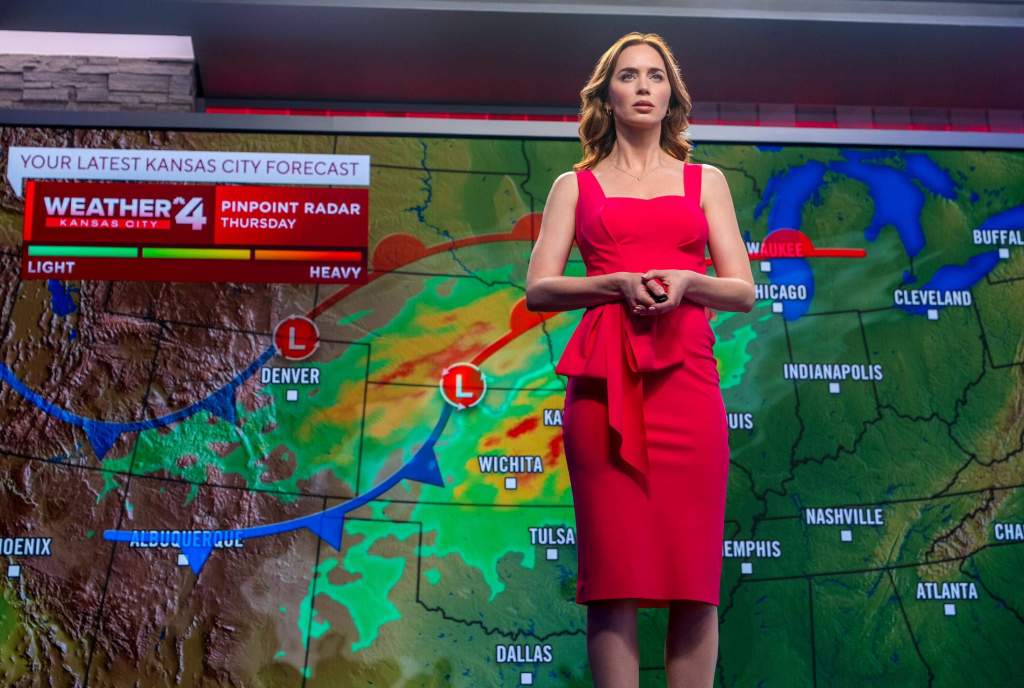
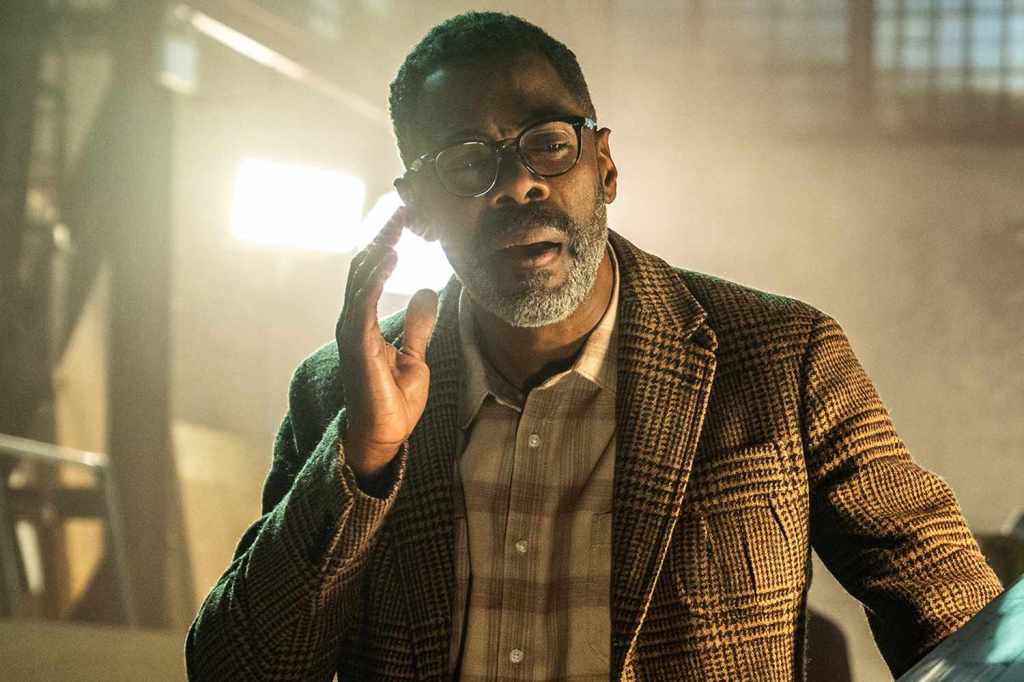
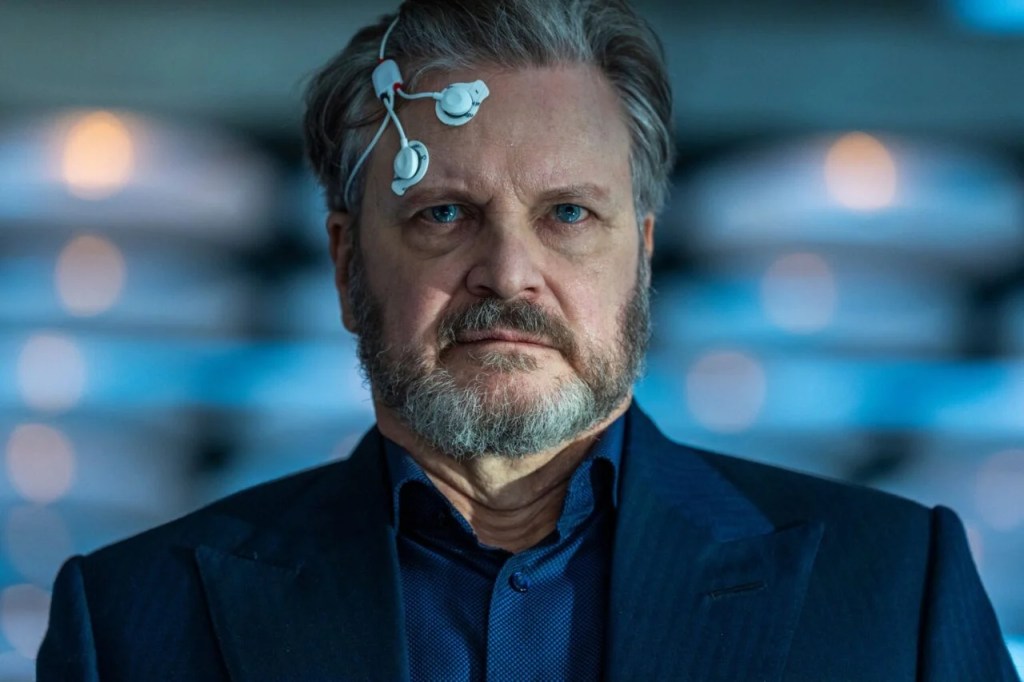
Spielberg makes his case in the form of two different stories. In one of these, Daniel (Josh O’Connor), a whistleblower for a secret government agency named Wardex that deals with extraterrestrial findings, tries to bring to light all that he knows with the help of his girlfriend Jane (Eve Hewson). He is protected by Hugo (Colman Domingo), a former Wardex employee, while being ruthlessly chased by its current CEO (Colin Firth) in order to keep him quiet. In the other story, a TV meteorologist named Margaret (Emily Blunt) is suddenly bestowed with psychic abilities that allow her to speak in languages she has never known – including a possible alien tongue – and also inexplicably understand the thoughts and emotions of everyone she comes across. Obviously, this is somehow all connected, and the movie is structured around the concept of bringing all of this together. If this particular structure reminds you of his first alien feature, you are not alone.
Like with most of his films, Spielberg has cast this one well, which goes a long way towards its success. O’Connor is a great everyman, something that his recent body of work has made him quite adept at. Hewson, whose star is on the rise, reminds one of a young Rachel Weisz. She pairs off well with O’Connor and seems a natural fit for these kinds of Spielbergian shenanigans. An even better coup, though, is Blunt. She plays Margaret with a committed intensity that is both emotional and funny, and her deft combination of vulnerability and strength proves vital. I have always enjoyed seeing Firth get his hands dirty by tapping into villainy, and here he makes for quite an effective, no-nonsense antagonist. Domingo’s role is a supporting one, but he lends his considerable charisma to it and makes his limited screen time count.
At the very least, the movie proves that Spielberg has not lost his unique flair for visual storytelling. He still moves the camera as well as anyone and knows how to tell his tale in the most economical yet exciting terms; a labeled police car dramatically driving into frame as a means to convey a specific location comes to mind. A longtime expert at building considerable tension, Spielberg uses the importance of eye color as a key plot point to great effect from a visual standpoint. He also gifts himself the opportunity to stage one thrilling action sequence involving a car and a freight train. It’s a highlight of the film as it recalls some of his best moments from the Indiana Jones pictures.
What the movie is ultimately aiming to ask is if the verified existence of extraterrestrials, both on Earth and in outer space, automatically makes us look at God in a different way. Does one indeed replace the other? Do aliens challenge our faith and our religions, or redirect them in some way? This is something that Spielberg actually somewhat touched upon in the lackluster Indiana Jones and the Kingdom of the Crystal Skull, but that film had its priorities and focus placed elsewhere. Here, on the other hand, he truly seems to be making an essay out of it, and his approach is deadly serious.
It’s always been in fashion to knock Spielberg when it comes to his penchant for overt sentimentality. His latest, despite being one of the most exciting works he has churned out in a while, is also somewhat guilty of these tendencies. In fairness though, this characteristic is not as present as it is throughout some of his other features, as he seems more interested in constructing a conspiracy thriller with the ambition to skip across several genres, thus leaving little time for the gushy. In this regard, the movie effectively channels the energy of a sci-fi fairytale with the same ease that it does that of a drama, and, in brief instances, even a comedy. The latter quality is underscored by a scene involving an “invisible” fire truck, as well as moments when certain background characters simply do not possess the ability to fully grasp the physical reality around them. When the world literally stops what it’s doing during the excellent final sequence, the catharsis generated by that instant is both alarming and humorous.
Perhaps the intentional choice of its title is meant to nod towards Roland Emmerich’s Independence Day in some way, though Spielberg’s film is light years away from it in both ideas and execution. To its credit, Disclosure Day is simply not interested in chaos and destruction for the sake of it. In fact, it’s actually invested in the exact opposite: Enlightening us to things that are far bigger and more deserving in their pursuit than humanity’s endless cycle of war and political conflict. It’s a very simple message, but surely a worthy one. Equally worthy is the movie Spielberg has made to convey it.
Disclosure Day is currently playing in theaters.

