Masters of the Universe
1.5 out of 5 stars
By J.C. Correa
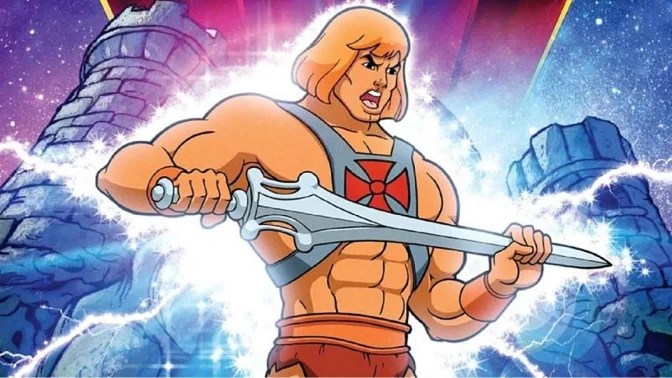
If you were a child in the early-mid 1980s, chances are that He-Man and his friends were part of your toy collection. Similarly, the lush-looking animated cartoon depicting his adventures was likely included in your daily after-school viewing ritual. And for young girls who maybe couldn’t find an easy way in to this elemental, yet colorful mythology of swords and sorcery, toy giant Mattel, the company behind the exceedingly muscular dolls (and the stick-figure Barbie for that matter), saw to it to give them She-Ra, who was essentially the female version of He-Man, albeit with a wardrobe of lesser indecency. Due to the immense popularity of the toy line and television show in their day, it was only a matter of time before the property was given the live-action treatment, which occurred with the ill-fated Masters of the Universe feature film in 1987.
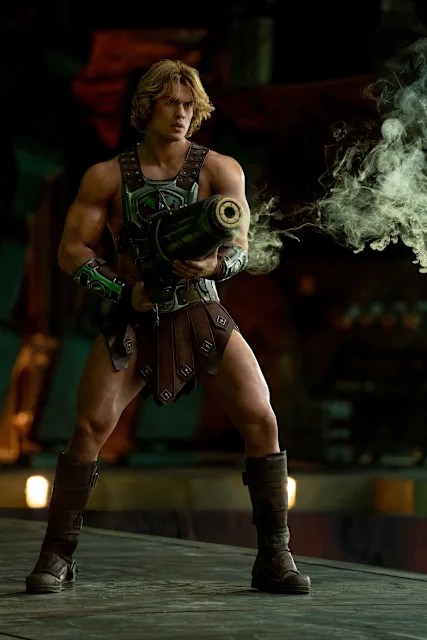
Considering how obsessively Hollywood panders to Gen X geeks nowadays, it is genuinely surprising that it’s taken almost 40 years for the IP to finally be revisited on the big screen. To that end, for those who grew up with it, perhaps the good news is that, unlike the earlier offering, the new Masters of the Universe is a very faithful rendering of the look and design of the original toys/cartoon, replete with the brightest of colors. Through a pictorially vibrant prologue that leans heavily on self-awareness, there is some initial promise rooted in how committed the movie is to the franchise’s visual bombast and larger-than-life aesthetic. And, for the first half hour or so, you do get the sense that the breezy, quirky tone could actually service this as well as it did Guardians of the Galaxy.
Unfortunately, the writers of the film had either one too many drinks throughout or are simply the type that don’t get out much, because the result is an excessively-campy and dull affair whose reliance on downright tomfoolery is the blunt manifestation of repressed libido. To put it differently, this is a very horny movie, but of the most groan-inducing kind. I suppose it’s fair to recognize that the homoerotic subtext of a fantasy filled with scantily clad beefcakes is ripe for the pickings. In that department, Masters of the Universe is not asleep at the wheel. However, it is also trying to generate thrills while constantly undermining itself. Its complete lack of confidence about the former ultimately results in a case of perpetual nervous laughter aimed inward. Often, it seems to have more in common with Austin Powers than with The Lord of the Rings. So is it a comedy? Is it satire or a spoof? Is it spoofing itself? Your guess is as good as mine.
What I do know for sure is what it’s not, and that would be a great adventure film. It doesn’t even strive to be a menial one. Which is a shame because the fundamental concept of a prodigal son returning to a world he has long-since abandoned so that he can embrace his role as its savior has the essential elements of the most basic myths. There is a reason why these themes still resonate centuries later, and why they are considered timeless. Masters of the Universe only embraces that in its logline. At its core, it is more interested in reminding us of the absurdity of its mythology and basically apologizing for it at every turn. When this exemplary case of self-sabotage is not jokingly self-referential, it is hamming up hero and villain tropes to such a degree that the reliance on juvenile sex jokes ends up seeming like the only logical match for such sordid kitsch. At its best, the movie is the product of the type of insecure, lazy writing whose sole purpose is to honor a highly dated source material, without ever once aiming to update it, expand upon it, or better yet, improve it. In other words, it never actually strives to be good, let alone great.
Taking all the aforementioned into account, you can’t help but wonder who exactly this is made for. While its faithful design clearly has Gen Xers in mind – as do Brian May’s and Queen’s contributions to the soundtrack – I don’t imagine that the overall approach will offer them much of anything in terms of genuine engagement, at least beyond the lowest common denominator. Conversely, the childish antics may probably connect with younger viewers on the surface, but most of the crass and bizarre humor will likely go over their heads. If I had to guess, the film could someday find a home in the midnight-screening circuit reserved for cultish fare of the gaudy variety.
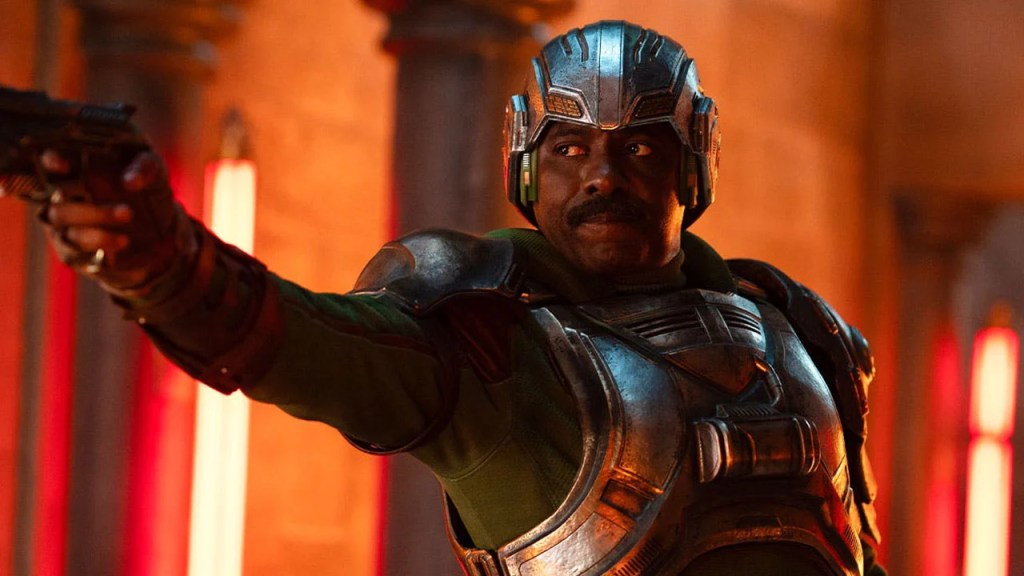
Another point that makes the movie a particular disappointment, at least for me, is that it is helmed by Travis Knight, who a few years ago went on to make Bumblebee, which was easily the best of the live-action Transformers flicks. That 2018 feature was the only one interested in giving a beating heart and proper emotion to another franchise based on a popular ‘80s toy line. Which is why, considering all this, it is astounding to see how much Knight has squandered He-Man’s potential beyond accurately depicting things like Castle Grayskull or the design of our hero’s sword. Often, the end result simply feels like the cinematic equivalent of a picture book aimed at novice readers, mostly free of text, except perhaps of the big and bold variety. Is this truly enough for 50-year-olds drawn in by childhood nostalgia? Say it isn’t so!

A common criticism bestowed upon the 1987 iteration was that it set the majority of its story on Earth, away from the luminous world of Eternia that the fantasy’s characters call home. Ironically, though the new Masters spends only half an hour in our planet before it sends the young Prince Adam/He-Man (Nicholas Galitzine) back to his land, which is the only section endowed with any sense of actual fun and whimsy. This sojourn cleverly allows the film to approach the whole mythology from an Earthly perspective, giving logical explanation to names like Ram Man and Trap Jaw that the toys proudly bore. The movie’s best scene occurs at a comic book shop, partly because it makes fun of nerds in the ways you would expect, which still don’t seem to get old. Somehow, though, the filmmakers think it wise to continue the geek attack while trying to build the very things that geeks gawk at. It is perhaps no wonder then that Galitzine seems much more comfortable as the bumbling Adam than as his heroic alter ego.

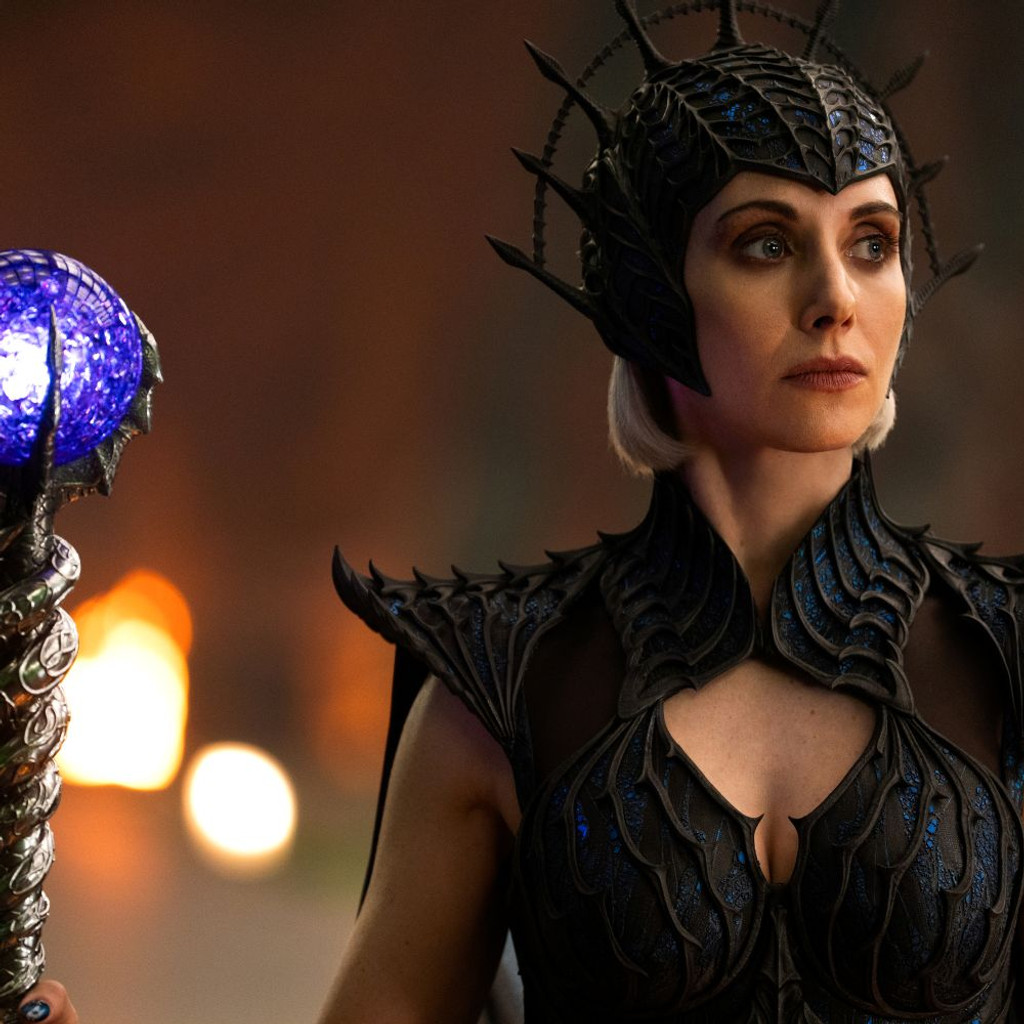
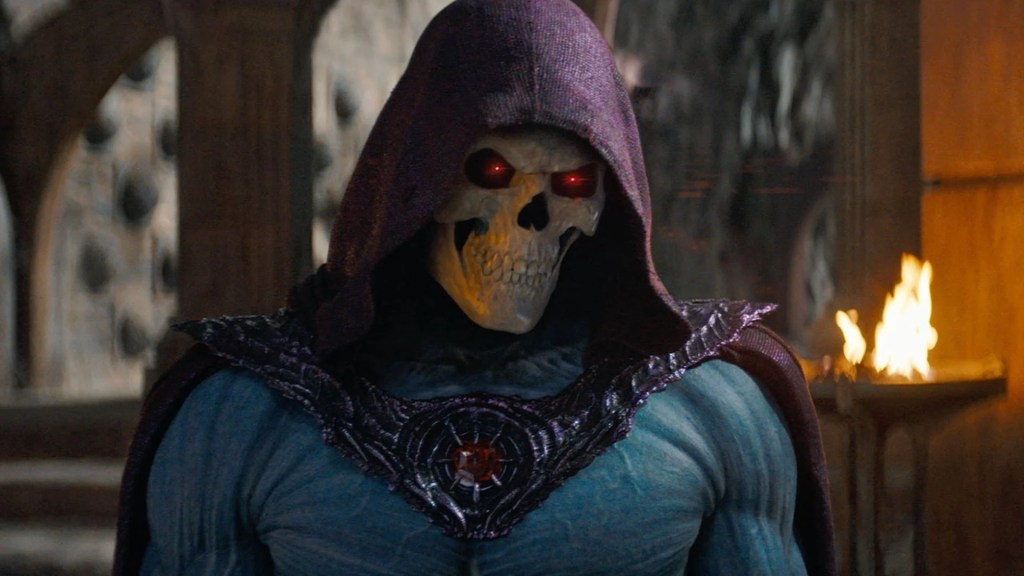
The movie’s solitary heroine, Teela, is a complete bore, partly because she is played by Camila Mendes, an actress who, despite looking like Mila Kunis, has less charisma than a wooden log. As her father Duncan (and Adam’s mentor), the always-magnetic Idris Elba does his best to direct his charm in every direction he can, but the script does him no favors. Perhaps unsurprisingly, who the script does have plenty for, albeit highly dubiously, is Jared Leto as Skeletor, the hooded walking corpse that is He-Man’s eternal nemesis. As played by Frank Langella in the 1987 film, he was an irritable megalomaniac modeled after The Emperor in Return of the Jedi, which meant he was also one of its few highlights, and willing to give it some actual weight. Leto’s version, on the other hand, is a flamboyant crybaby with a propensity to maniacally laugh like every campy villain is required to. Fans of the cartoon will correctly point out that this, along with the purple cloak and buff blue body, is all accurate. Still, I don’t think any child back in the day, however mature, picked up on the overt S&M vibes that Skeletor now shares with Evil-Lyn (Alison Brie) because there simply weren’t any. This erotic subtext might be forgiven, maybe even welcome, were the movie more interested in presenting him as a proper threat as opposed to a downright clown. That’s just never a good sign in tales about heroes and villains.
Speaking of Austin Powers, Masters of the Universe sees fit to literally rip off one of its best scenes in which Mike Myers, as Dr. Evil, brilliantly spoofed what happens in the seconds after supervillains laugh maniacally. That same scenario is transposed here onto Skeletor. Twice! It might have been funny the first time had it not already been done elsewhere, and substantially better at that. Which is why the insipidness of the reprise is opaqued by something more closely resembling an insult. If that weren’t enough, by the time the dopey skull face is inserted into a few of Adam’s imaginary flashbacks on Earth in truly ludicrous contexts, you start to feel like we’ve now fully devolved into SNL territory.
Dolph Lundgren, who played He-Man nearly 40 years ago the first time around, makes a light cameo that intentionally nods to and celebrates the film he starred in. That scene would have more charm and hit like a welcome surprise were it not for the fact that this sort of stunt has become almost standard practice whenever Hollywood revives old properties. Perhaps even less surprising is that, despite what we’ve been left with, the movie somehow manages the nerve to include some post-credits sequences that hint at potential sequels. I hope I’m not alone in thinking that they should do us all a favor and please stop now.
Masters of the Universe is now playing in theaters.

