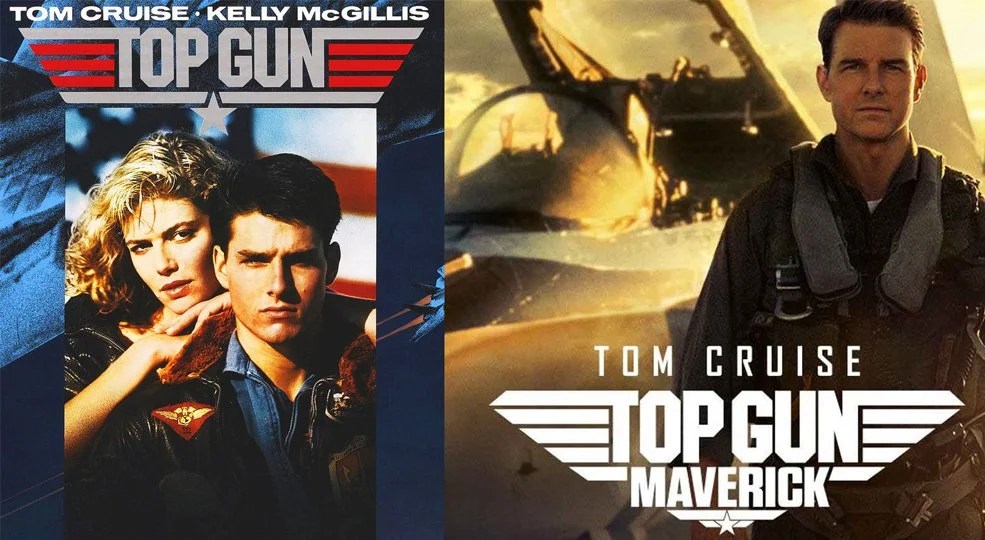
Top Gun: 3 out of 5 stars
Top Gun: Maverick: 5 out of 5 stars
By J.C. Correa
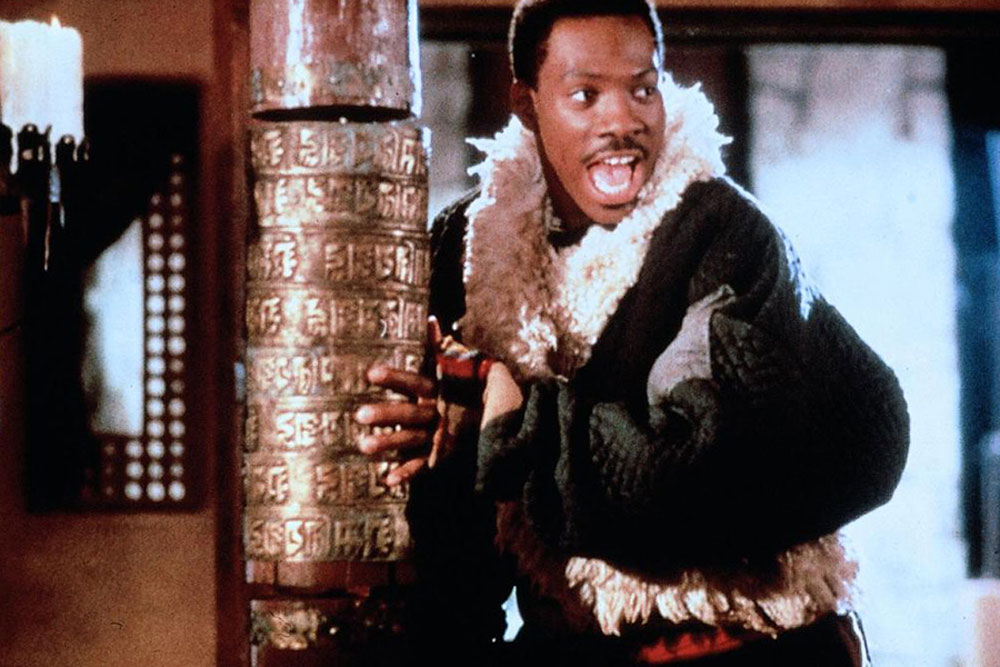
One afternoon in early 1987, my uncle, a former aviator, took me to the cinema to see a new Eddie Murphy movie called The Golden Child. At that point I had only heard of Murphy and seen his image on posters. As an 11-year-old, I was unfortunately still too young to be properly exposed to the R-rated sensibilities of Beverly Hills Cop or 48 Hours. The Golden Child, however, with its PG-13 rating, was an attractive proposition, one that I instantly jumped at as soon as my uncle pitched it. Typical of him, though, he was very picky about which theater to go see it at, which strongly depended on what movie it was paired with as part of a double feature. Back then, you see, I was in the midst of a four-year stint living in Ecuador, and in those days new films always played there in a double feature engagement.
Though the Murphy movie was undoubtedly showing in a handful of cinemas across the city of Quito, my uncle insisted that we go see it at the one that was also playing, with it, a picture going by the title of Pasión y Gloria (Passion and Glory). In fact, based on how he was selling me on the afternoon outing, you would think that Pasión y Gloria was indeed his end game, and The Golden Child merely a necessary inconvenience along the way to get there. While I was a little boy, my uncle had passed on his love of aviation to me, and he cashed in on that then by telling me that Pasión y Gloria was indeed every airplane lover’s nirvana, and something simply not to be missed. This all sounded pretty good, so I didn’t resist. As it turned out, that day was when I first laid eyes on the legendary Murphy and laughed at all of his hijinks. Yet, by virtue of seeing the other movie, I also experienced an adrenalin rush like never before; the need for speed if you will. Indeed, I was a latecomer to the thrills of Pasión y Gloria, as the film had been a monstrous hit around the world the year before, where it was released in most markets under its original (and far better) title: Top Gun.
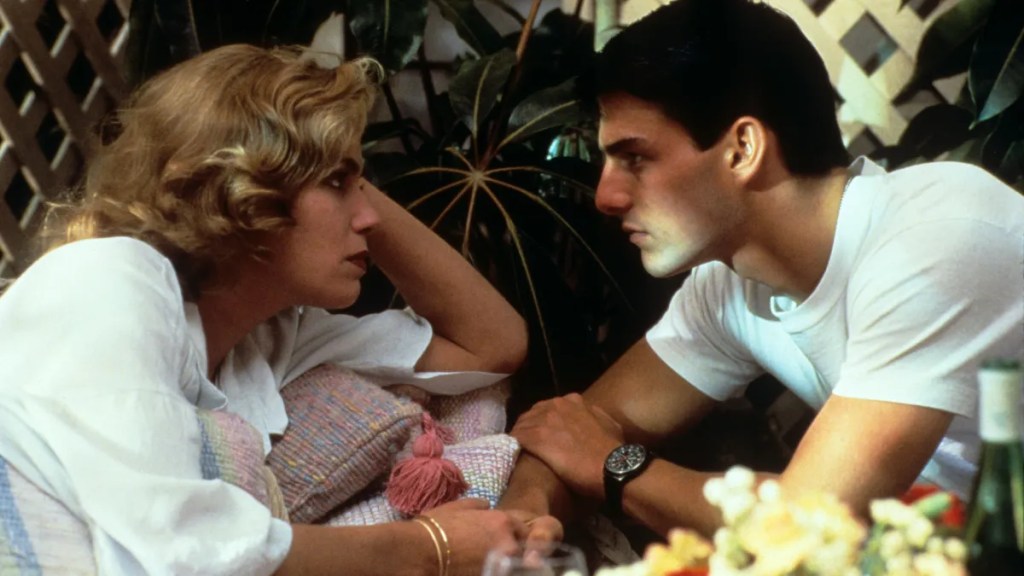
As an impressionable pre-teen, I learned quite a few things from Top Gun that day, and from the two or three other times that my uncle took me back to the same theater to see it again. For starters, though my diet of movies was already quite extensive at that age, it had been strictly limited to the PG variety. In this regard at least, Top Gun was no different. Still, even the James Bond pictures had refused to educate me on something vital: The fact that when human beings passionately make out, the tongue is very much an active participant; something that Tom Cruise made very clear by how his prowled inside Kelly McGillis’ mouth, despite being in silhouette the entire time. The film also made me aware of the concept of aspect ratios, and how these can wildly vary from picture to picture. This point was easy to grasp when viewing Top Gun in all its wide, 2.39:1 glory next to the more compact, 1.85:1 presentation of The Golden Child. I remember thinking that Top Gun was intentionally challenging my periphery, making a statement about its supposed grandiosity. I never watched films again the same way, at least not without taking this into account. Lastly, much like Rocky IV had done the previous year, Top Gun taught me the importance of having a kick-ass soundtrack of hip tunes to accompany the visuals, and that owning said collection on an album would be as essential as owning the movie on VHS one day.
It’s no secret that after becoming the biggest box office hit of 1986, Navy enlistments in the United States shot up a gargantuan percentage over the next months following its original theatrical release on May 16 of that year. Since then, just over four decades ago, the film has gone on to cement its place in pop culture, at the very least as one of the defining properties of the 1980s, wholly representative of their kitsch and excess. For young Americans who grew up in that decade – particularly boys – with its jingoistic worldview and brash attitude, Top Gun likely served as one of the primary tenets of their American identity. Of course, I am undoubtedly speaking about myself here, but I also strongly suspect I am far from alone in this. In fairness, though, the movie’s legacy far exceeds that of functioning as merely a slice of the Reagan-era politics of its day. As Lt. Pete “Maverick” Mitchell, the hotshot, daredevil pilot with a massive chip on his shoulder, it instantly sent Cruise into a stratospheric level of superstardom from which he has yet to come down. But the film also served as a platform from which many great careers were launched, including those of Val Kilmer, Anthony Edwards, Meg Ryan, Tim Robbins, and McGillis. Furthermore, the movie was primed to explode due to its willingness to appropriate and exploit a visual language strongly informed by the nascent MTV phenomenon of the time. For better or worse, it is something that more or less continues to this day in popular cinema.
Two weeks ago, in celebration of its 40th anniversary, Top Gun was re-released in cinemas around the world, along with its 2022 sequel, Top Gun: Maverick. Naturally, it was an offer I couldn’t pass up. And with all due respect to Eddie Murphy, this was a substantially better double feature than the one I was exposed to back in early ‘87. It was fun seeing Top Gun again on the big screen and being reminded of the initial impact of aspect ratios and French kisses. But it was also a good opportunity to carefully deconstruct all of the characteristics that not only made it immensely popular in its day, but also very much a dated product of that time. While the plethora of aerial sequences that director Tony Scott constructed with kinetic fervor still hold up, a great deal of Top Gun is actually paper thin from a story perspective, if not outright silly. Its plot, which depicts a group of young Navy pilots in a perpetual penis-size contest as they train at an elite flight school to determine who’s most fit for the danger zone, while occasionally stopping for homoerotic games of beach volleyball with each other, is certainly kitschy and fairly laughable. Ditto the way in which the film suddenly sends its main characters on a nondescript mission the very second that they all graduate from the movie’s namesake academy. It’s clearly just ticking the expected boxes. None of this, of course, is important in the end. It’s simply the way in which Scott honored the impassioned pitch of producer Jerry Bruckheimer and his partner, the late Don Simpson, by staging something that resembled the dogfight in Star Wars, but with F-14s. As the box office receipts certainly proved, it was something that very much resonated with young men who, at the time, were in the thick of discovering their testosterone.
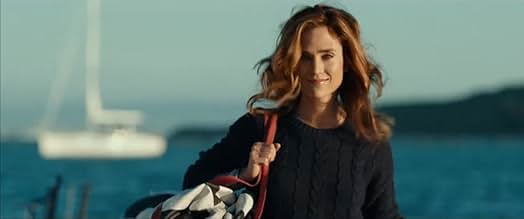
When you get past all of this, however, and remove the nostalgic, rose-colored tinted glasses, the one thing that remains clear after all these years is that, at its heart, Top Gun is a story of friendship. Of brotherhood, if you will. And the relationship between Cruise’s Maverick and Edwards’ Goose is not only absolutely central to the tale but is also the point from which the film derives most of its drama. Top Gun: Maverick understood that very well and therefore leaned on it very heavily. It’s a decision that allowed it to work not just as a vastly superior sequel, but one that likely exceeded anyone’s expectations by surpassing the original on every conceivable level. Along the way, it also made Glen Powell a star, further raised Miles Teller’s, and reminded us of why we love Jennifer Connelly.
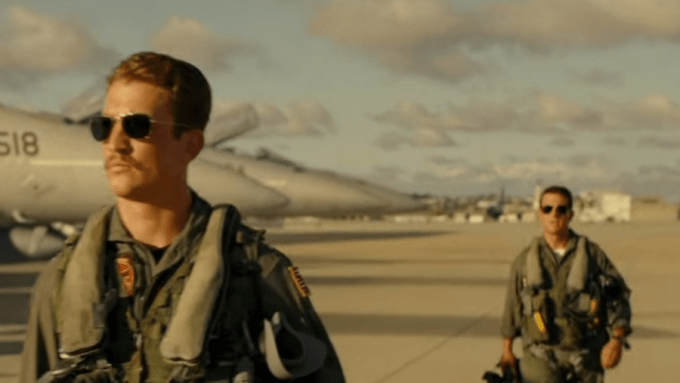
Top Gun: Maverick was directed by Joseph Kosinski, who took over the reins from Scott, after the latter’s tragic death in 2012. In fact, Scott had apparently been attached to the project for quite a long time before that. In the end, though, it was Bruckheimer, and, to a large extent, Cruise, who saw it across the finish line by ensuring that the movie honored and respected the legacy of Top Gun in a way that actually aimed to elevate it. Maverick is not a retcon job in any capacity, but rather, a film willing to take its subject matter very seriously by raising the stakes considerably, and in turn, the drama. Unlike the original, the sequel is always pointing towards the pilots’ mission in the third act and consistently underscores how precarious it all is. By the time it reaches its thrilling climax (an ironic nod to the one from the original Star Wars), it’s firing on all cylinders as a character piece as well as an action spectacle. But its smartest move is probably the decision to keep the character of Maverick more or less unchanged from the first time around, despite being older and just a little wiser. This allows Cruise to revisit what is arguably his most iconic role in much the same way that made fans fall in love with him in the first place. The movie essentially has its cake and eats it too, expertly balancing nostalgia with daring innovation, while never falling short on pathos.
Watching the two pictures back-to-back undoubtedly amplifies the shortcomings of the first one. Part of this is also due to the fact that Maverick was partially shot with IMAX cameras, which helps it achieve an epic scale that its predecessor lacks by comparison. The fact that this anniversary re-release was exclusively booked on IMAX screens only helps to cement that point. However, in spite of all this, I doubt that the sequel’s very existence has in any way erased the appreciation for the original that most Gen Xers who grew up with it probably still keep alive in their hearts. If anything, the second film only confirmed that whatever emotions they felt the first time were very much valid.
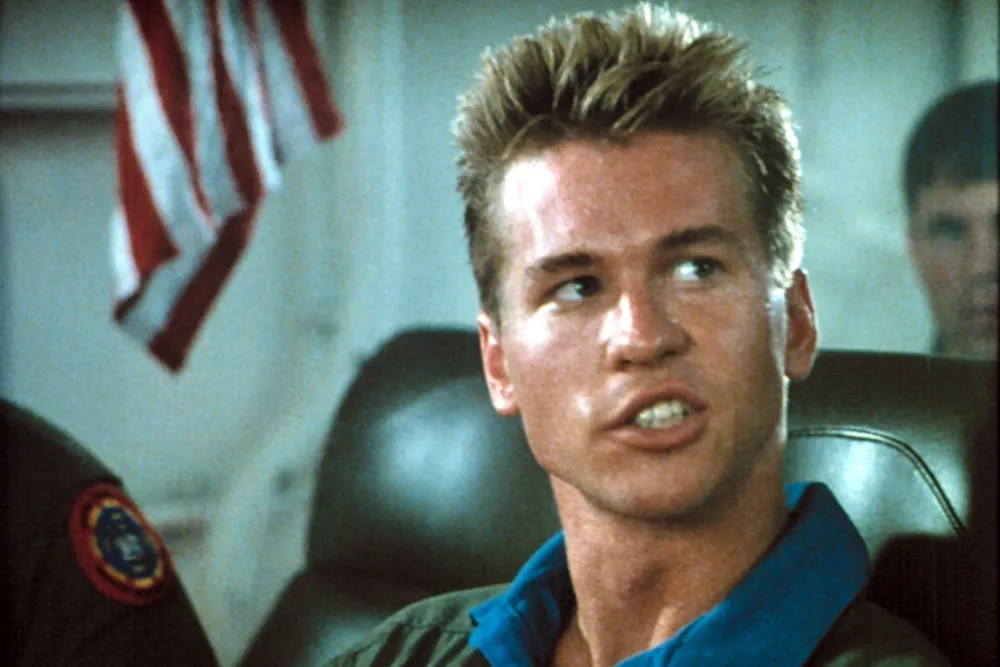
My uncle recently passed away at the age of 90. In one of my last interactions with him, he didn’t seem to remember Top Gun at all; his mind clearly the victim of the kind of pronounced memory loss that plagues most elders. As such, I also strongly suspect that he never actually got to see Top Gun: Maverick, either in the theaters or otherwise, which is a shame. If he had, I know with absolute certainty that he would have loved it. And he never would have been more right.

