By Joe Puccio
It’s fairly safe to assume that the vast majority of employees working for the World Wrestling Federation (WWF, now known as World Wrestling Entertainment, or WWE) in the latter half of the 1990s were not on Eric Bischoff’s Christmas card list. David Sahadi, however, would’ve had no reservations in exchanging pleasantries had the admittedly exaggerated situation ever presented itself.
“Eric was perceived as the enemy when he was kicking our ass,” recalled Sahadi, during a recent chat with Generation X Wire, referencing the nearly two-year span when chief competitor World Championship Wrestling (WCW), led by Bischoff, overtook the once dominant WWF in the television ratings battle between WWF Monday Night Raw and WCW Monday Nitro. “Vince (McMahon, Chairman and Chief Executive Officer of the WWF at the time) wanted everybody in the company to despise Eric. And everybody did – except for me. I didn’t know him personally back then, but I actually respected him. He was doing things that I wished we were doing. I just remember thinking that this guy’s onto something. And sure enough, he was.”
Now, thirty years later, Sahadi and Bischoff are finally working together, in the form of Real American Freestyle (RAF), a legitimate, unscripted professional wrestling league co-founded by the late Terry “Hulk Hogan” Bollea, that focuses on real, competitive freestyle wrestling instead of scripted sports entertainment. The irony of being a colleague of Bischoff’s, RAF’s Chief Marketing Officer (CMO), isn’t lost on Sahadi. “He was the so-called enemy back in the day. And now we’re collaborators and I love it. He’s a great person to work for,” Sahadi acknowledged. “I had two teachers during the Attitude Era (an adult-oriented period in wrestling that lasted from 1997 through 2002). One was the man I worked for, Vince, and the other was the man I was competing against, Eric. They both taught me how to become better creatively, how to push the envelope, and how to tell stories.”
While the New York City-born Sahadi has worn several hats throughout his professional career, his work as a multimedia producer is the vocation that has awarded him unanimous praise within the popular sport of wrestling. Known for his revolutionary, ahead of its time production techniques, Sahadi’s ideas included the ambitious opening montage for Raw in 1995 of a band playing atop Titan Towers, then the WWF’s corporate headquarters, while a helicopter circled the roof, as well as the gradual implementation of stylistic black and white retro videos.
“When I joined the WWF, I had just come from a sports background, so I brought that mentality to the product. I really wanted to bring credibility to the athletes because I felt they were more than just cartoon characters,” Sahadi explained. “I came from a world of Michael Jordan and Tiger Woods and now I was around Doink the Clown and Nailz. Initially, I wondered what I had gotten myself into.”
Sahadi, who graduated from Manhattanville University with a bachelor’s degree in mathematics, obtained a part time gig at NBC Sports, with assistance from his prolific sports writer father Lou, as a “logger,” a job which required him to watch football and take a detailed record of the events of the game in order to help with the production of highlight reels. “Could I have asked for a better first job? It was only one day per week, on Sundays, and I was covering my hometown New York teams,” he beamed. From there, Sahadi began working in the sports promotions department as a production assistant, which led to a promotion as the Manager of On-Air Promotions. “My dad was a rock star, but I didn’t realize it at the time. He was just dad,” he stated. “That realization eventually prompted me to write a memoir about him a few years ago called My Dad My Dying Sun: A True Story of Love and Legends. He was so humble and acted like a father and nothing else when he was with me and that’s what I loved most about him.”
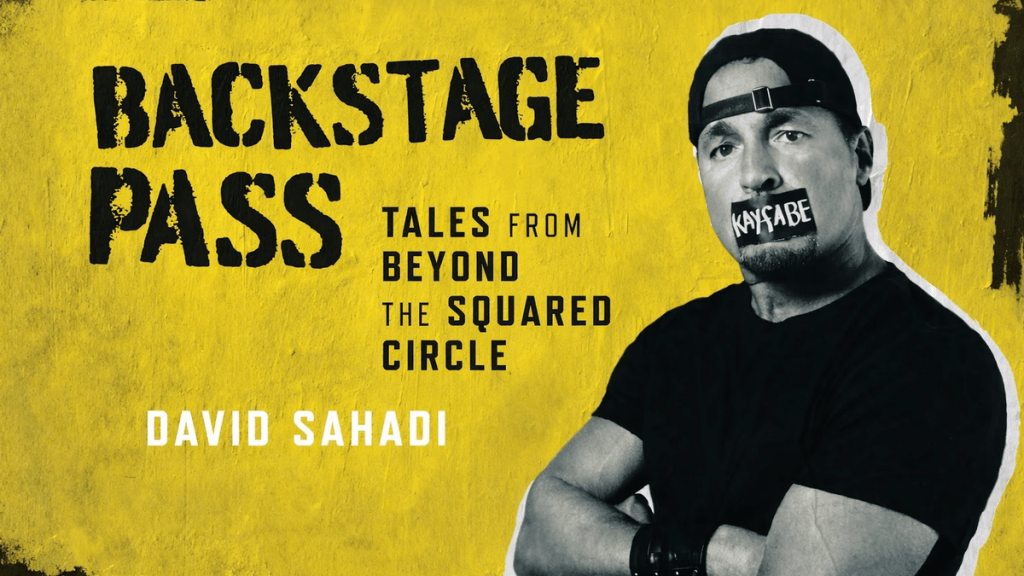
Sahadi’s latest book, Backstage Pass: Tales from Beyond the Squared Circle, is a riveting, firsthand account of the often-incredulous occurrences of what happens beyond the wrestling ring. It’s loaded with behind-the-scenes drama, nefarious betrayal, and never-before-told anecdotes from the talented director.
One such story involves Sahadi’s boss, McMahon, and the unusual circumstances surrounding their first time meeting in person. Sahadi knew of McMahon’s reputation for being a dominant alpha male, but what he encountered that day proved to be the complete opposite. “He was wearing this gaudy workout outfit with zebra stripes and had a bright red hat on,” Sahadi laughed. “And he was playing with a remote-control toy car in his office. He told me that the main thing they like to do in the WWF is have fun. He charmed the hell out of me that day and he was basically that way with me the entire time I was there.”
As for McMahon’s well publicized departure from the company resulting from the sordid sexual assault allegations leveled against him, Sahadi, not one to mince words, has a strong opinion on the subject. “The stories very well could be true,” he remarked, matter-of-factly. “But I can’t judge him by that because I wasn’t part of it and was not a witness to it. I can only judge somebody by how they treat me. And Vince treated me with respect.”
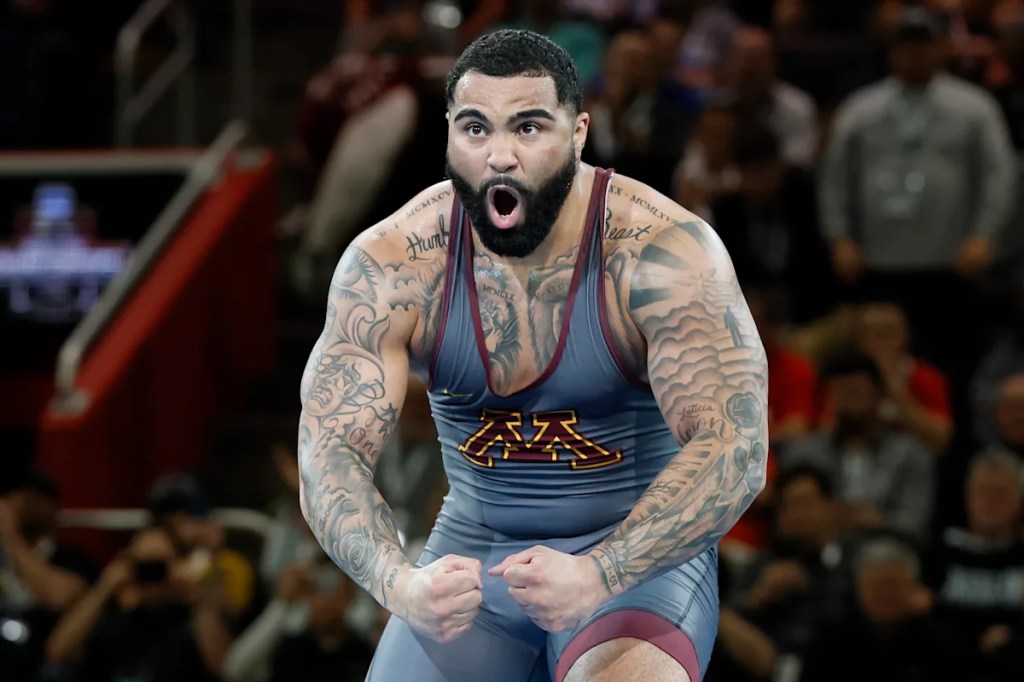
One of the more interesting narratives recounted by Sahadi concerns Dwayne Johnson, arguably the most successful wrestler-turned-actor in history. Before Johnson achieved monumental fame as The Rock, he was known as Rocky Maivia, and was anything but an overnight sensation, struggling to find his path in the ultra-competitive wrestling landscape. “Here’s a kid who I befriended when he was a nobody, taking him out to dinner, helping him during his shoots,” Sahadi clarified. “But then his ego blew up. He changed completely.” Sahadi details a particularly upsetting encounter with Johnson in his book, ultimately catching the superstar in an embarrassing lie. “It’s going to hurt some people’s perception of The Rock and I’m sorry for that. But it is what it is.”
While Sahadi grew up a fan of a completely different era of the game, when names like Gorilla Monsoon, Ivan Koloff, and Bob Backlund ruled the roost, he managed to again enjoy the product not only during his WWF/WWE tenure, but also throughout his stints with Total Nonstop Action Wrestling (Impact Wrestling/TNA) and Major League Wrestling (MLW). Currently, however, he doesn’t follow much modern wrestling. “It’s hard for me to watch it now,” he admitted. “We were breaking new ground every week for several years. But lately it’s become a cut and paste affair. Everything’s the same.”
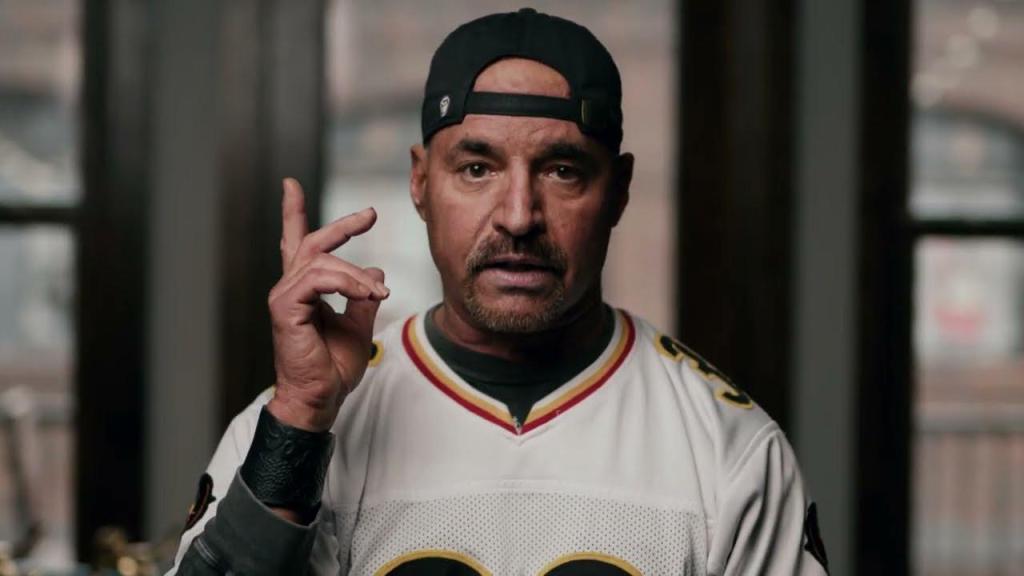
These days, it’s Real American Freestyle that truly excites Sahadi, now a resident of Chattanooga, Tennessee. In addition to working on a book, tentatively titled The Rise of RAF, The Dawn of RAF, there are plans to expand the company via television shows, touring, and beyond. “Our audience is growing consistently. I think it’s going to be the next UFC (Ultimate Fighting Championship) within a year,” he contended. “It’s a really exciting brand.”
Reflecting on his fruitful career, Sahadi offers a bit of poignant advice. “If you’re uncertain about what you want to do in life, find your passion, what brings you joy, what makes your heart smile, even if it’s in an entry level position,” he opined. “You’ll ascend quickly because it won’t feel like work. It’ll be a joy, not a job. And every few years, reinvent yourself, and you’ll never stop growing.”
A quick examination of Sahadi’s life – from NBC all the way to RAF – makes his points hard to argue with.
Order Backstage Pass: Tales from Beyond the Squared Circle on Amazon here.
Order Backstage Pass: Tales from Beyond the Squared Circle on Barnes & Noble here.

