By Joe Puccio
There is a fifth dimension, beyond that which is known to man. It is a dimension as vast as space and as timeless as infinity. It is the middle ground between light and shadow, between science and superstition, and it lies between the pit of man’s fears and the summit of his knowledge. This is the dimension of imagination. It is an area which we call The Twilight Zone.1
Echoing its moniker, the first Golden Age of Television left behind an abundance of programs that are still fondly remembered today, some 70 years later. The said period, spanning the late 1940s through the early 1960s, unquestionably produced its share of enduring entertainment across an eclectic array of genres, such as comedy (I Love Lucy, The Honeymooners), variety (The Ed Sullivan Show, The Mickey Mouse Club), westerns (Hopalong Cassidy, The Lone Ranger), and even professional wrestling (Gorgeous George Wagner, Bruno Sammartino).
Perhaps none, however, have left a mark quite as indelible as an unassuming black and white anthology series named The Twilight Zone.
Tackling complex themes as broad as racism, aging, McCarthyism, nuclear war, death, and the societal effects of technology, the show certainly never shied away from any of the difficult motifs experienced in our country, many of them to this day.
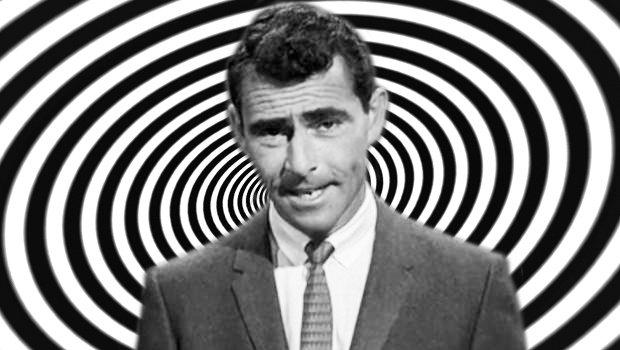
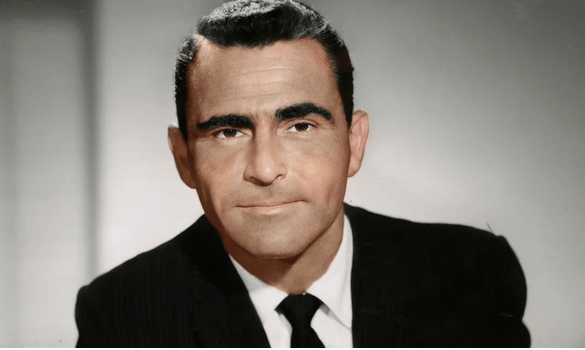
The architect behind the radical creation was Rod Serling. While small screen viewers are undoubtedly familiar with the upstate New York-born personality for his weekly introductory narration of each episode, his contribution to the television medium stretches much further.
“With The Twilight Zone, he made something that is still a very viable cultural touchstone for quite a lot of people,” exclaimed Joseph Dougherty, in a recent conversation with Generation X Wire. “And it’s relevant today.”
Dougherty, a veteran television producer, writer, and director on series such as Judging Amy, Saving Grace, and Pretty Little Liars, is a lifelong fan of Serling’s with a unique initial connection to him. The future Emmy Award winner (for thirtysomething) was a student at the State University of New York at Albany in 1975 when Serling just happened to be booked for a lecture at the school.
Dougherty, a late arrival to a crowded, casual, pre-event gathering, ended up seated on the same couch as the venerable guest of honor, and fortunately – or perhaps, unfortunately – was granted the opportunity to ask a question of the man he admired. “Why was it necessary for Burgess Meredith’s character to break his glasses at the end of “Time Enough at Last?” To be fair, it’s a valid query, especially for such an avid admirer of Serling, although, in hindsight, Dougherty felt it was a bit uninspired. A response of “nuclear war shouldn’t work out well for anyone” was perfectly sufficient. That was the extent of the personal relationship the two shared. Tragically, not too long after their sole meeting, Serling passed away from a heart attack at just 50 years old.
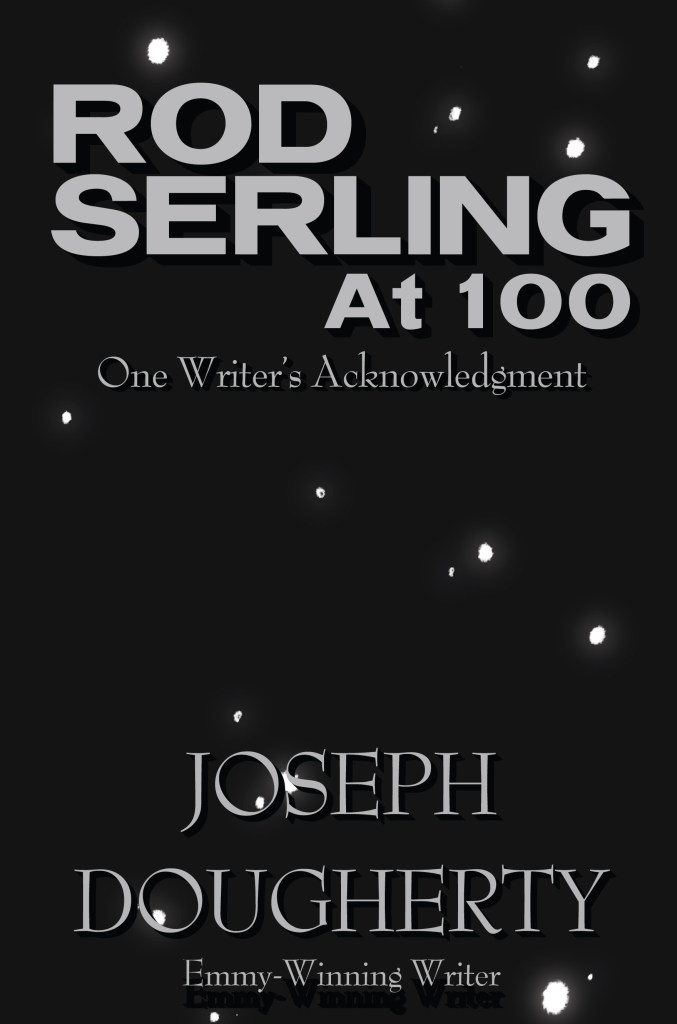
Rod Serling at 100: One Writer’s Acknowledgment [Fayetteville Mafia Press; November 2024], timed to coincide with the centenary of Serling’s birth, is Dougherty’s exploration into the icon’s fascinating life. It was Serling who inspired the author to pursue his own writing vocation. “My career started ten years after Serling died, but he remains central to how I look at what I do,” shared Dougherty. “This book is my way of saying thank you to the storyteller who first pushed me away from the dock toward a career as a writer.”
Incredibly, Serling wrote a whopping 92 of the 156 total episodes of The Twilight Zone’s five season run between 1959 and 1964. Along with Charles Beaumont and Richard Matheson, who also penned a substantial share of the scripts, the trio’s unwavering commitment to the show was evident in its sheer quality. “If Serling hadn’t been involved in as many of them as he was, I don’t know if we’d still be talking as much about the series today. It would be a different show,” opined Dougherty. “Although he would’ve been healthier. He wanted us to pay attention to what was being said and he had a lot to say. And he was impatient and you can hear the impatience in his narration. But he took his work very seriously and I think it ultimately burned him out and shortened his life.”
One aspect of Serling’s storytelling discovered in Dougherty’s research was his knack for providing a decidedly different experience obtained by multiple viewings of episodes, in part by manipulating viewers’ emotions. One example is apparent in “One for the Angels,” in which a pitchman is visited by Mr. Death. “I rewatched many episodes and was pleasantly surprised to see things I never noticed,” explained Dougherty. “Did Lew Bookman actually outsmart Death? Or did Death allow it to happen? There were others, like “In Praise of Pip,” in which a father’s wish was to see his dying son one last time, and “Deaths-Head Revisited,” where a former Nazi returns to the Dachau concentration camp that he ruled. I’ve found that in The Twilight Zone, you may not get what you want but you always get what you’ve been asking for.”
Although the majority of installments were 30 minutes (25 minutes with commercials), the fourth season changed course a bit by producing hour-long (51 minutes with commercials) chapters, the result of a CBS demand to fill a time slot. The directive didn’t please Serling, nor the production crew, who felt the previous running time was ideal, not wanting to expand for no reason. “Their quality is all over the map,” acknowledged Dougherty. “Miniature” is remarkable and “On Thursday We Leave for Home” is possibly the best hour of television that Serling ever wrote. It’s epic. But you do feel like they could’ve been shorter.”
To be clear, Rod Serling at 100: One Writer’s Acknowledgment isn’t only about The Twilight Zone. Dougherty deep dives into Serling’s fairly idyllic childhood, his traumatic World War II tour of duty, his early work in theater and radio, and Night Gallery, the early 1970s “extension” of The Twilight Zone, featuring stories that leaned heavier on horror than its predecessor. “When I first watched Night Gallery, I was disappointed because it wasn’t The Twilight Zone,” admitted Dougherty. “I didn’t understand the production problems with it and the creative issues that Serling had with it.”
Dougherty does, however, feel the show is worth seeking out. “There are definitely some gems there,” he contended. “If you’ve never seen it, you should watch the pilot, which was three stories written by Serling. The middle one was directed by a young Steven Spielberg.”
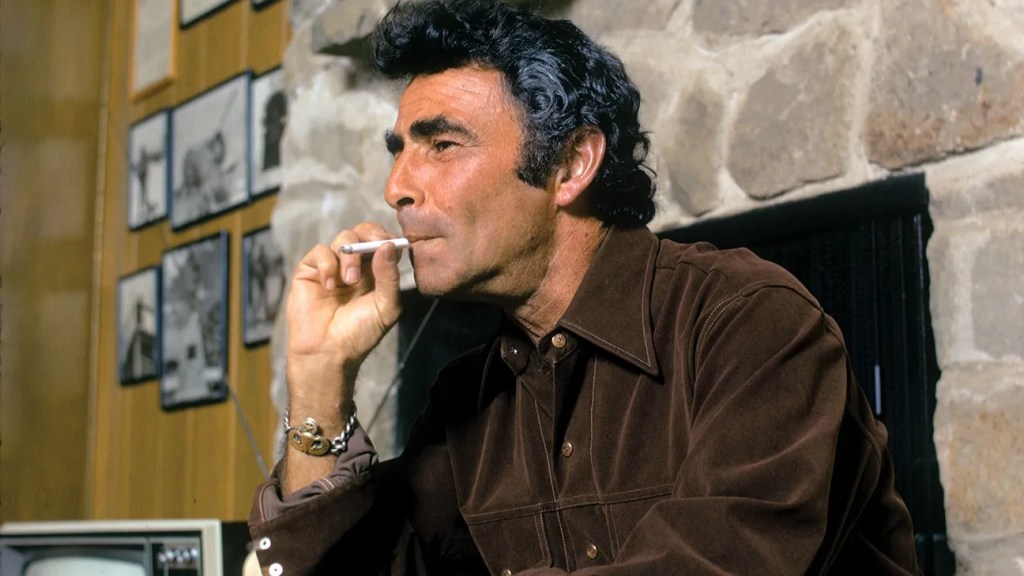
Serling’s influence on Dougherty, while palpable, might not be obvious to everyone. His habit of sprinkling in Easter eggs, or hidden references, in his work (“A Stop at Willoughby” in thirtysomething and “One More Pallbearer” in Pretty Little Liars, to name a few) is a small, yet significant, tribute to the man who means so much to him. And although Serling’s own reflection on his lasting legacy is extremely modest2, the fact that historians are still discussing him 66 years after The Twilight Zone premiered speaks volumes. “I recently spoke to a few teachers who have been bringing episodes into their classrooms,” stressed Dougherty. “It’s not outdated at all.”
1Rod Serling (Season One of The Twilight Zone)
2“I’ve pretty much spewed out everything I have to say, none of which has been particularly memorable. I’ve written articulate stuff, reasonably bright stuff over the years, but nothing that will stand the test of time. The good writing, like wine, has to age well with the years, and my stuff has been momentarily adequate.” – Rod Serling, 1972.
To order Rod Serling at 100: One Writer’s Acknowledgment from Amazon, click here
To order Rod Serling at 100: One Writer’s Acknowledgment from Barnes & Noble, click here


One response to “Dougherty’s Rod Serling Book is in the ‘Zone’”
This was very well written and has enticed me to find this book so I can read it from beginning to end.
LikeLiked by 1 person