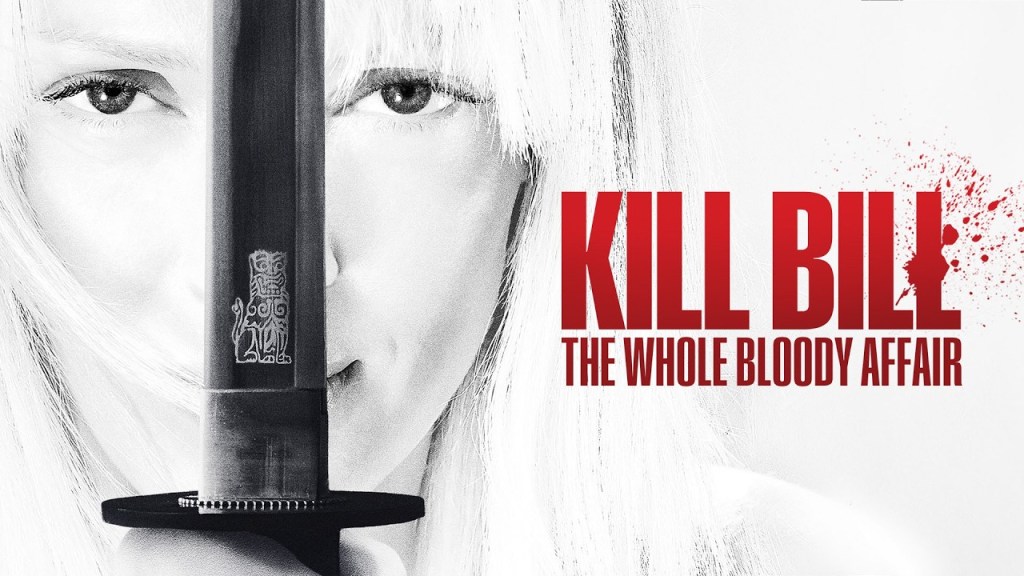
Kill Bill: The Whole Bloody Affair
3.5 out of 5 stars
By J.C. Correa
Sometime around the year 2000, a friend of mine and fellow cinephile completely wrote off Quentin Tarantino in a conversation we shared by saying that he was, after three movies, effectively “done” as a filmmaker. This was, in my estimation, a rash assessment, when taking into account the high acclaim bestowed upon his first two pictures, Reservoir Dogs and Pulp Fiction, and particularly the seismic cultural impact of the latter by way of how nearly everyone in Hollywood had since tried to emulate it. I concluded that my friend’s condemnation was more directly influenced by how the director’s third feature, Jackie Brown, had, at the time at least, been met with a reception that generally failed to live up to the dazzling thrust of his initial oeuvre in the eyes of many.
Tarantino would wait another three years to make his next cinematic statement, surely making my friend feel further validated in his belief. That statement, however, would eventually turn out to be Kill Bill, his glossy, highly-kinetic, stylistically-supercharged revenge fantasy, which he infamously split into halves – in this case, “volumes” – the first of which saw the light of day in October of 2003. Regardless of your level of affinity for Kill Bill: Vol. 1, the one thing that could not be denied was that its creator undoubtedly still knew how to make a movie, and more specifically, different types of movies; a point which the subsequent release of Vol. 2 six months later further underscored.
I sadly lost touch with my impassioned friend in the interim time, but I always thought of him in light of this, wondering what he had made of Tarantino’s not-too-subtle way to re-emerge into the cultural scene. After all, the eccentric auteur had made it a point to re-announce himself with a vengeance (quite literally), and now it looked like he was here to stay. The Kill Bill pictures were generally embraced by the public and went on to be hits, and Tarantino has essentially never looked back. Until now that is. Sort of.
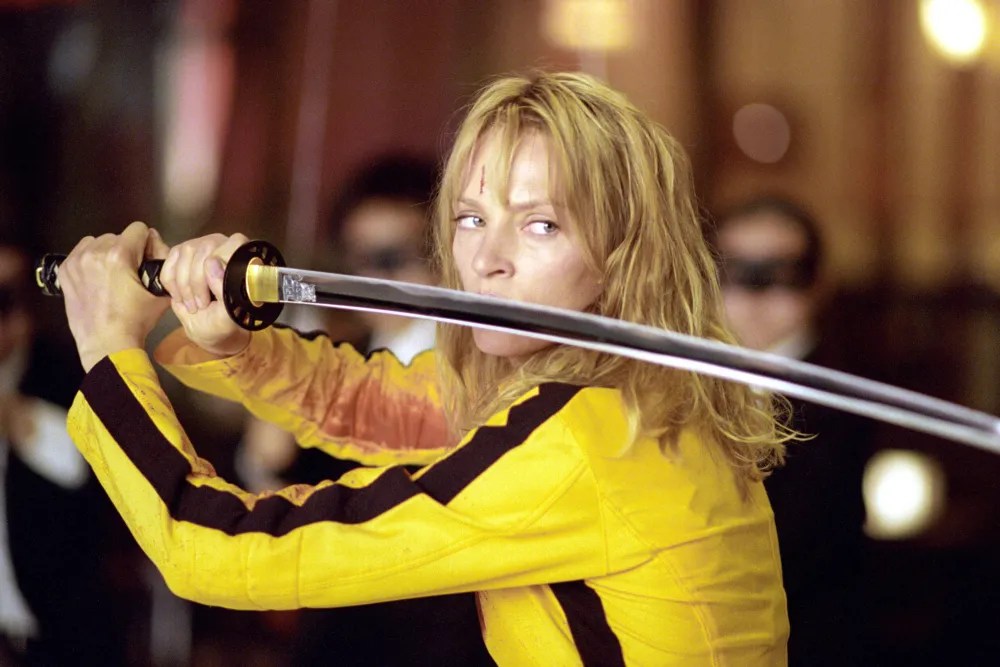
Since their initial release over twenty years ago, I always chose to consider these features not as separate entities, but rather, as part of a complete work. As the story goes, the project’s executive producer (and future convicted rapist) Harvey Weinstein was clear on the fact that releasing a 4-hour movie back then severely compromised its bankability, and thus, insisted that Tarantino slice the work in half. The filmmaker quickly acquiesced, partly because this division allowed him to indulge in his cinematic obsessions by crafting two halves that decidedly embraced different genres, tones, and styles. As such, Vol. 1 functioned as an homage to kung fu/martial arts films and exploitation cinema, while Vol. 2 was primarily a more subdued neo-western. The first one was quite kitschy and viscerally thrilling, while the second embraced a meditative and verbally loquacious spirit. Regardless of these marked contrasts, the general drive of the story, involving an unnamed Bride and former assassin seeking violent retribution against the vicious killers she worked with, all of whom left her for dead, was enough for me to see past it all and want to embrace it as a solid whole.
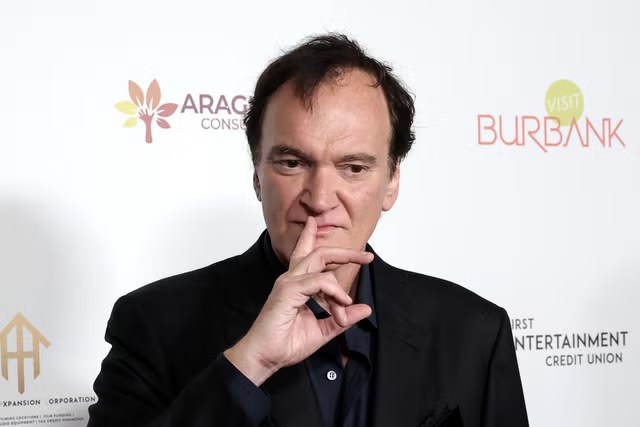
Which precisely brings us back to Tarantino and his original intent. Gradually, in the years since, it became known that a complete, unedited, and slightly altered version of the picture, a director’s cut if you will, not only existed, but had been screened from time to time as a sort of special event, one-off kind of thing. That is, of course, until this past December, when the man himself decided to officially bring Kill Bill: The Whole Bloody Affair to theaters across North America, followed by an expansion in the ensuing months into international markets. As it turns out, viewing the story in this manner is a thrilling, satisfying, but also strangely disorienting experience.
Before I get into the obvious differences that are on display, it is probably worth reassessing and highlighting the strength of the initial work itself. Kill Bill may be among Tarantino’s most popular projects – especially among the fanboy community – but it has always been flawed and ultimately lacking the transcendent qualities of some of his other movies, which are thematically richer and dramatically weightier. Part of this has to do with the fact that Kill Bill is essentially little more than Tarantino using a very basic story to unapologetically indulge in all his cinematic fetishes. Through it, he gave himself the opportunity to look back a lot (and tip his hat in all directions), but rarely actually look forward.
Still, it’s impossible to deny the effortless visual dexterity with which he shot his material, and the thrilling impact that that generated. During the promotional tour of Vol. 1, he made it a point to highlight that filmmakers cannot truly earn that title unless they can properly direct action. Though he hadn’t much worked in that capacity until then, his fourth picture was hammering that point to the ground, and then some. The movie showed that Tarantino possessed an absolute understanding of how to efficiently move his camera – especially during the “Showdown at House of Blue Leaves” sequence that caps off Vol. 1 – as well as of the dynamic effect that things like smash zooms, close-ups, and slow motion (when used sparingly) could create. Sound design was also employed to an outstanding degree, particularly when emphasizing the harrowing, living burial of Uma Thurman’s terrified Bride during one of Vol. 2’s earlier chapters. For all the flashy glory of its predecessor, that moment, and her subsequent escape, set to the strains of Ennio Morricone, which Tarantino wonderfully repurposed, are still Kill Bill’s finest hour.
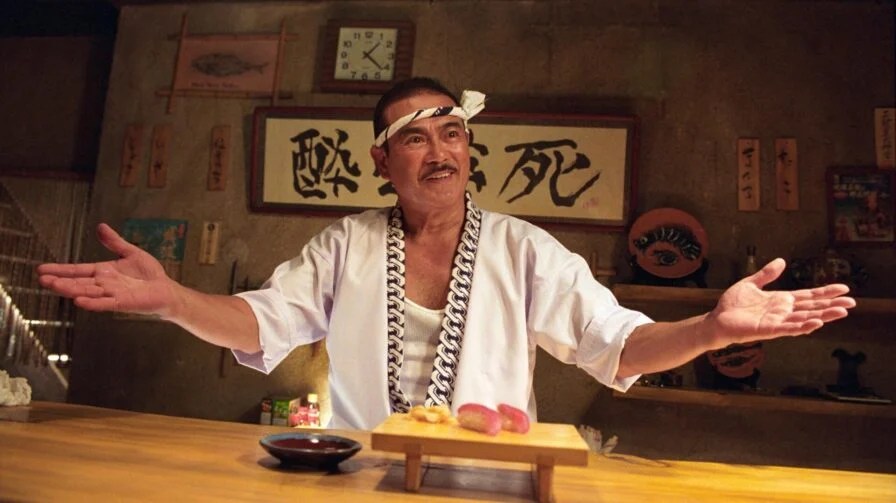
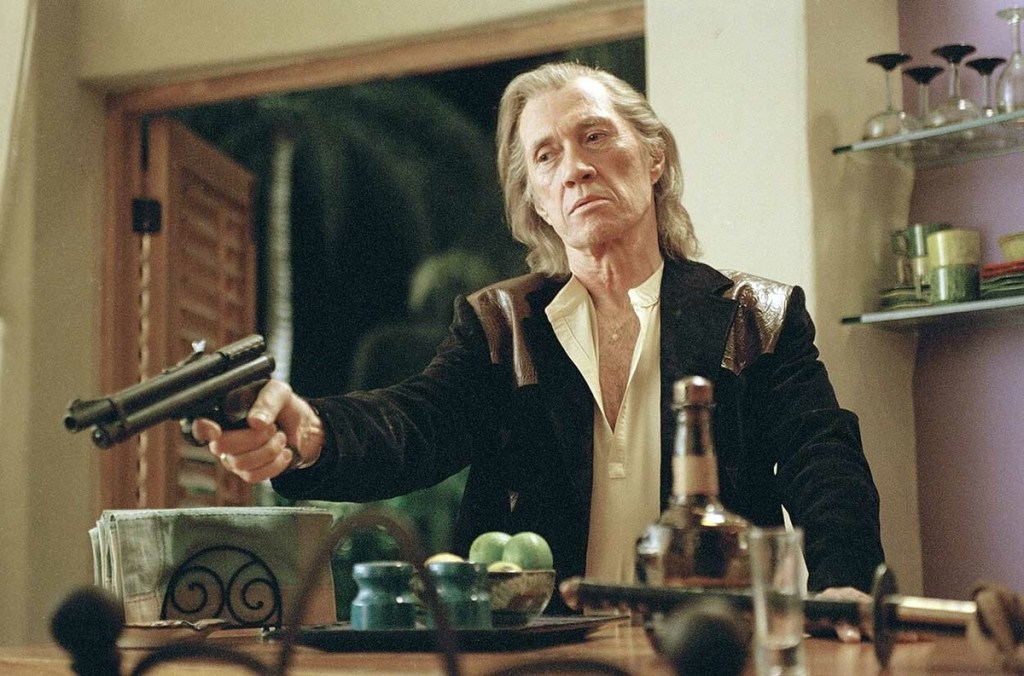
But as I mentioned, it wasn’t all high marks and is still not when viewed today. For example, a lot is made of how much The Bride’s legs have completely atrophied after being in a coma for four years, yet her arms and torso inexplicably work from the get-go. The dialogue, primarily in the story’s first half, while still exhibiting Tarantino’s signature flair, occasionally feels forced, and at times, even cringey. At least by his standards. This causes a scene in which The Bride is introduced to a master bladesmith (Sonny Chiba) and his sushi-making assistant to stunt the narrative’s momentum by coming across as initially silly and childish. Fortunately, Tarantino gives the dialogue much more oomph as we head into the second half, and awards almost all of the best lines to David Carradine, the exceedingly charming but ruthless killer of the title who The Bride is out to get. Bill functions essentially as the auteur’s mouthpiece, and Carradine has such a presence and dominance of rhythm (watching him use an enormous blade to sadistically cut up a sandwich into smaller pieces is genuinely fascinating), delivering every line so matter-of-factly, that it’s easy to see why he keeps other characters under his spell for so long, much like he does with us. Considering that he only appears in the half that makes up Vol. 2, he is a large reason why it’s always been the better of the two films. Through him, the physical violence that Vol. 1 traded in now takes on a more menacing, psychological form.
For those familiar with the picture in its two separate entities, the most obvious thing to notice about Kill Bill: The Whole Bloody Affair (which is presented with a 15-minute intermission) is an additional Japanese anime sequence that expands upon the terrific one that was already there. And though it is executed in the same strikingly gory style as the first, a case can be made for it being unnecessary. Beyond this, the aforementioned battle at House of Blue Leaves is not only somewhat extended, but by virtue of showing the entirety of the footage in color, as opposed to the black and white that was used to diminish the impact for the censor, there is now literally more blood and guts to be seen, even as the violence increases concurrently with the ridiculousness. The most seismic difference, however, is the omission of the acknowledgment that The Bride’s young daughter is still alive, before we actually get a chance to see her. This was a fantastic note to end Vol. 1 on, but in the case of this repurposed narrative, it allows for a very different and more efficient dramatic payoff further down the line.
And yet, in spite of all this, there was something truly perfect about how Tarantino split the film into two distinct entries upon their initial release precisely because of how tonally and aesthetically different they both are. He may have shot one gargantuan, 4-hour plus movie, but he consciously made the decision to smear its second half with a very different coat of paint than the first. It may be one overall story, but both parts choose to tell it in their own radically unique way. And these ways, when viewed separately, each stand out because of their inherent strengths. As a single experience, however, it can often feel a bit jarring, as said strengths at times get swallowed up by the size of it all.
You may ask in the end, is it a worthy experiment? Absolutely. But is it the definitive way to watch Tarantino’s epic fourth film? I’m not so sure about that.
Kill Bill: The Whole Bloody Affair is currently available for purchase on Fandango at Home.
 Generation X Wire