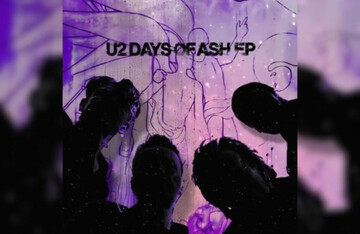
U2 – Days of Ash
3.5 out of 5 stars
By J.C. Correa
No non-American band has ever wanted to be more red, white, and blue than U2. On their most famous album, The Joshua Tree, they made that very clear by having the balls to shape it into both a celebration and condemnation of the United States. And whether it’s through odes to Martin Luther King Jr. and Elvis Presley, their exploration of roots and blues music, a direct collaboration with Johnny Cash, or a song bluntly titled “The Hands That Built America,” their fascination with the “land of the free and home of the brave” is a through line that runs across their entire career.
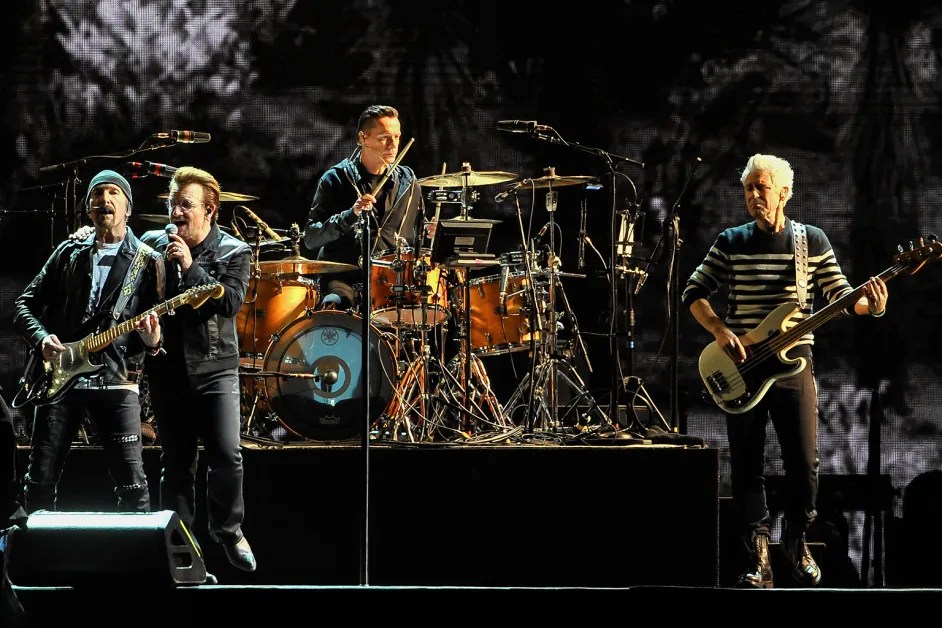
So, it’s no surprise that the Irish rockers, who are celebrating their 50th anniversary as a band this year, refuse to be outdone by Bruce Springsteen in the crusade against what all of them consider to be the great American tragedy of our time: The fervently divisive and near-autocratic presidency of Donald Trump. After “The Boss” (commonly considered America’s greatest musical patriot and poet of its conscience by just about everyone who doesn’t think of him as the exact opposite), just four weeks ago, released “Streets of Minneapolis,” a searing and spelled-out takedown of the ICE raids and the fatalities sprung from them, U2 have thrown their gloves into the same ring by dropping the six-track EP Days of Ash. The fact that the collection was released with zero advanced notice or publicity on Ash Wednesday is simultaneously an exercise in absolute restraint and the sledgehammering of the point in question.
However, unlike Springsteen, the boys in U2 (all of whom, in fairness, are just about entering senior citizen status) have a greater purpose than just the need to rage against the machine. When not denouncing the current administration’s policies, they aim their political brand of rock at equally pressing headlines like the wars in Gaza and Ukraine, and the state of the world as a whole. In fact, the EP is deliberately designed in a way where each song directly addresses a particular crisis close to their heart.
Perhaps unsurprisingly – at least considering the commercial potential tied to such a move – the set starts off with “American Obituary,” a song whose title requires the search for no metaphor. Opening with angry, punk-flavored power chords, the tune’s lyrics focus squarely on the murder of Renée Good at the hands of an ICE agent in January of this year. They make it a point to highlight that the number of bullets that gunned her down equals the number of children she was a mother to. With phrases like “America will rise against the people of the lie / I love you more than hate loves war / The power of the people is so much stronger than the people in power,” there is certainly no getting around what the intent is here. Though detractors may find the approach trite, the band is clearly doubling down and not leaving anything to the imagination on this one. In fact, one could argue that the title is not just a nod to Good’s killing but actually a cryptic commentary on the state of the country.
Taking all of the above into account, you would think that this is clearly the best way to get things going. Though it probably is lyrically, this is also where U2 stumble the hardest in that they don’t have the music to match such an urgent and angry statement. “American Obituary” sounds like a collection of worthy musical ideas, haphazardly brought together in ways that don’t connect. It tries to summon a fighting garage rock spirit but falls remarkably short of something as catchy as “Vertigo.” The tune displays an over-reliance on falsettos, but perhaps most critical of all is the fact that there is no real top-line melody here – let alone a great one – something that singer Bono has frequently made it a point to stress the importance of when discussing his approach to songwriting. Considering the immediacy of the lyrical topic, it’s very likely that this is simply the result of a rushed idea that never had time to properly gestate. As a consequence, what is meant to be arguably the most important song here, ends up being the least successful of the bunch. With such a muddled musical approach, it would’ve probably worked much better as a poem.
Speaking of poems, Days of Ash features one that is not only in line with the overarching themes of the EP, but by placing it halfway through, it functions effectively as a transition point in the sequencing. Entitled “Wildpeace,” the poem focusses on and promotes the idea of an organic peace, as opposed to a forced one. It was written by the late Israeli poet Yehuda Amichai and is recited here by Nigerian artist Adeola. With U2 and their sometime producer Jacknife Lee providing ambient music to accompany it, you get the sense that perhaps Brian Eno may secretly be working from the shadows.
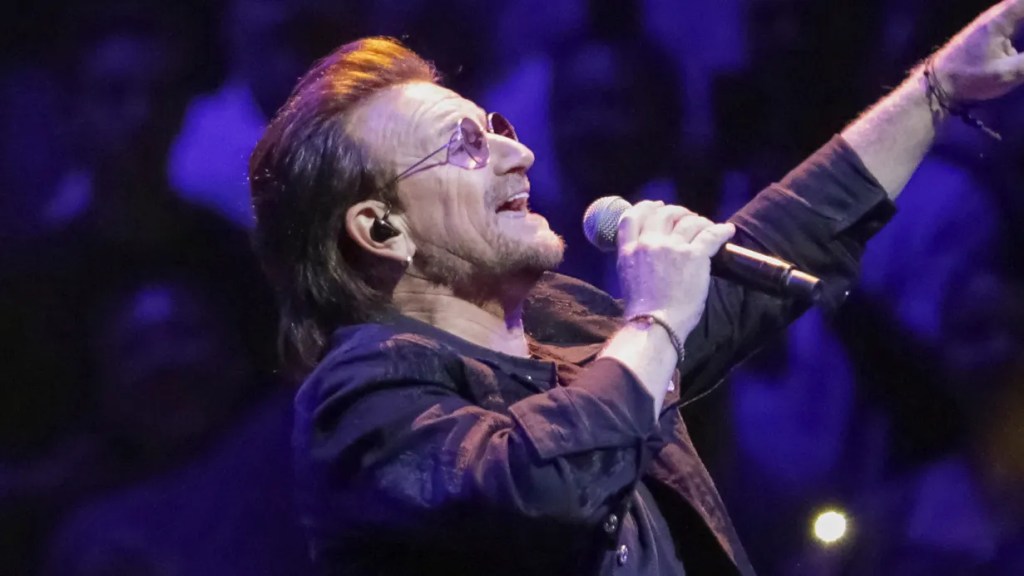
After the initial flounder, the band finds more comfortable footing on the second track, “The Tears of Things.” Cleverly imagining a conversation between David and his creator, Michelangelo, the song uses the poetic possibilities of that conceit to address larger events like the Holocaust and other atrocities, before replacing it all with the current crisis in Gaza. It is not judgmental in that it doesn’t take sides, choosing instead to serve as a deep lament for the inevitable loss of life that occurs during senseless conflict. In it, Bono pleads with a sorrowful verve, switching from a somber baritone for the first part to an impassioned tenor voice for the second half. The beautiful lyrics and imagery, though slightly pretentious at times, question faith and the role and validity of God in a world filled with continuous suffering.

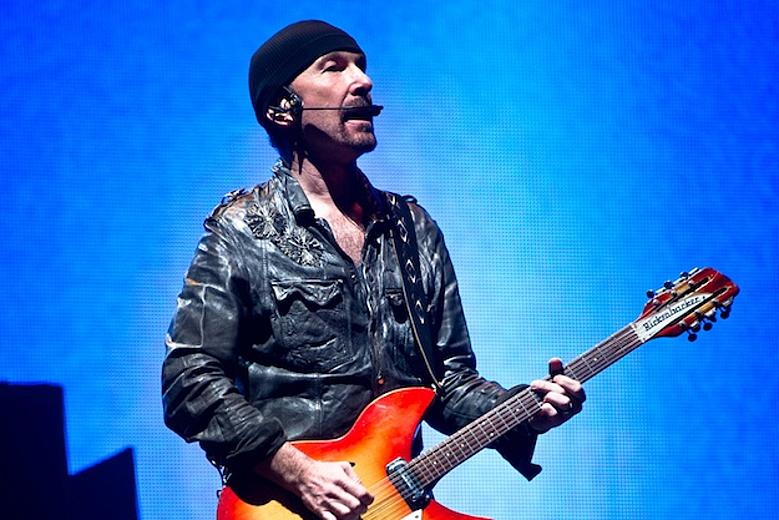
Despite that song’s achievements, it’s on track three that the EP finally finds its mojo and sustains it from that moment onward. This point is a particular peculiarity for U2, being as they are notorious for consistently front-loading their albums. Not so in this case, and the decision actually feels like a refreshing change of pace. “Song of the Future” starts off with a tremendously catchy groove that it never lets go of. The tune may be written as a defiant tribute to Sarina Esmailzadeh, an Iranian schoolgirl who was beaten to death after protesting for women’s rights, but the vibe is slinky and sexy all the same. Long-time fans of the band may understandably feel that this is the point where U2 finally sound like U2, or at the very least on par with the best version of their 21st century selves. Part of the reason why the track connects as it does is that the band’s secret weapon – the rhythm section of bassist Adam Clayton and drummer Larry Mullen Jr. – are definitely on their A-game here. Even guitarist The Edge compliments Mullen’s deep drum groove with clever acoustic strikes, before playing a tasteful electric solo that practically replicates Bono’s vocal melody. With lines like “love is a verb and not a noun,” it’s the most fun number of the bunch on a project where that word is intentionally scarce.
Sharing the same level of sorrow and pessimism as “The Tears of Things,” “One Life at a Time” serves as a cautionary tale that projects real desperation. Backed up by a beautiful orchestration and another earnest, soulful performance from Bono, the song finds its inspiration in the killing of nonviolent Palestinian activist and filmmaker Awdah Hathaleen (who contributed to the Oscar-winning No Other Land) by an Israeli settler on the West Bank, all of which was captured on camera. Its effect is augmented by the fact that the band, once again, sounds locked in and plays with vigor.
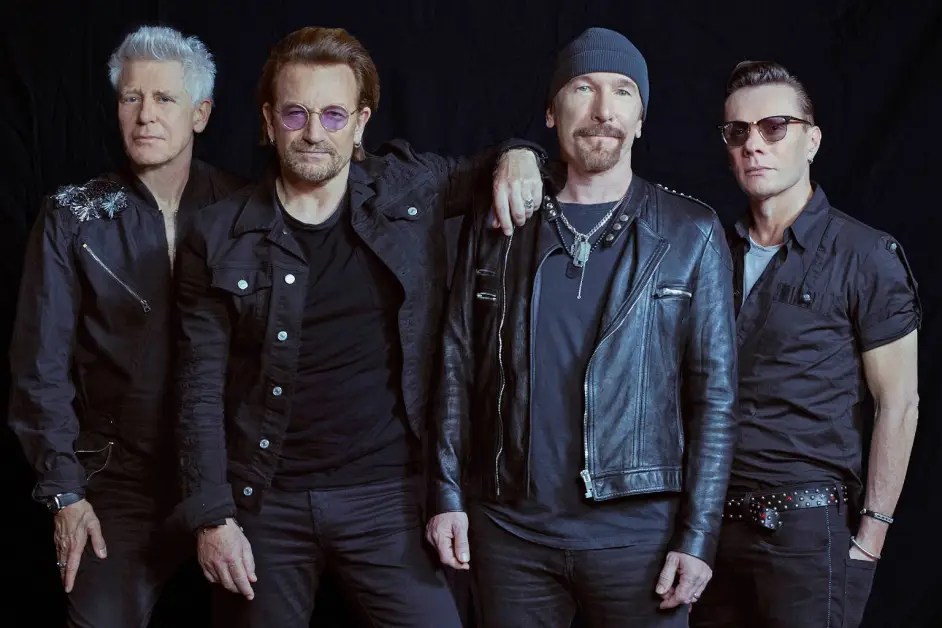
Days of Ash concludes, perhaps fittingly, on a euphoric, hopeful, and this being U2, anthemic note with the memorable “Yours Eternally.” Not wanting to leave one of the biggest conflicts of our time unaddressed, the war in Ukraine takes center stage here, the tune’s lyrics told from the perspective of a Ukrainian soldier on the front lines in the form of a letter to their loved ones. The soaring vocal melody is peak Bono, and The Edge compliments it with a beautiful lead acoustic guitar. Perhaps the most notable aspect of the track for casual listeners will be the fact that, beyond the voices you might expect to hear, those of none other than Ed Sheeran and Ukrainian singer Taras Topolia are featured into the mix. However, the true standout, and from where the song derives most of its power, is the incomparable, martial-like drumming of Mullen that slightly recalls his iconic work on “Sunday Bloody Sunday.” Though fans of the band might be glad to have U2 back via this unexpected venture, Mullen’s return to the fold, after being sidelined from ailing back issues during the band’s historic residency at the Las Vegas Sphere a few years ago, might be the reason to most celebrate it.
U2’s Days of Ash is available on all streaming platforms.
 Generation X Wire