
By Joe Puccio
For a man who is most notable for creating a show about ‘nothing,’ Larry David’s life is certainly anything but. Especially as far as Josh Levine, the meticulous author of Pretty, Pretty, Pretty Good: Larry David and the Making of Seinfeld and Curb Your Enthusiasm, is concerned. The book, covering David’s life from his complicated, middle-class, Jewish upbringing to his eclectic Hollywood resume, is a carefully detailed account of the writer’s entire prolific life.
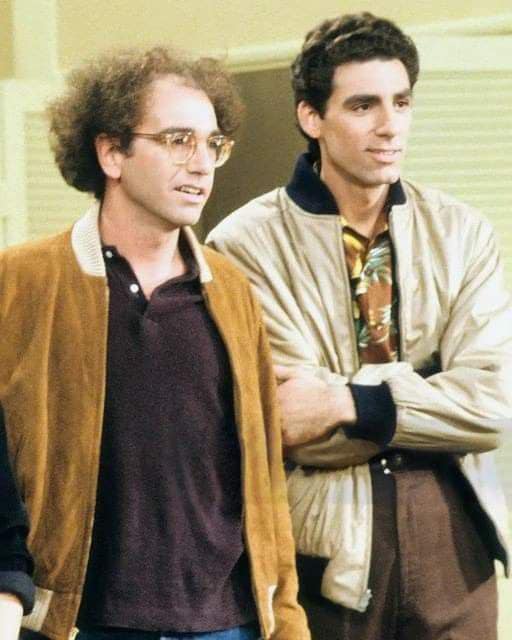
Before Seinfeld, the brainchild of the titular comedian (Jerry) and David, hit the small screen on NBC in the summer of 1989, David cut his teeth in show business as both a scribe and performer on ABC’s Fridays, a Saturday Night Live knockoff, before eventually joining the writing staff of the more popular sketch comedy series itself in 1984. While the stints on both programs were relatively brief, he made two acquaintances during this period which proved to be quite paramount to Seinfeld’s success – Michael Richards (Cosmo Kramer) on Fridays and Julia Louis-Dreyfus (Elaine Benes) on SNL.
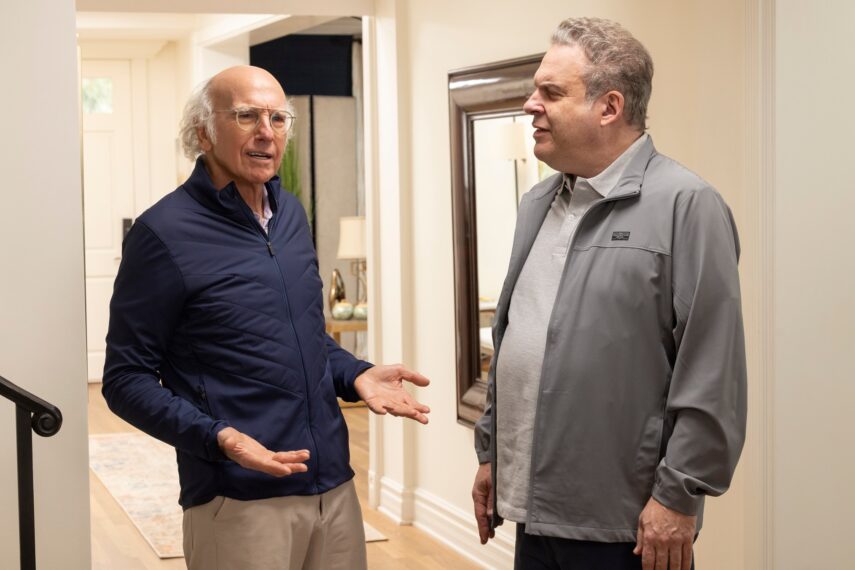
But, as Levine describes it, the road to David’s revered status was rocky, as the Brooklyn-born funnyman worked a variety of jobs, from a bra salesman to a limousine driver. And, of course, a stand-up comic. “Unfortunately, no footage of Larry’s stand-up, before he became famous, exists, at least that I’m aware of” Levine conceded, during a recent conversation with Generation X Wire. “There were no cell phones back then. There’s the clip in the pilot episode of Curb but that was much later. When we see someone who’s famous, we often think it was inevitable. But what’s fascinating about Larry is it wasn’t a sure thing. He was living on a dime, trying to make ends meet, and when he started doing stand-up, the audience really didn’t like or ‘get’ him. I don’t think stand-up was really the right forum for him. He really succeeds in situations and relationships with other people, and his comic ability really shines in his improvisational interaction with others, such as with Jeff Garlin, Richard Lewis, and Cheryl Hines on Curb.”
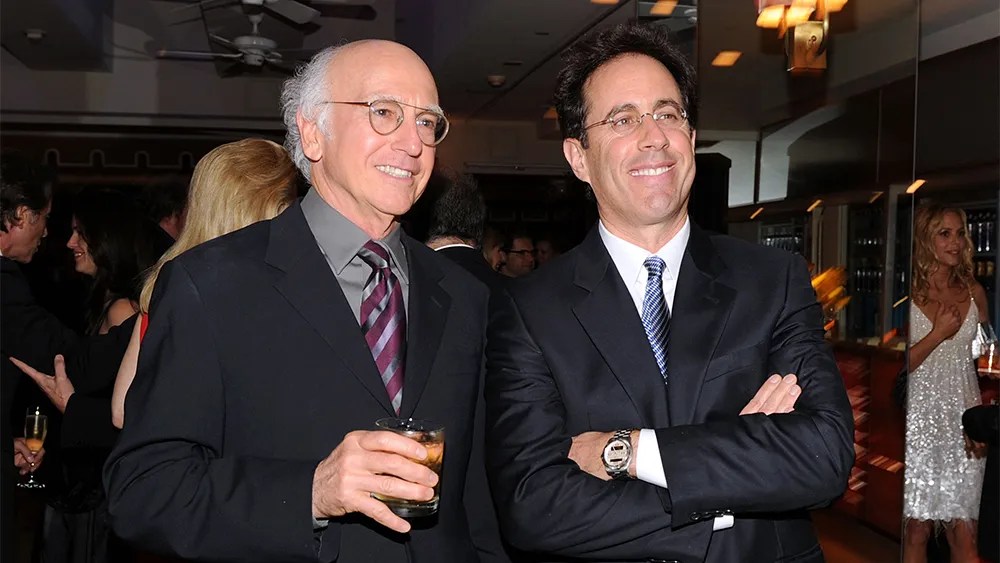
Seinfeld, conversely, excelled in the comedy club environment. “Jerry, who was a friend from the scene, got booked on The Tonight Show and was filling enormous theaters, making bundles of money. His career exploded,” he explained. “Larry basically just wanted enough money to be able to buy a car. He had no idea he would become a multi-millionaire.” Combined, the individual talents of Seinfeld and David formed what is universally regarded as one of the greatest and most influential American sitcoms of all time in Seinfeld. “Jerry approached Larry because Jerry had never written a script before and he didn’t know how to create a narrative or a television show whereas Larry had written screenplays and he wrote a pilot for Gilbert Gottfried that got made. So, he had that experience that Jerry didn’t have,” he continued. “And I think that’s what drew Jerry to Larry, as well as them both sharing a similar sense of humor.”
While the majority of the whopping 180 episodes of Seinfeld are almost invariably praised, the series finale has proven to be rather divisive, with most opinions leaning negatively. One particularly interesting anecdote that the Toronto native dives into is that of what might’ve been had the installment not focused on the key characters’ Good Samaritan trial, which ultimately resulted in a significant lack of humor on a show that was normally overflowing with it. “I think just about anything else would’ve been received better,” Levine laughed. “Originally, Larry’s intent was a finale of the characters in simple conversation. He’s always been sensitive to the fact that it was so disliked. The problem may have stemmed from him leaving the show two years earlier and coming back for just the final one. He wasn’t living in the milieu anymore. The characters always behaved terribly but we loved them anyway. And he crossed the line and made them way too unlikable in the end. Maybe he lost touch a little bit.”
As Curb Your Enthusiasm fans know, David was afforded a redo of sorts of the Seinfeld finale during that program’s seventh season. The do over, mostly lauded, became something of a vindication. “It must’ve been incredibly emotionally cathartic for him to take it and make a purse out of a sow’s ear,” Levine contended. “In fact, Jerry has even said that there are two or three episodes in that season that he feels should have been Seinfeld episodes because they were so ‘Seinfeldian.’ In a way, he had his cake and ate it too by refusing to do a typical reunion show but he sort of did it on Curb.”

Another of the many intriguing David tales covered by Levine in the ECW Press publication is the saga of The Larry David Story, the candid, unreleased HBO documentary on the entertainer that was abruptly pulled just hours before its scheduled release four years ago. “He decided it’d be fun to do it on stage instead. He easily could’ve gone back to stand-up like Jerry did, but I think he realized these live interviews or chats suited him more. This way, he has somebody to play off of. I think that’s why he killed it. It’s in the vault and maybe one day it’ll be released but it probably won’t be anytime soon,” he opined. “But HBO must like him a lot to have allowed him to stop it from airing.”
Levine, who names “The Contest” and “Palestinian Chicken” as two of his favorite episodes of Seinfeld and Curb Your Enthusiasm, respectively, doubts that David, now 78, will ever bring Curb out of TV retirement. “It ended so perfectly (in 2024),” he answered. “He could always take the Larry-like character and use him in other ways. But the political climate has changed a lot as well since it debuted and I don’t think he’d be able to ignore that now since he’s made it clear how much he hates Donald Trump.”
A brand-new project for the curmudgeonly artist is David’s latest focus. “It’s an untitled limited sketch series on American history that Barack and Michelle Obama are producing,” he revealed. “I would imagine that it’s going to be very pointed and will say something about our current times. This is pure speculation on my part, but I can imagine him doing reenactments of historical moments, like when he did the Civil War reenactment on Curb. I could see Larry meeting George Washington or even being George Washington,” he smiled.
Although Levine, who is an accomplished author of children’s books and novels under his birth name Cary Fagan, has never met David in person, he did a wonderful job creating an accurate portrait of the iconic actor in Pretty, Pretty, Pretty Good. “Larry’s not an intellectual but he’s very smart. He has amazing instincts and he’s thinking about all the little things in life constantly that we’ve all appreciated seeing on Seinfeld and Curb,” he reflected. “Part of the book is bringing my critical faculties to Larry’s place in the long line of Jewish comedians. He was influenced by them, he has influenced others, and he is very much of his time, but he is also very forward thinking. He’s very impressive in that way.”
Order Pretty, Pretty, Pretty Good: Larry David and the Making of Seinfeld and Curb Your Enthusiasm on Amazon here.
Order Pretty, Pretty, Pretty Good: Larry David and the Making of Seinfeld and Curb Your Enthusiasm on Barnes & Noble here.
Follow Cary Fagan (Josh Levine) here.
 Generation X Wire