
Revisiting Swingers Through Sideways
3.5 out of 5 stars
By J.C. Correa
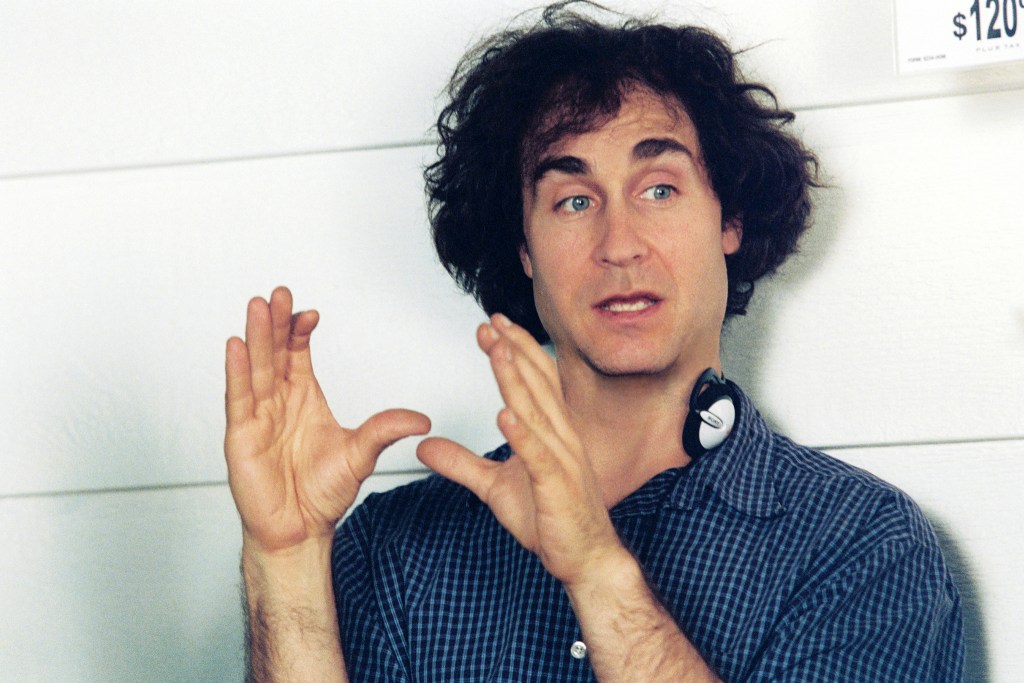
When Alexander Payne released his intoxicating ode to wine and midlife crises in 2004, it was not uncommon for Sideways to be compared to Doug Liman’s 1996 indie hit Swingers. Many viewers and critics argued that both its central theme of wooing the fairer sex and the dynamic of its two main characters were, if not an actual continuation, fairly similar to what can be found in Liman’s film. In fact, paperback editions of the Rex Pickett novel on which Sideways is based even include the following endorsing quote from Booklist on the cover: “A buddy novel in the cinematic vein of Swingers.”
Being as the latter is turning thirty this year, while Payne’s movie remains not only a cult favorite but, in my estimation at least, one of the defining pictures of the 21st century (and which I wrote about for this publication a little over a year ago to commemorate its twenty-year milestone), I recently rewatched Swingers with the intention to not only reevaluate it for its anniversary, but also to see how much it indeed may or may not have influenced its spiritual brethren.
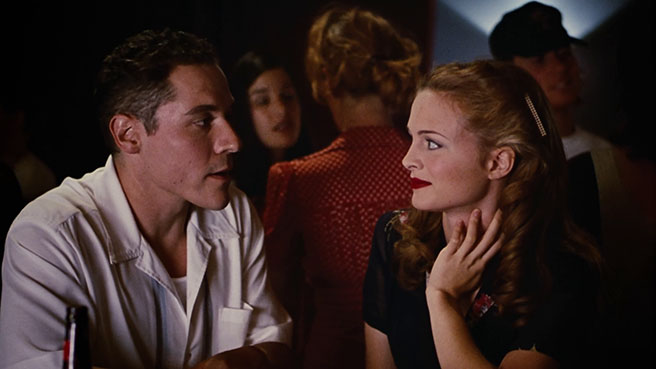
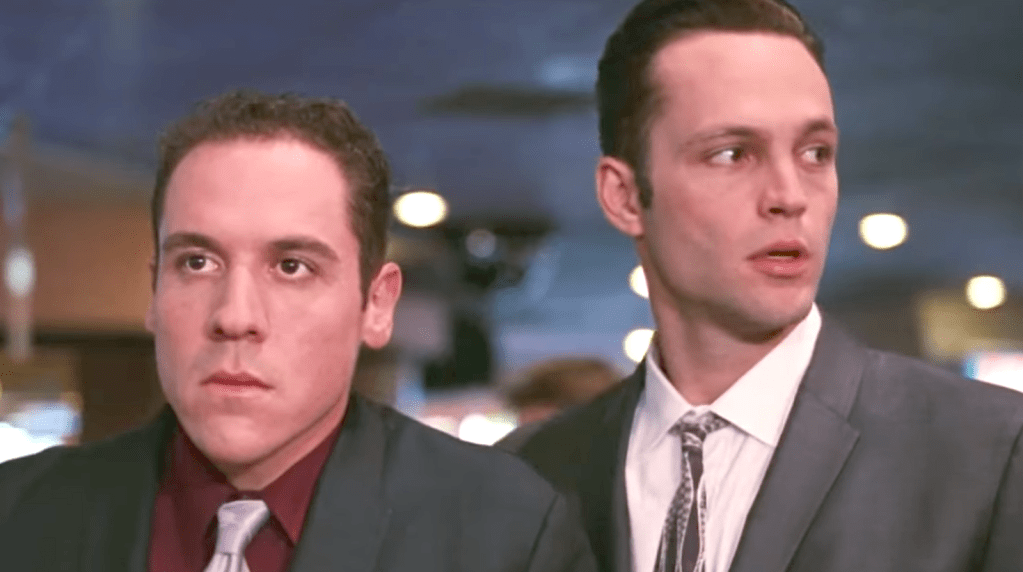
Swingers was written by Jon Favreau, who also stars in the film, and it was basically the project that officially put him on the map. Having directed only one forgettable feature before that, it more or less did the same thing for Liman as well. The movie tells the story of a depressed and insecure young comedian from New York named Mike (Favreau) who has moved to LA in the hope of making it, all the while nursing a broken heart from having been dumped by a longtime love that he can’t seem to get over. Trent (a riotous Vince Vaughn), his new best friend in California, is a charming and affable ladies’ man who aims to score everywhere he goes, but not without constantly trying to pull Mike out of his rut, which usually comes in the form of showing him the ropes in the game of approaching women.
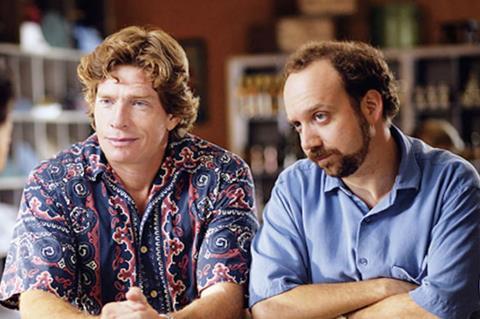
In Sideways, Paul Giamatti plays Miles, an eighth-grade English teacher who is desperately trying to find success as a published author despite many rejections. A wine snob of the highest order, he embarks on a weeklong trip to Santa Barbara wine country with his best friend Jack (Thomas Haden Church). Miles, too, is licking his wounds from a recent divorce that still has him reeling. Jack, of course, is the opposite: A charismatic, middle-aged, alpha male man-child about to get married at the end of the week, who still has every intention to land as many conquests as possible until he does. Jack, too, tries to nudge Miles into forgetting his ex, while attempting his best to get him laid, in spite of his friend’s constant resistance.
In this initial regard, both films feature a down-on-his luck protagonist who can’t seem to get over personal and professional humps (Mike is not exactly landing many gigs as a comedian), paired off with a horny and funny sidekick who lives life in a carefree manner, and with just one thing on his mind. Both Trent and Jack want to vigorously shake their buddies out of their respective doldrums by re-introducing them to the essential, healing properties of the flesh, but never at the expense of their own thrills. The obvious difference, at least on the surface, is that the characters in Swingers are all singles in their mid ‘20s, whereas in Sideways they are clearly in their early ‘40s, and are either about to settle down, or have already done that at one point in their lives.
Giamatti and Favreau are both especially good at projecting a festering self-loathing that is essential to their roles. In Miles’ case, it serves primarily as a source of humor. On the other hand, Mike wears it like a badge of honor, which invites the audience to truly feel his pain and empathize with his plight. But the differences don’t end there. Miles’ wine consumption affords him a distraction and at least gives him superficial pleasure. Mike, though, has no such thing at his disposal. In this way, he is much more reliant on Trent to help get him through, as well as on the other members of his friend group; be it the soft-spoken Rob (Ron Livingston), a fellow New Yorker recently arrived in LA for the same reasons, or the boyish-looking Sue (Patrick Van Horn), Trent’s main wingman in the city’s party scene. Miles, for his part, enjoys Jack’s presence (when he can tolerate it) because it affords him the opportunity to proselytize about wine; although he would gladly trade him in any day of the week for the preferred company of a great bottle of pinot noir.
Interestingly, a minor subplot in both movies is the characters’ affinity for golf. In Sideways, amidst their wine-tasting shenanigans, Miles and Jack try to make time to play a few rounds, and the film makes it a point to illustrate that doing so is intended to be a highlight of their trip. It doesn’t necessarily turn out that way since Miles spends his time on the green obsessing over whether or not his manuscript will get the green light from a publisher, all the while trying to drown out the pedantic technical advice that Jack insists on giving him. Because of this, and the blunt intrusion of another group’s golf ball into their turf, the scene is played exclusively for laughs. Early on in Swingers, however, we see Mike and Rob hit the course to mainly discuss the latter’s struggles as an actor, as well as Mike’s emotional woes. The fact that the only gig Rob has been able to land is the chance to play Goofy as a mascot gives the scene its one laugh, but it is otherwise constructed as a sequence intended to make both men bond through their respective despair.
By virtue of examining young adulthood, Swingers does embrace a more leisurely tone that is more concerned with the rituals of male bonding at that particular age. Trent and Sue frequently act immaturely in how they relate to each other (trash talking while playing video game hockey; egging each other on around women in an infantile manner), which by default positions both Mike and Rob as the adults of the group. Similarly, in Sideways, guided by his one-track mind, Jack displays crass, juvenile behavior throughout at the constant annoyance of Miles. But that doesn’t stop Miles from completely losing it at one point and regressing spectacularly when, after learning that his book will not get published, he pours the contents of an entire spit bucket into his mouth in a desperate attempt to ease his blues. Mike, too, is not free of this regression, as in Swingers’ most memorable moment he emotionally implodes by calling a girl he just met earlier that night, only to leave a total of six consecutive messages on her answering machine. It’s an excruciating sequence, both painful and hilarious to watch because, just like in Miles’ case, it catches the protagonist at his most vulnerable.
Curiously – or perhaps expectedly – in both movies our heroes are eventually rescued by the welcome presence of a woman who comes to symbolize hope and optimism. In Mike’s case, towards the end he meets a sweet and sensitive girl named Lorraine (Heather Graham) at a swing jazz club. They quickly strike up a mutually relatable conversation, and before long, are tearing it up on the dance floor, living up to the word from which the film partially draws its title. For his part, Miles is given the prospect of a new lease on life upon meeting Maya (Virginia Madsen), an intelligent and sensual woman who also happens to share his love and knowledge of the grape.
Because it’s dealing with pressing issues that pertain to midlife like regret, disappointment, and failure – with wine as the central metaphor for it all – Sideways is the deeper and richer film, displaying a much greater sense of pathos. Part of that is also because Payne has a more thorough understanding and empathy for the human condition than Liman has shown across his admittedly more commercial body of work. But Swingers still gets so many things right when treading this similar terrain, in large part because of how brutally honest Favreau’s screenplay is in its depiction of the crushing weight caused by heartbreak and sorrow, and his wonderful performance to help complement it. In fact, the thematic consistencies that exist between both movies leads me to believe that not only would they make a terrific double feature, but I would personally love it if someone out there could transfer this particular mold onto a story that shines a light on life’s third trimester. Official or not, that would make one hell of a trilogy!
Swingers is available to rent on Fandango at Home.
 Generation X Wire