By Joe Puccio
As the performers who’ve been both talented and lucky enough to be able to earn a living in show business can surely attest, the struggle to attain autonomy in one’s career is very real. Furthermore, managing to maintain said success is sometimes just as challenging. For Joyce Bulifant, the struggles she overcame reached far beyond simply winning over casting directors – although she did that too.
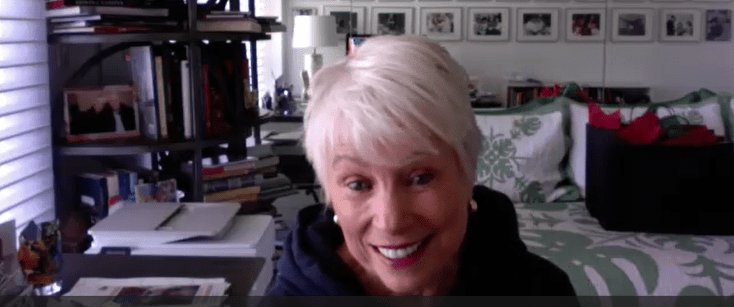
The endearing actress, perhaps best known for her recurring role on The Mary Tyler Moore Show throughout the majority of the 1970s, didn’t learn she was dyslexic until she was in her 40s – a revelation she celebrated rather than censured. “My youngest son (John Asher, actor/director) was in a special school for dyslexic kids named Landmark and I’d been trying to raise public awareness for the disability at the time,” Bulifant explained, during a recent conversation with Generation X Wire. “One day, the headmaster asked me, out of the blue, if I’d had trouble in school. After I told him I did and asked why, he said he watches me on live TV shows like Match Game, and he felt that I might be dyslexic. I immediately said, ‘That would be great,’” she kidded. “I grew up thinking I was stupid and knowing I wasn’t helped me so much.”
While a learning impairment isn’t exactly a laughing matter, Bulifant good naturedly manages to find humor in the challenging obstacle. Misreading news items is one such example in which levity is employed. “One day I was reading something in The New York Times to my husband, Bill Asher, which said ‘Five nuns were pregnant at the Vatican.’ He looked at it and told me it said, ‘Five nuns presented at the Vatican,’” she laughed. “That’s very different.”
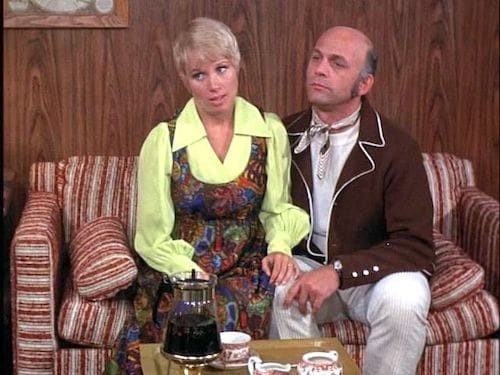
In spite of the hurdles the condition caused in memorizing scripts, Bulifant carved out a highly successful living for herself on both the small screen as well as film. Her portrayal of Murray Slaughter’s (Gavin MacLeod) wife Marie on Mary Tyler Moore will forever be a part of classic television history and would have been even more prominent on the beloved series had she not already had several other industry commitments. “I was under contract to Universal (Studios) doing My Three Sons, Perry Mason, and every western you could think of. Then I did a few seasons of a series called Tom, Dick and Mary. From there, I did The Bill Cosby Show and then Love Thy Neighbor, which was one of my favorites, because I got to do a lot of physical comedy,” Bulifant noted. “I was really doing three shows at once so that’s why I couldn’t be on every episode. One time, they even called while I was in labor to ask if I could come in for a reading,” she chuckled.
The Virginia-born thespian’s experience on the revered sitcom about a news program at a local Minnesota television station was nothing short of wonderful due, in large part, to her colleagues. “Ed Asner was a big teddy bear. Ted Knight practically became the character he played. Valerie Harper was always so helpful and sweet. I hate to think that none of them are still with us,” she sighed. “Gavin became one of my very best friends and lived next door to me. We did a lot of benefit shows together over the years. Betty White used to tell me that I could get away with telling a dirty joke because it sounded like a nursery rhyme. So, I did that a lot,” she smirked.
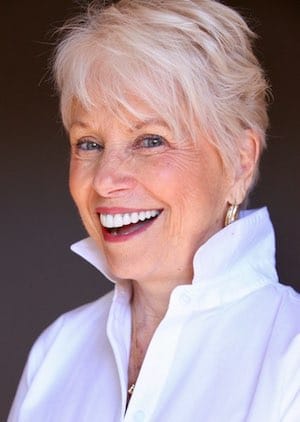
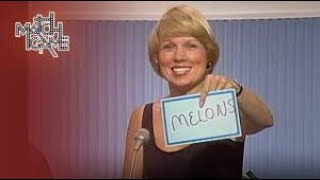
Bulifant’s time as a celebrity panelist on the raucous Match Game, the long running game show hosted by Gene Rayburn known for its double entendre-laden content, wasn’t always as pleasant as her other endeavors. Despite its seemingly jovial, party-like atmosphere, behind the scenes drama and occasional accepted-for-the-era harassment from Rayburn and show regular Richard Dawson proved to be challenging at times. “I’d wait to go up the stairs to my dressing room until I could make sure that Gene wasn’t coming down at the same time – but I didn’t always time it right. He’d always try to lay a big kiss,” she acknowledged. “And Richard was a piece of work. We’d gotten along until he asked me out. You couldn’t get away with what went on back then today. It wouldn’t be allowed. You just kind of went along with it.”
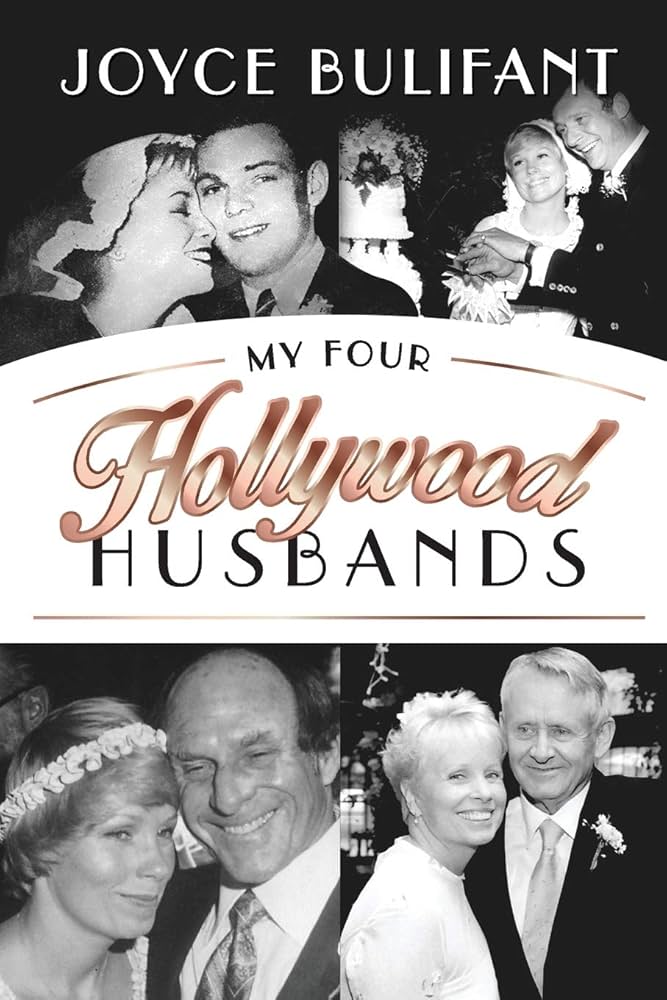
Match Game turmoil is merely one of the weighty subjects that Bulifant tackles in her 2017 memoir, My Four Hollywood Husbands. The provocative biography, as the title suggests, is primarily a deep dive into her often tumultuous relationships, albeit to varying degrees, with initial husband James MacArthur (Hawaii Five-O), sophomore spouse Edward Mallory (Days of Our Lives), third partner William Asher (I Love Lucy), and fifth love Roger Perry (Star Trek). (Bulifant and fourth husband Glade Bruce Hansen were wed briefly in 2000).
“I was very codependent, and a codependent person does not help someone with the disease of alcoholism. All four of them suffered from it,” Bulifant conceded. “James and I were both working, we had two beautiful children, a beautiful home, we traveled around the world – we had everything. His father was also an alcoholic and a womanizer, and he looked up to him. It was also very hard for me because I was so close with his mother, Helen Hayes (actress).”
Her attraction to Mallory stemmed from his lost soul trait and her predilection for wanting to help others, while she never realized there was a dependency problem during most of her nearly 20-year marriage to Asher. “Bill was wonderful. I never knew he had a drinking problem until he had a stroke and he started taking depression medication, sleeping pills, and alcohol, and the combination changed his personality completely,” she revealed. “Roger and I actually first met in 1962. He passed away seven years ago. He was the dearest love of my life. But alcohol played such a role in all of them.”
Bulifant’s beginnings were quite chaotic, living in various locations across the country during her formative years, from Florida to New York to North Carolina to Maryland to Pennsylvania. With her parents divorcing when she was a young girl, the resilient artist bounced around foster care and orphanages while her mother, a single parent, worked. Her early nonexistent relationship with her father also created a difficult challenge to overcome. “I remember being in a store and seeing a picture of myself and underneath it, it said to help me find my daughter with a telephone number. My father had put it up there. When I spoke with him, he said that my mother wouldn’t tell him where I was,” she recounted. “He came that day and took me sailing.”
Discovering theater ultimately became a blessing for Bulifant, who desperately needed to find her path in life. “I really blossomed at New Hope-Solebury School in Pennsylvania in their drama class. It was great for me,” she enthused. “A producer named Peter Fanoy happened to be in the audience when I did a Christmas play there. Even though it was a small part, he invited me to The Grove Theatre in Nuangola as an apprentice. I was only 14 years old. Everybody else there was in college! I did it for three summers until I got my Equity card. Kirk Douglas started there too.”
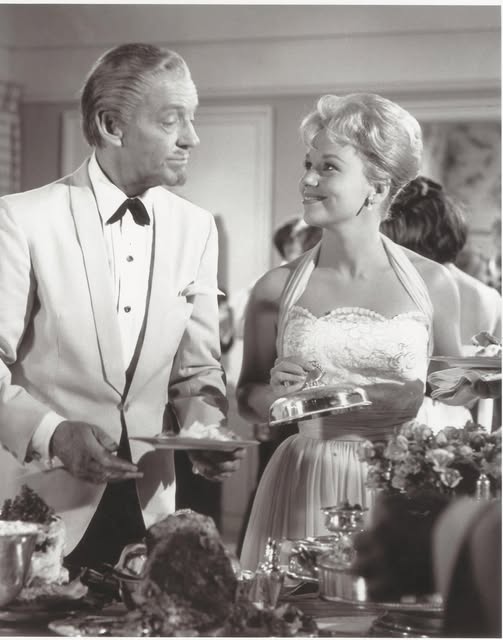
Admittedly not known for dancing, Bulifant even has an engrossing connection to Fred Astaire, of all people. The magical experience all started with a phone call from her agent. “He asked if I wanted to do a show with Fred and if that wasn’t great enough, I’d get to dance with him too. Once he convinced me he wasn’t joking, I just couldn’t believe it. My mother used to take me to every Fred Astaire movie that came out. I idolized him,” she gushed. The eventual dance scene that transpired in the episode of Alcoa Presents admittedly turned out a bit differently than she’d imagined it would. “Right away, I pictured a chiffon dress, a ballroom, a crystal chandelier, and being lifted in the air. No, it was the twist,” she giggled. “And he didn’t know how to do it! So right before we went out there, I taught him the twist. Years later, at a charity ball, he came over to ask me to dance and actually asked if I remembered him. That’s how humble he was.”
Another astonishing footnote of Bulifant’s career is a true ‘what if’ occurrence, having landed the iconic role of Carol Brady on The Brady Bunch before having it whisked away just as quickly as she got it. “I was on the set and Sherwood Schwartz (producer), who was such a sweet man, told me that the head of ABC (Martin Starger) changed his mind and wanted Florence Henderson. He felt I looked too young and that she would fit better,” she added. “This was after I’d signed a seven-year contract.” Schwartz explained that they’d written the show for the maternal figure (Bulifant) to be the funny one but in being overruled by the network, they’d be forced to switch gears, slotting the housekeeper (Ann B. Davis) part as the comic relief instead. “He said if Florence does it, it’ll be The Donna Reed Show. If you do it, it’ll be The Lucy Show and that’s what we wanted. The three girls on the show were all even chosen to look like me. But ABC had the final say,” she clarified. “Sherwood told me that I’d be in the next show he did, no matter what. And you know what? He kept his word. I did a cute show with Herb Edelman (Big John, Little John). But it all worked out. Florence did a great job, and I had eight real children of my own,” she joked.

One project that Bulifant almost turned down wound up to be considered by many one of the greatest comedy films ever made, ironic being that her reason for nearly passing on it was her belief that the script wasn’t funny. “I’m amazed at how well Airplane! still holds up today. Originally, I thought it was the silliest thing I ever read and felt it didn’t make any sense,” she admitted. “Ruth Koch (wife of producer Howard Koch) and I thought it was going to be a disaster. When it came out and I went to a screening, people were falling off their seats, laughing. I didn’t get a sense of it while filming it, but I was wrong.”
Although it’s been seven years since the release of her book, Bulifant feels the messages and lessons it conveys are still as relevant now as they were when she began writing it over two decades ago. “It’s really about how alcoholism breaks apart a family and its effects on children, from my perspective, with a background on the Golden Age of Hollywood and the love story of Roger and me being woven in and out,” she articulated. “Originally, it was going to be called Home Sweet Home: Where Is It? and be mostly about the fifty different places I’d lived in my life and everything that happened there. Then I got a call from a friend of mine, who suggested calling it My Four Hollywood Husbands. I immediately said that it was disgusting, tacky, and I would never name it that! Then I hung up and thought, ‘Well, it might sell books,’” she smiled. “It’s been very rewarding.”
Order My Four Hollywood Husbands on Amazon here.
Order My Four Hollywood Husbands on Barnes & Noble here.
 Generation X Wire