
By Joe Puccio
Depending on just how far back one’s fandom of professional wrestling stretches, the name Gorilla Monsoon can easily evoke very different memories. For those who began following the business in the counterculture decade of the 1960s, when Vincent J. McMahon reformed the Capitol Wrestling Federation into the World Wide Wrestling Federation (WWWF, now World Wrestling Entertainment, or WWE), the moniker elicits images of a terrifying, non-verbal, 400-pound behemoth from Manchuria. Alternatively, if your formative years occurred during the post-Vietnam 1970s, it’s likely that you recall a more civilized, heroic version of the giant, who learned to speak English and coexist with revered stars like Bruno Sammartino. And if you discovered the performance art form in the colorful, bombastic, decadent era of the Hulk Hogan-led 1980s, you undoubtedly remember the mild mannered, middle-aged, play-by-play television announcer whose chemistry with both Jesse Ventura and Bobby Heenan remains unrivaled to this day.
Born Robert James “Gino” Marella in 1937 in Rochester, New York, the future grappling heavyweight cut his teeth in high school athletics in football, track and field, and amateur wrestling before transitioning into the dramatic, choreographed form of the sport in the late 1950s. Initially hesitant to don the tights for a living, Marella’s original vocation goals were considerably more modest, with aspirations of becoming a teacher and coach, once stating “I was a physical education major at Ithaca College, and the only thing I regret about becoming a professional wrestler is that I missed the opportunity to teach youngsters.”
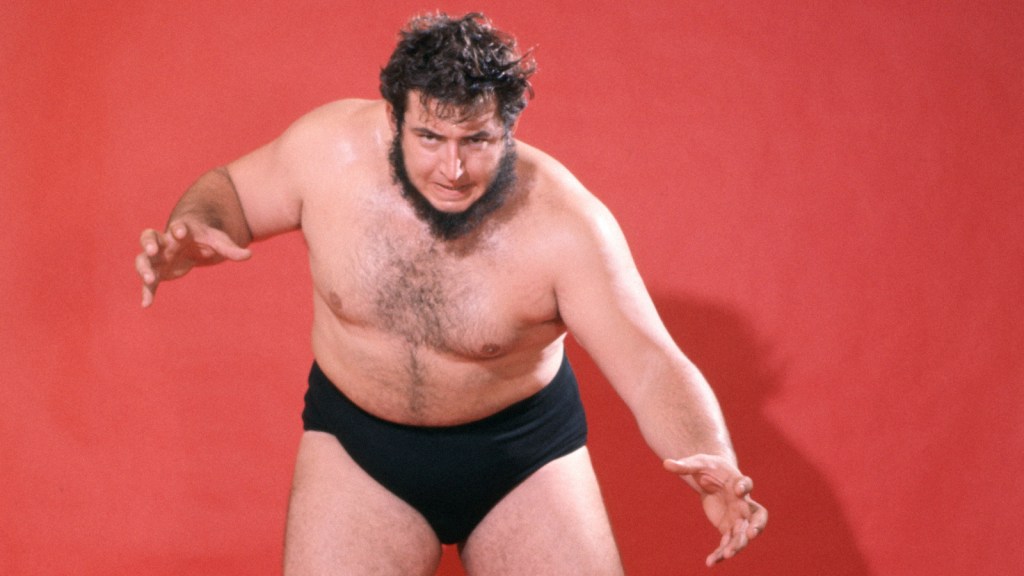
With a career spanning nearly four decades, it’s somewhat surprising that a comprehensive biography of the legendary figure was never written. Until now, that is. Thanks to educator and podcaster Brian R. Solomon, Marella’s riveting life story has finally been told in written form in the newly released Irresistible Force: The Life and Times of Gorilla Monsoon. At over 500 pages, the tome leaves no stone unturned, covering everything from his family’s origins in the Southern Italian region of Apulia, in the province of Foggia, to his close-knit upbringing in upstate New York, to his days as not only an active performer but as a pivotal behind-the-scenes presence who was so influential that he even has a backstage area named for him (“gorilla position”).
“Researching all of the early history and details for my books is sort of my thing,” Solomon explained, during a recent conversation with Generation X Wire. “I do that with my own family as well. It’s a hobby of mine. Not everybody would do it but it’s an obsession of mine.”
In a profession in which the talent is notoriously on the road and away from their spouses for the majority of their lives, it’s not a secret that fidelity is a quality that many struggle with. Marella, however, was an exception to the unfortunate rule. “When I worked for WWE (writer/editor), it was said to me that they all cheat and that even the ones who you don’t think cheat, cheat,” Solomon admitted. “Gorilla and his wife (Maureen) had a rock-solid foundation. I think part of it was because he was raised very well – middle class, immigrant family, highly educated, with good role models as a kid. That was what was modeled to him.”

The prolific author dives into a wide variety of topics related to the esteemed wrestler, including several items that were previously unknown to the general public.
Poor eyesight prompted Marella to wear contact lenses in the ring until a serious infection from a dirty mat caused him to change course, and since eyeglasses in his line of work obviously weren’t a possibility, he basically worked in a visually impaired state moving forward. “Because he had such a hard time seeing things clearly while wrestling, he decided to change his style a lot, and he would then go easier on his opponents,” Solomon conceded. “People would complain that he’d barely move at that point in his career but that had a lot to do with it.” Marella’s other health issue, having diabetes when he was in his 30s, factored into the equation as well. “He was putting on a lot of weight at the time and combined with his sight, he just didn’t want to hurt anybody in the ring. That’s the way that he dealt with it.”
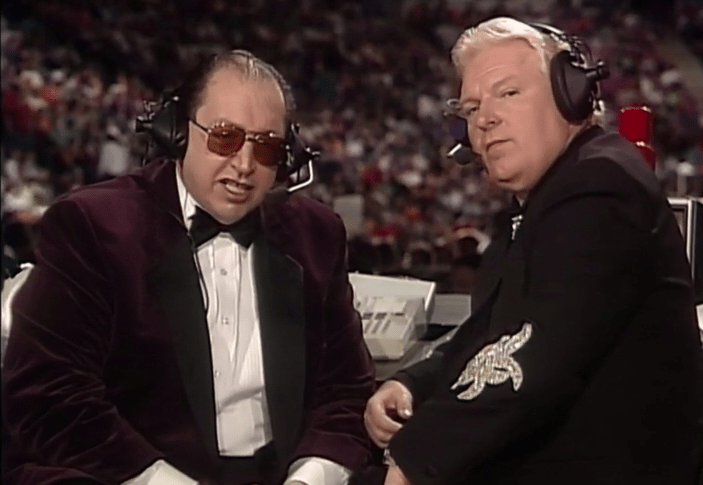
A beautiful singing voice is certainly not the first trait that comes to mind when looking at Marella. But as the old idiom goes, don’t judge a book by its cover. “He sang in high school and college and was in glee clubs and musical theater. He even did it as part of his gimmick in his early wrestling years, singing Italian songs,” Solomon commented. His particular vocal talent was never acknowledged on television, however. “I could totally see him singing “O sole mio” or some other Italian folk song on TNT (Tuesday Night Titans, a World Wrestling Federation (WWF) variety show on the USA Network that aired from 1984 to 1986) back then,” he smiled. “He supposedly sang at his sister’s wedding and possibly at his daughter Sharon’s as well. His entire family could sing. Dave Meltzer (wrestling journalist/historian and publisher/editor of the Wrestling Observer Newsletter since 1983) has even reported that Gorilla sang at Giant Baba’s (Shohei Baba, one of the most famous Japanese wrestlers of all time) renewal of his wedding vows in Hawaii in the early 80s.” As for the reason fans were never privy to it, Solomon has his assumptions. “It seems like it was a very conscious choice that he didn’t want to do it in a public-facing way. He must’ve just been self-conscious about it.”
A bizarre, short-lived Baltimore-based talk/game show named Bingo Break, co-hosted by Marella, with former wrestling announcer and current news anchor Sean Mooney acting as “bingo master” is also covered in the publication. “The show was terrible,” Solomon laughed. “There’s no way to defend it. But, apparently, bingo in Baltimore is a cultural phenomenon. Incredibly, they were hoping to take the show national and get it on Fox. It’s like a peek inside an alternate universe.”

Even Heenan, Marella’s long-time best friend and colleague, made a Bingo Break appearance, a mild surprise being that the famed wrestling manager was newly employed by World Championship Wrestling (WCW, WWE’s chief competitor at the time). The pair’s friendship ran so deep that when Marella passed away in 1999, Heenan’s despair was such that he couldn’t even muster the strength to call Maureen back until the next day. The Marella/Heenan connection is merely one of several touching anecdotes in the book. A considerable amount of coverage is given to son Joey’s tragic death from a car accident at the age of 31, an event so devastating for the loving father that, by all accounts, he was never truly the same individual again.
Perhaps the most fascinating aspect of Irresistible Force is Solomon’s analysis of the intriguing possibility that had Vincent K. McMahon not purchased the WWF from his father in 1982, Marella was the likely successor to take over the reins. “It would have been a lot more conservative for sure. Gino was much more old-school than Vince. However, he understood business,” he clarified. “I think there still would have been some expansion but instead of one giant national company that put everybody else out of business, there would have been a handful of regional groups. Having said that, though, I don’t think that the business would still be around in the same form that we know it today.”
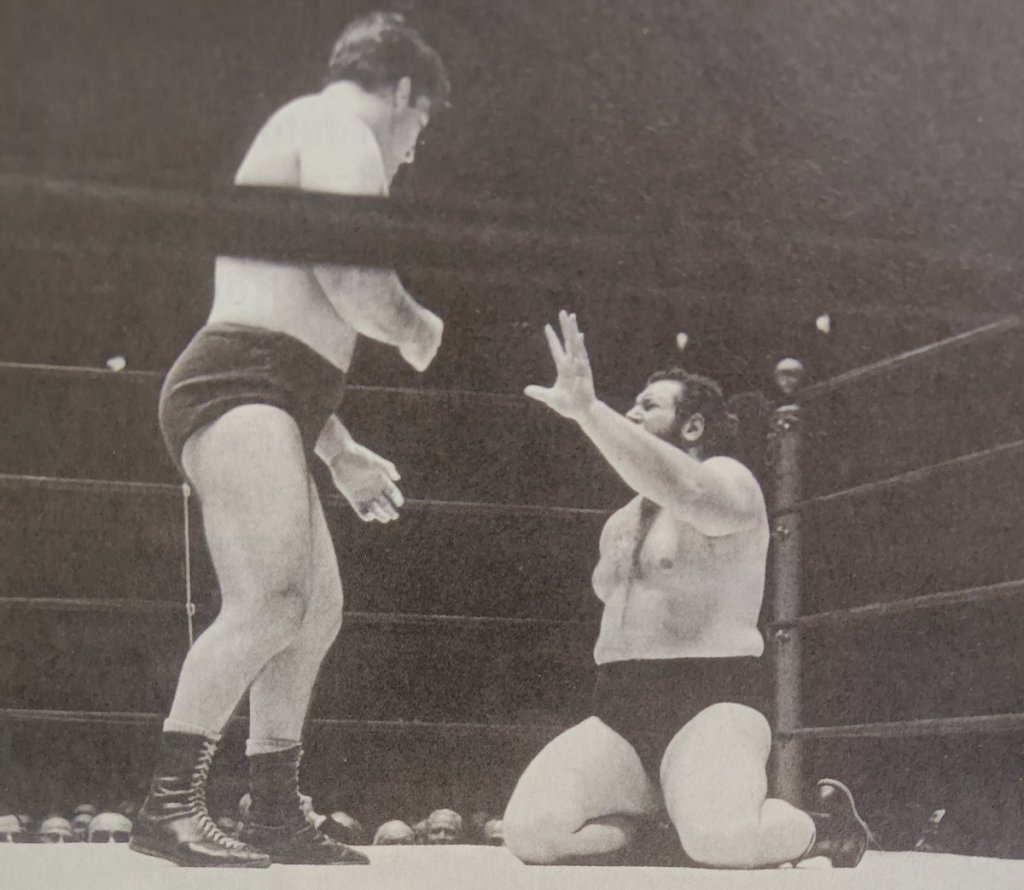
With a heartfelt foreword written by Bret Hart, whose venerable nickname “The Excellence of Execution” was coined by Marella himself, Irresistible Force: The Life and Times of Gorilla Monsoon is just that and more. “Bret wrote the foreword himself, it’s in his own words, and he cared so much about it that he texted me with corrections he wanted made after he sent it to me,” Solomon revealed. “I’m so honored that he wrote it.”
As for future projects for Solomon, whose extensive resume includes books on the squared circle (Blood and Fire: The Unbelievable Real-Life Story of Wrestling’s Original Sheik) as well as other subjects (Superheroes!: The History of a Pop-Culture Phenomenon from Ant-Man to Zorro), stay tuned. “I’m talking to ECW Press right now about a few wrestling and non-wrestling ideas,” he shared. “Even if my next book isn’t specifically about wrestling, it will always be something that I come back to.”
Order Irresistible Force: The Life and Times of Gorilla Monsoon on Amazon here.
Order Irresistible Force: The Life and Times of Gorilla Monsoon on Barnes & Noble here.
Follow Brian R. Solomon on Instagram here.
Follow Brian R. Solomon on Facebook here.
Follow Brian R. Solomon on X here.
 Generation X Wire