Being Eddie
3 out of 5 stars
By J.C. Correa
48 Hours, Beverly Hills Cop, Coming to America? Check. A wildly successful tenure on Saturday Night Live? Check. Reverential praise from peers and fellow comics? Check, check, and check!
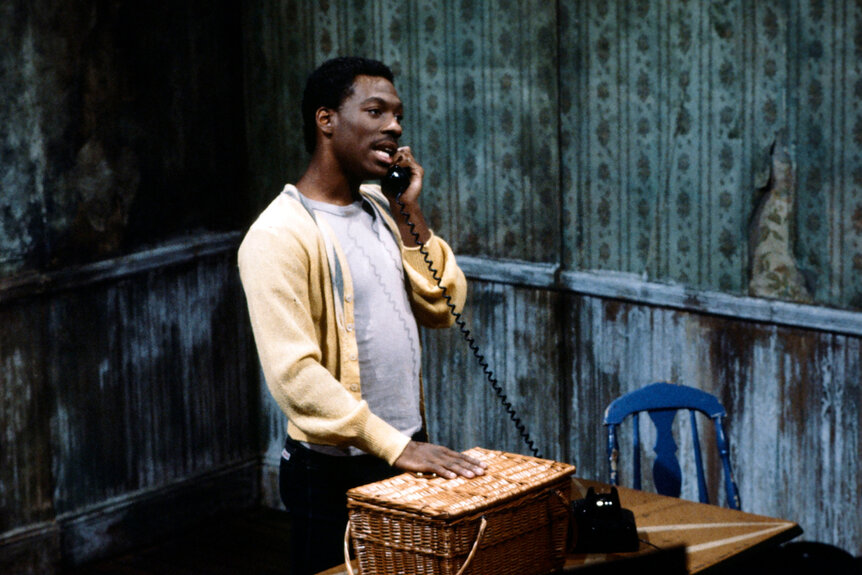
If you’re looking for an opportunity to revisit not only Eddie Murphy’s greatest hits and multiple career milestones, but also celebrate and relish in the fact that he is a once-in-a-generation type of talent who changed pop culture for the better, you will be more than satisfied with what Being Eddie, the new Netflix documentary on the iconic comic actor, has to offer. The flick traces Murphy’s origins in Brooklyn, following a chronological structure that covers his early days as a stand-up comedian on the Long Island and New York circuits, his seismic presence on SNL before he was even 20 years old, and eventual transition into movie stardom of the stratospheric nature by the mid-1980s.
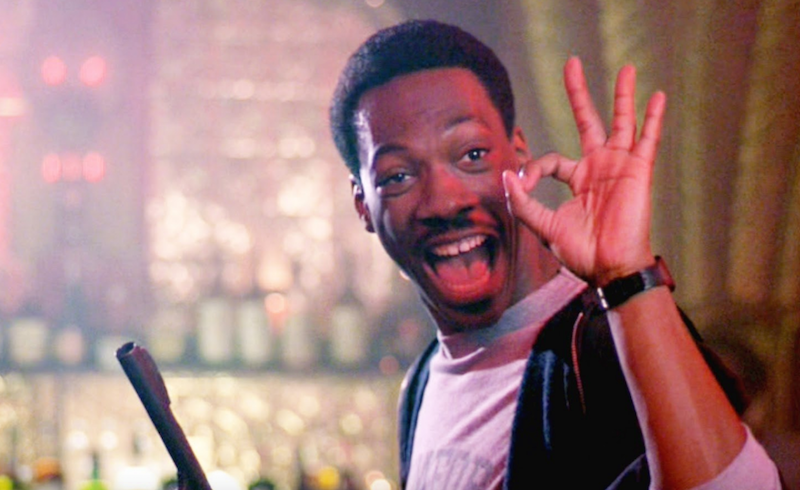
A great chunk of the narrative is shaped by a laundry list of venerational accolades from comedians he inspired like Dave Chappelle, Chris Rock, Adam Sandler, Pete Davidson, Kevin Hart, and Tracy Morgan, as well as contemporaries like Jerry Seinfeld. Even Richard Pryor, Murphy’s personal hero and impetus for his own ambitions, gets a say here by way of period interviews with the comedy legend. What he expresses in terms of how he grades Eddie’s rise to fame is of particular interest, as is Seinfeld’s assessment that Murphy’s success was greatly aided by his sex appeal, then a rarity among comedians.
At the center of it all, expectedly, is Eddie himself, speaking to the camera with reasonable candidness, and never wasting an opportunity to crack himself up and allow us the chance to enjoy his endearingly unique laugh. At times, you get the sense that you’re just watching another Eddie Murphy production, albeit one with a singular structure and intent. And this is also what may cause you to wonder if what we’re witnessing is actually a documentary in the true sense of the word, or something a little more akin to a puff piece.

Filmed in his own majestic palace of a home in Beverly Hills (where else?), Murphy speaks with deep fondness when recalling his late brother Charlie, who also is featured through archival interviews. He elaborates a little on his family dynamic, and how after the death of his biological father, the eventual remarrying of his mother impacted him positively. Perhaps most interestingly, he admits having structured his early stand-up bits almost exclusively with impressions, at which he was impossibly gifted. For those familiar with his iconic stand-up films Delirious and Raw, it’s a cool nugget to learn considering they were still a part of his act then. Even more bluntly, Murphy admits to having had absolute belief in his ability to become rich and famous, something he attributes to the limitless love he has for himself. At one point, John Landis, who directed him in Trading Places and Coming to America, reveals a telling characteristic that separates Murphy from other stars of his level by conceding that “he’s too vain to destroy himself.”
A point that is covered in the doc, and rightly so, is the substantial significance that Murphy’s success in the ‘80s represented for Black performers. Along with Prince and Michael Jackson, he opened the doors for so many, and as he himself says, he was “the psychological soil that was required for everything that happened after.” Once his star rose at lightning speed, he admits to having been gifted the rare position of constantly being in favor with the (White) Hollywood old guard, all of whom suddenly wanted to include him in their circles at all costs. Arsenio Hall, a close friend and collaborator, speaks about the fact that society inevitably pitted Murphy against Pryor, resenting the implied belief that, at the time, there could only be one top Black comedian in pop culture.
Considering how revered his brand of stand-up continues to be for many, it’s of particular interest to hear Murphy explain the reasons why he decided to give it up altogether. Actor Jamie Foxx underscores that point when he eloquently says that “comics are at their most lethal when they’re skinny.” Murphy also elaborates on why he distanced himself from edgy cinematic fare by instead embracing family-oriented movies, a decision that was mainly the result of him suddenly being a father. As such, he goes on to exclaim that his children are his only real legacy, and much more important to him than any of his work. As cliché as the statement may sound, you do believe him, in large part because of the type of profile that has been painted up to that point.
Frustratingly, what the doc, directed by first-time feature helmer Angus Wall, does not do is place any focus on Murphy’s long string of box office flops. In this regard, it feels substantially incomplete. Though everything he touched may have turned to gold in the ‘80s, it’s also quite telling that, apart from The Nutty Professor and Shrek franchises, most of his Hollywood projects after that first, vaunted decade, were a financial failure of some sort. All of this is practically ignored entirely, giving you a sense that what we are watching is not only a celebration of a singular talent, but also a bit of revisionist history.
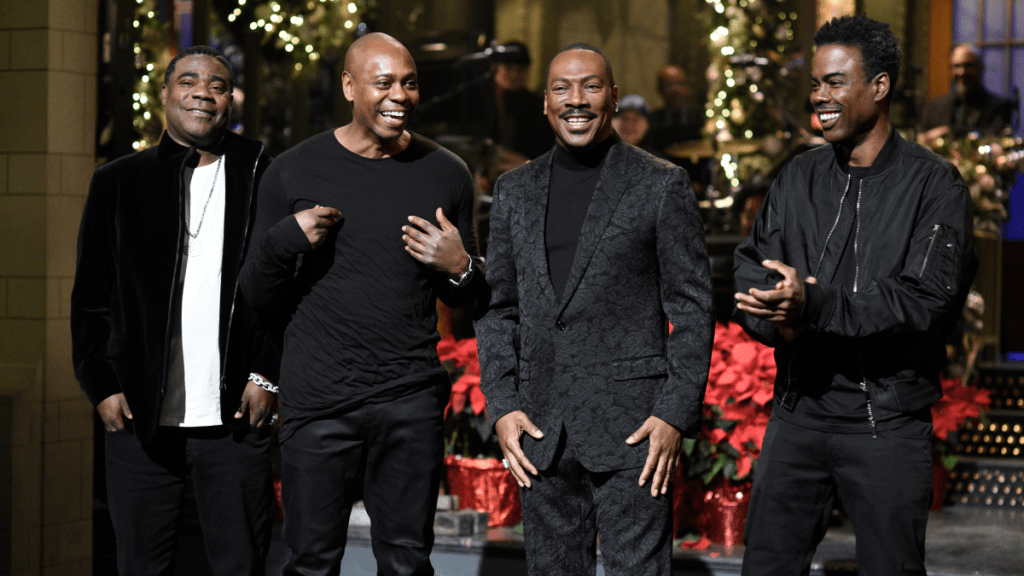
Curiously, a considerable amount of screen time is devoted to Murphy’s 2019 return to SNL in a hosting capacity. In one of the moments of richer dramatic tension, Eddie elaborates on why he stayed away from his proverbial comedy alma mater for so long. We also see a fair share of footage from that date, in which Eddie is mingling backstage with Chappelle, Morgan and Rock. Upon witnessing the sight of the four of them together, it becomes apparent that the other three comics, legendary as they may be, do not exude the same kind of aura as Murphy. His is a rarefied air. And maybe that’s the whole point of this particular documentary.
Being Eddie is currently streaming on Netflix.
 Generation X Wire