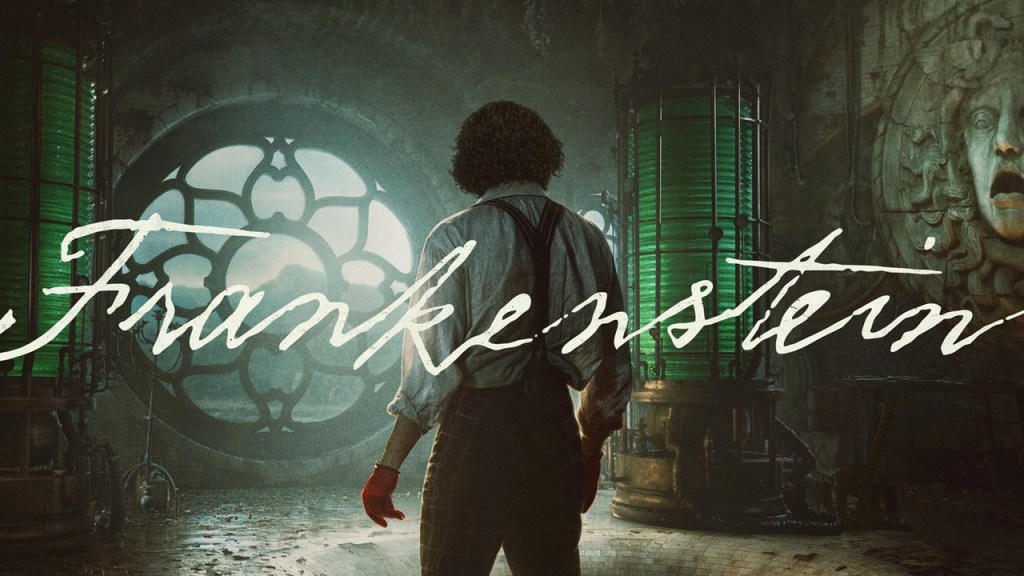
Frankenstein
3 out of 5 stars
By J.C. Correa
Beautifully lit, lavishly designed, and brimming with the type of luminous colors that its director is known for, the latest Frankenstein seems to center around the popular talking point of it supposedly being the film that Guillermo del Toro was born to make. Or destroy, I’d say might also be accurate, depending on how extreme a purist of the Mary Shelley literary classic you choose to ask.
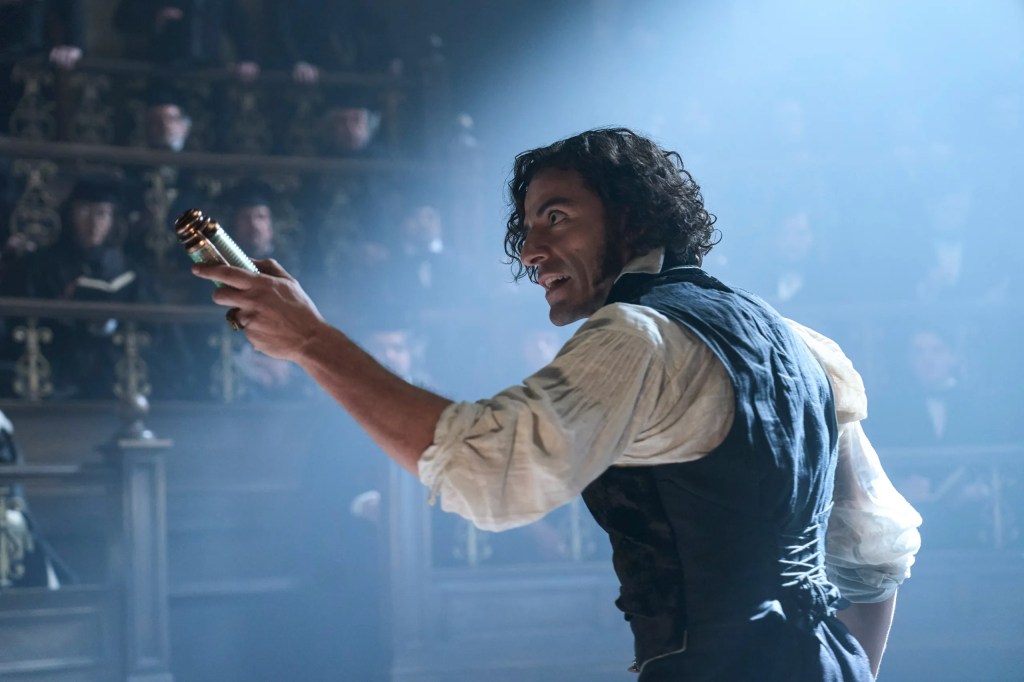
In the lead-up to its release, del Toro has confessed his lifelong desire to reinterpret the story of arrogant and crazed surgeon Victor Frankenstein and his infamous Creature creation for the cinema. As such, he has doused the movie with his trademark visual flair, but no more than say, most of his other works. On the surface, it is a gorgeous-looking picture, even as it displays a certain optical artifice around every corner.
Oscar Isaac, normally a terrific actor, brings a lot of mad intensity to the role of the mad scientist, but his performance is primarily one-note, and after a while you really do start to wonder if he will attempt to embrace additional layers. Perhaps the part doesn’t call for it, but it does make for a somewhat numbing experience all the same. English thespian Charles Dance is well cast as Victor’s icy father, though his appearance is rather brief. The always-entertaining Christoph Waltz plays Harlander, an arms merchant who decides to fund Victor’s experiment, but the performance will not go down among the Austrian actor’s most memorable. On the casting front, a more successful example is actually scream queen Mia Goth in the role of Elizabeth, Harlander’s niece and fiancé to William (Felix Kammerer), Victor’s brother. Elizabeth, in her own way, inevitably becomes the object of the affections of both Victor and his creation.
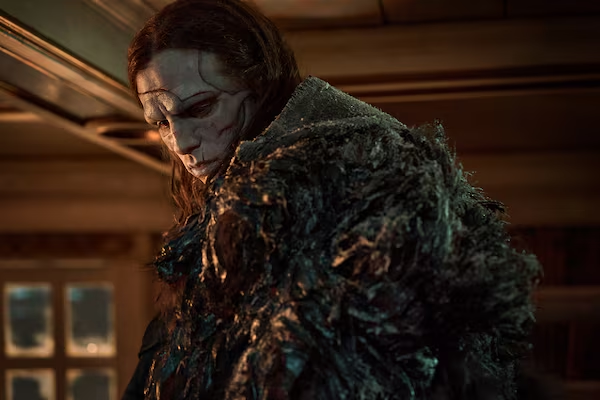
Speaking of the Creature, Euphoria star Jacob Elordi is awarded the task of embodying it. It’s a tricky role for a variety of reasons, not least of which is trying to find the right balance between a grotesque gruesomeness and a sweet gentility. The Creature is, after all, a sad victim of circumstance, a lonely being in a world he didn’t ask to be part of. Elordi brings a gentle grace to his movements and overall is able to project the tragic qualities of the character, in large part through the docile expressions on his alluring face.
Which brings me to one of the most interesting and puzzling aspects of the picture. Unlike all other previous incarnations, del Toro has made the inspired choice to set up a progression for the character with regard to his monstrosity. When Victor first brings him to life – after a uniquely whimsical montage of body parts’ mutilation – the Creature spends the next half hour in nothing but a simple loincloth, his exaggerated limbs and torso constantly exposed. Through his newly-shaved head you’d be forgiven at times for confusing him for the Silver Surfer, but I don’t believe that’s an accident either, being as at other moments in the story he intentionally recalls the Tin Man and Superman, and at one point even has a faint resemblance to Jim Morrison.

The conceit for del Toro is to introduce the character as a child, in both body and mind, and gradually corrupt his appearance just as the world begins to chip away at his innocence. It’s as organic and logical a choice as they come, and I do believe it pays off a fair share of dividends. However, in order to accomplish this, the filmmaker has asked the makeup department to execute a rather “soft” design on the character. Gone is the plethora of oversized scars and traces of blunt deformity. It is replaced instead by a body that looks like it’s been divided into carefully chiseled sections, albeit with a different color shading. The end result is much more polished than we’re used to, and much less threatening. Only once his hair grows and he is able to put on proper garments does the Creature begin to look more monstrous, adjusting his body to the persona as well.
Similar to the novel, the screenplay divides the story into two defined halves: Victor’s tale, and that of the Creature’s. Unsurprisingly, the filmmaker coats the first one with an overstimulation of detail, whereas the second is much more flat and nuanced. As a general rule, del Toro insists on having his camera never stop moving, whether it’s through bold or subtle pans, boom or tracking shots, or simply traveling through the space within a scene. The decision may function as a metaphor for Victor’s erratic state of mind – and as a way to maintain energy throughout – but it does work less successfully during the quieter moments of the Creature’s chapter, where it seems less aligned with the mood it’s trying to capture.

Embracing a romantic, almost heroic tone, as well as an expectedly gory approach (it is a del Toro movie after all), this may not be everyone’s idea of Frankenstein. Perhaps the best way to enjoy it, beyond the luscious sets, is to accept it not as the definitive version, but rather, as a unique interpretation of this hallowed material, one with such a rich history. In that regard at least, the film justifies its existence. Even if it is a far cry from the best work of its maker.
Frankenstein is currently playing in theaters and streaming on Netflix.
 Generation X Wire