3 out of 5 stars
By J.C. Correa
An instrumental version of The Beatles’ iconic “Hey Jude” serves as the musical backdrop to a prologue montage that details the history of the eccentric and highly dysfunctional family that serves as the namesake of Wes Anderson’s third feature film, originally released in 2001. It is an absolutely perfect marriage of sounds and images, partly because the lack of Paul McCartney’s famed vocal, which is substituted instead by an Alec Baldwin narration, further accentuates the idiosyncratic nature of Anderson’s world-building; one which, expectedly, is bursting with colors.
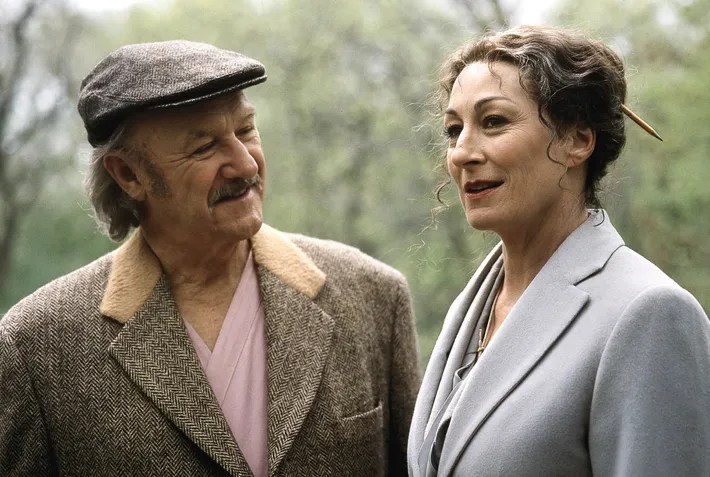
After achieving considerable critical acclaim with his sophomore outing Rushmore three years earlier, the quirky auteur unleashed his biggest undertaking yet, in which he attempted to chronicle the highs and lows (mostly lows) of a, for lack of a better term, royally screwed up family through his usual blend of irony and absurdism. For the part of Royal Tenenbaum, the clan’s utterly self-absorbed patriarch, he cast Gene Hackman, who was then in the final years of his illustrious acting career. Fittingly, the role was the screen legend’s last honored work, as he was awarded a Golden Globe for Best Actor in a Musical or Comedy for it.
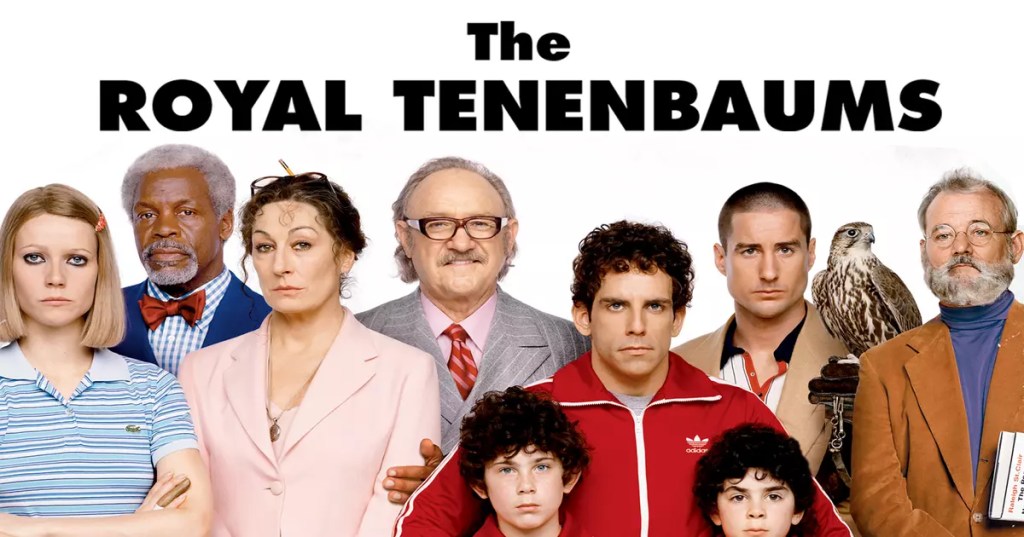
Aside from Hackman, the movie benefits from a strong cast (like most of Anderson’s projects do, to be fair) that includes Angelica Huston, Gwyneth Paltrow, Ben Stiller, Luke and Owen Wilson, Danny Glover, and Anderson regular Bill Murray. All of them contribute to its success, except perhaps Owen Wilson. But that has less to do with the actor himself than the part he is tasked with bringing to life, which is also clearly the result of him having co-written the screenplay with Anderson. As Eli Cash, Wilson plays a lifelong neighbor of the Tenenbaum family who is also buddies with Richie (Luke Wilson), the youngest son. But whereas Richie is a sensitive, likable fellow who simply threw away his talent as a tennis prodigy because of his undying love for his adopted sister Margot (Paltrow), drug-addled Eli, with his penchant for a white Stetson and a beige tasseled jacket, is an unlikable idiot who seems shoehorned into the picture. The fact that the story takes place in New York City makes his appearance even more jarring; though one could argue that by virtue of this being an Anderson flick, that point becomes moot. Still, his annoying demeanor and forced presence make his inclusion seem almost inconsequential.
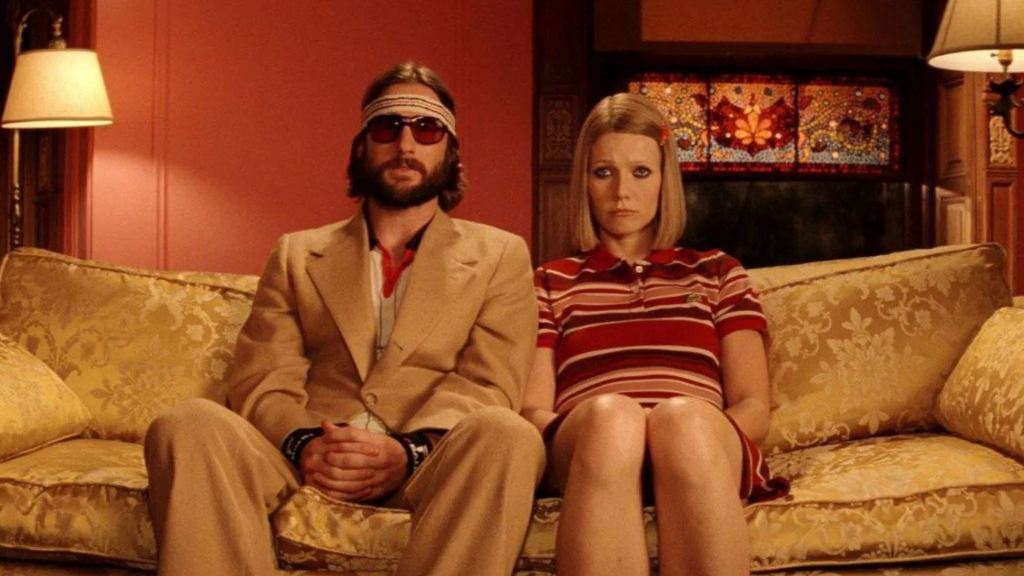
For his part, Glover is endearing and funny playing a bit of a simpleton who is in love with Etheline (Huston), Royal’s ex-wife. Both actors share a good chemistry, as do Paltrow and Luke Wilson, especially in an emotionally intimate scene between Margot and Richie that Anderson stages inside a living room tent, all to the wondrous sounds of The Rolling Stones’ “Ruby Tuesday.” We learn that Richie lost his last professional match years earlier in spectacularly hilarious fashion by committing 72 unforced errors against a player named, of all things, Gandhi. As a result, he spends the first half of the movie hiding under a trifecta of long hair, shades, and a headband. The soulfulness of Wilson’s performance, though, becomes that much more apparent once Richie eschews all of that and basically shows his face.

Along with Wilson’s work as Richie, the film’s most notable turn is, unsurprisingly, Hackman’s. Part of the challenge in this is that Royal is an aloof, self-centered jerk. And yet, Hackman not only finds ways to make this man charming and likable but also allows us to laugh at him as much as with him. Anderson dresses the character in an apropos pinstriped, double-breasted suit that just brings out the arrogance. But the filmmaker is also keenly aware of Hackman’s gifts for comedy and timing and directs him in a way that makes good use of that. Witness Royal’s awkward first meeting of his two grandsons across a fence, or the manner in which he bonds with them shortly thereafter by taking them on an outing that involves a lot of rule breaking to his absolute delight. When he antagonizes Henry (Glover) for his advances on Etheline, it’s genuinely funny, as is the moment when Royal, after having lied to his family that he is nearing death, only to have then had his rouse exposed by Henry, suddenly tells Richie, “But I’m gonna live!” Hackman’s smile and matter-of-fact delivery of the line is perfect and fully nails the irony of the moment.
Even though he inspires a rabid following – and has done so for pretty much the entirety of his career – I make no bones about the fact that I have always found Anderson to be a somewhat tough proposition. Despite appreciating his artistic need to create a style that is wholly distinctive – and adhering to it without exception – my biggest reticence towards him usually originates from a perceived tendency to sacrifice great drama for flair and quirks with some regularity. In some instances, unfortunately, his blunt aesthetic can actually take me out of a picture, which I suspect is the opposite of his intension.

In the case of The Royal Tenenbaums, however, with its off-kilter sensibilities, smart humor, and memorable characters, the end result stands as one of the more successful examples of Anderson’s singular brand. Whether it’s through the effective blocking of actors within a shot, his chosen settings for a scene (such the aforementioned tent, or a tense dialogue in a tiny closet where the bright colors of an assortment of board games are brought to vivid life by a single bulb), or the artful and economical manner in which he conveys a specific location (Margot gently closes an apartment window to the point where the Eiffel Tower reflects off of it), his strengths as a director nicely complement his unique ideas and characteristic ways to tell them. Though I question his decision to have used such a wide aspect ratio to stage this particular tale, and recognize that the movie is far from perfect, it is, nonetheless, a joyful and engaging experience, and perhaps easier to go down for those who may not be particularly keen on Anderson as a whole.
The Royal Tenenbaums is available to stream on Disney+ and Hulu.
 Generation X Wire