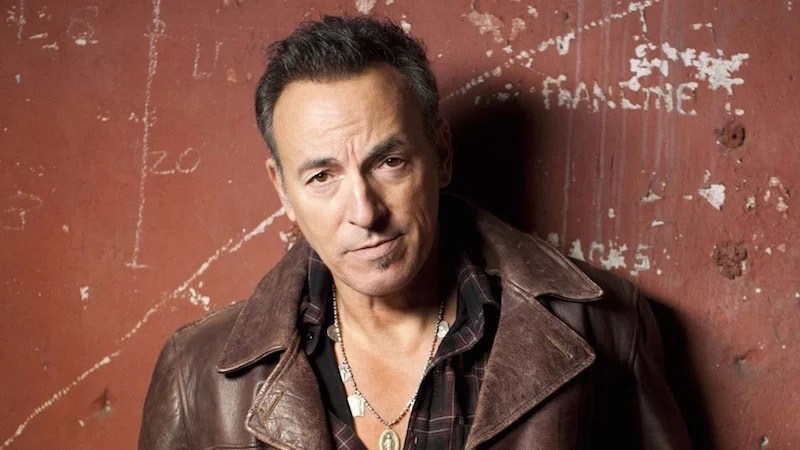
Bruce Springsteen – Tracks II: The Lost Albums
By J.C. Correa
Leave it to Bruce Springsteen to swiftly rectify that the 1990s never really were the lost period that many of his fans have chosen to believe for years. Through the recent release of the almost comically-titled box set Tracks II: The Lost Albums, the New Jersey icon has simultaneously unveiled over five hours of mostly never-before-heard music, across 83 songs and seven full-length LPs that span 35 years of his recording career. Some competent and distinguished artists never get to make seven albums in their entire life, let alone shelve them completely. But you get the drift.
This enormous release, which is fully available for streaming as well as in CD and vinyl formats, only underscores the astounding prolificness of Springsteen. In this department, he’s up there with Prince, or at least very close behind. And yet, as someone who recognizes his gift for making great records – having made some of the greatest in history – I fear that unveiling such a loaded package could prove to be a disservice to the albums at hand, as the size of the collection inevitably takes attention away from each of these works. Were I his manager, I may have tried to convince him to put these out on a monthly basis, instead of in one fell swoop. But as we all know, there is only one Boss in this equation, and the best one can do is go through it all with the aim to scavenge out the gems, in the hope that the entirety of the release is filled with many.
LA Garage Sessions ’83 (Recorded in 1983)
The set begins with the most specifically-titled collection of tracks. At 67 minutes, it’s also the longest. Interestingly, it starts off with an actual cover song, in this case Elvis Presley’s “Follow That Dream,” albeit with reworked lyrics. And as soon as you hit play, it becomes immediately apparent that the timbre of Springsteen’s voice, as the album’s title points out, belongs to his early to mid ‘80s period. The sounds in some of the tunes also tie it to that time; be it the catchy synth and bass hook of “One Love,” or the period synth strikes of “The Klansman,” where the Boss dares to humanize a KKK member through palatable music as he adopts his point of view. This latter ditty is, thematically-speaking, probably the boldest undertaking of Springsteen’s career, and it’s not hard to imagine the reasons why he chose to never release it before. Even though it’s in line with his mission as a songwriter to explore all areas of society, it’s sure to at least raise a few eyebrows all the same. The majority of the recordings here are very lyric-heavy, which should surprise no one considering the 1982 Nebraska mindset that clearly carried over into the following year. Also, almost all of the tracks lack any kind of musical intro, opting instead to start with a lyric. While this is consistent with the folk tradition, the repetitiveness of the approach does make the style predictable and the listening experience somewhat dull. In addition, most of these tunes don’t have particularly memorable music either; what’s there is basic and serviceable, simply there to support the words.
In spite of the unevenness and inability to work smoothly as an album – at least compared to something like Nebraska – there are certainly a few highlights here. “Seven Tears” is a lovely, poignant lyric in a rockabilly style, whereas “Fugitives Dream,” through its driving bass line, paints a dark, moody, and urgent portrait around themes of guilt and shame, and the need to make peace with the past (the record ends with a more stripped-down, sister version of this same idea). Elsewhere, the mournful love song “Black Mountain Ballad” is lyrically reminiscent of Born in the USA’s “Downbound Train,” while “Country Fair” stands out through its wonderful arrangement and inviting message of community (even crickets make a cameo). Still, the designation of showstopper surely belongs to “Richfield Whistle.” In this tale of a delivery man who ruined his life by skimming off the top from his empathetic boss, Springsteen lays out the story in such vivid detail that, across almost seven epic minutes, it ends up being a true career highlight, which is saying something.
Streets of Philadelphia Sessions (Recorded between 1993-1994)
After just one listen you immediately can tell how much of an improvement this second album, which jumps a full ten years, is over the previous collection in terms of not just its cohesion, but also in how much thought went into it. Like its awkward title implies, these tunes are the brethren of the Academy Award-winning single that Springsteen composed for the movie Philadelphia in 1993. And like it, many of them go for a sound that is heavily reliant on drum loops and atmospheric synthesizers. None is perhaps a better example of this than “Blind Spot,” the record opener that gets things going with a clear intent to establish a mood; one that is sustained throughout an album in which Springsteen is the primary instrumentalist. Early tracks like “Maybe I Don’t Know You” and “Something in the Well” double down on the dark and moody vibe, with the latter being an honest reflection on the follies of human nature, adopting a tone that strikingly foreshadows “The Ghost of Tom Joad.”
There are wonderful standouts like “The Little Things,” an exquisite and intimate love song which focusses on the innocence of love and the passion of a moment. With a catchy, jangly guitar that opens it, equally captivating melodies and a soaring chorus, “One Beautiful Morning” matches it in its beauty. “Between Heaven and Earth,” in spite of its heavy drum loop opening, is an intimate profession of love with a musical arrangement that only reassures it. “Secret Garden,” which many might know through its appearance in the popular 1996 film Jerry Maguire, gets included here as well, albeit in a different version that features programmed drums throughout. Though neither interpretation is better than the other, listening to it here only reaffirms the fact that it remains one of the most profound love songs of Springsteen’s career. Which is probably precisely why the Boss has slotted it into this group, as all the tracks on the album are love tunes of some sort. And to that end, the LP concludes with another highlight fittingly entitled “Farewell Party.” It’s a strong composition that benefits from alluring melodies on both vocals and guitar, and an overall terrific arrangement. It’s not only an ideal finish for this particular record, but also a reminder of how solid this journey has been from beginning to end.
Faithless (Recorded between 2005-2006)
The third disc, Faithless, is probably the rarest of the bunch in that it represents the soundtrack to a film that never ended up getting made. Knowing Springsteen’s sensibilities, it was meant to be, unsurprisingly, a movie described as a “spiritual Western.” That statement becomes very much evident when listening to its eleven tracks, four of which are actual instrumentals. Save for one exception, these other three are short and atmospheric. They are also entirely unmemorable. The outlier, however, is “My Master’s Hand (Theme),” and much like its sister version with vocals, has striking acoustic guitar melodies and arpeggios, marching drums, a powerful-sounding piano, some fitting harmonica, and a gospel choir to complete the package. Both are a highlight. Other strong offerings are “God Sent You,” a song that seamlessly transitions from the previous track and is the type of tune that Springsteen has done a thousand times before, but is nonetheless effective in its delicate, prayer-like approach; as well as the title track. This latter one is an utterly poignant, almost heart-wrenching love song/supplication with nothing but a simple acoustic arrangement with minimal slide guitar. It is masterfully done, and its lyrics make one helluva statement.
Elsewhere, the record, which was put together after 2005’s Devils & Dust, delves into bluegrass and roots territory for some of the other songs. “All God’s Children” sees Springsteen summon all the gravel he can muster for his voice and deliver an intentionally-reckless performance that almost doesn’t sound like him at times. While the overall effect is certainly unexpected, the track is also not a standout by any measure. Curiously, on this same topic, his voice sounds at least fifteen years younger on the somber “Let Me Ride.” “Goin’ to California” feels like an urgent kind of folk ditty that strangely conjures the vibe of Led Zeppelin’s own namesake, even if it’s nowhere near as great. I imagine that will also be the general assessment of the album for most fans. In terms of overall quality, it doesn’t stand out among the contents of the Tracks II box set, let alone the artist’s entire oeuvre. It’s an applaudable effort, but there’s truly few things here that are built to stick.
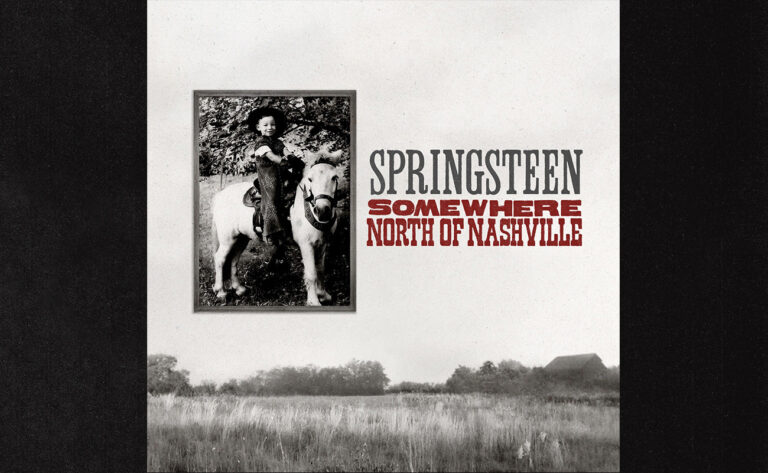
Somewhere North of Nashville (Recorded in 1995)
From the barroom-soaked licks and ramblings that kick off “Repo Man,” it’s pretty clear and evident that Springsteen is inviting us to a certain kind of party. At least he was in the mid ‘90s when he recorded this effort concurrently with the diametrically opposite The Ghost of Tom Joad. Twelve songs and 37 minutes later, that promise proves to be more or less true. And the conceit of this particular rave, as its name suggests, is the aim to rub shoulders with the vibe and stylings of country music. Somewhere North of Nashville firmly dips its toes into country and western territory, and the pedal steel guitar that is present in practically all of its numbers is the first sign of that. The album’s title may also incite a double take for some of the Boss’ fans, as it directly recalls a deep cut from his 2019 offering Western Stars, which this time around serves as the record’s closer. This alternate version retains the same melody but offers a fuller arrangement while also lengthening the track. While it’s a richer interpretation, I’m also not sure that it functions as a great album finisher; at least not this particular one considering all that comes before it.
It’s worth noting that the LP isn’t all barroom blitzes and whisky-drenched soirees. “Silver Mountain” is a passionate declaration of love with a beautiful arrangement and some very dark humor to help it stand out. In the mid-tempo ballad “You’re Gonna Miss Me When I’m Gone,” Springsteen at times sounds like Roy Orbison, while “Blue Highway” is an attempt at fun rockabilly. Though both have their merits, there are certainly better moments to be found here. One of these is a cover of Johnny Rivers’ “Poor Side of Town,” which fits right in with the style of the record. A curious point is the inclusion of an alternate version of “Janey Don’t You Lose Heart,” a fan-favorite B-side from the mid ‘80s. This new rendition, appropriately, has pedal steel and fiddle, but also suggests that some of the vocals may have been recorded over a decade apart as Springsteen’s voice in the last verse is much more weathered and in line with his 21st century intonations, as opposed to his mid ‘90s timbre that appears throughout the rest of the song. All of this being said, in line with “Repo Man,” the best moments on the album really are those in which he fully embraces the party and raises some honky tonk hell. On “Stand on It” he’s in full barnburner mode, while “Detail Man” delivers a lively 12-bar blues shuffle where the title character’s profession is simply a metaphor for a great lover. Humor abounds on both tracks, but nowhere as much as on “Delivery Man,” which is a hilarious portrait of a fella at the mercy of his chickens. It’s tremendously upbeat, vivacious and laugh-out-loud fun. Furthermore, the number serves as a magnificent example of just how light and funny the Boss can be when he chooses to trade in the introspection for nothing more than a rocking good time.
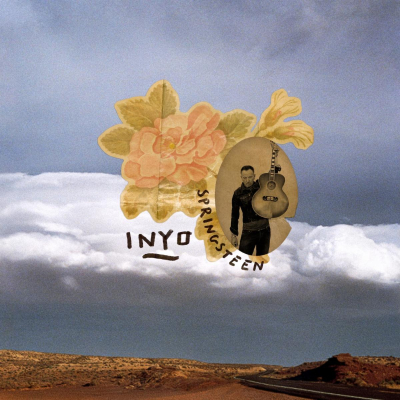
Inyo (Recorded between 1995-1997)
Like Faithless, Inyo is a peculiar entry in the artist’s canon in that, musically-speaking at least, it’s one of his most distinctive. Embracing the sounds of a mariachi band for some of the tracks is definitely a first for the wildly prolific musician, but to say that Inyo is a mariachi record (as some may be led to believe) is also a stretch. On this album – created (supposedly) during The Ghost of Tom Joad tour – Springsteen sets his focus squarely on the Mexican border, and on tales that might emerge from folks who live their lives dependent on what crossing it could and does mean. While not entirely consistent, the results are most certainly novel. With its fingerpicking acoustic style and emotional, impactful story, the title song leads things off in true folk fashion; something that is followed to similar effect on “Indian Town,” and also repeated on album closer “When I Build My Beautiful House,” albeit not as memorably.
Folk-like as well, “The Aztec Dance” defiantly tells a poignant tale of racism and immigration framed around the history of the Aztec colonization by Hernán Cortés. With its simple arrangement and powerful lyrics, it’s a high point. Conversely, “El Jardinero (Upon the Death of Ramona)” is another applaudable lyrical effort, but nothing about the overall effect stays with you. The percussion and quick strumming of “One False Move” feel urgent and propulsive as Springsteen introspectively sings about the life of a drug pusher on the border, while “Our Lady of Monroe” is a heartbreaking account of a retired cop from New Jersey regretting his life’s choices as he yearns for the wife and daughter he lost to these. In musical terms, however, it’s on “Adelita,” “The Lost Charro” and “Ciudad Juarez” that Springsteen more fully delves into mariachi territory by employing several specialized musicians to round out the sound. “The Lost Charro” forces him to go for a very high falsetto at times and is lyrically also a bit cumbersome by his standards. Much more effective is “Adelita,” with its gorgeous melody and waltz-like rhythm. It’s worth noting that across all of these songs, the timbre of Springsteen’s voice is noticeably different, suggesting that the vocals for these tracks may have been recorded over several years, as opposed to the three-year period that is being reported.
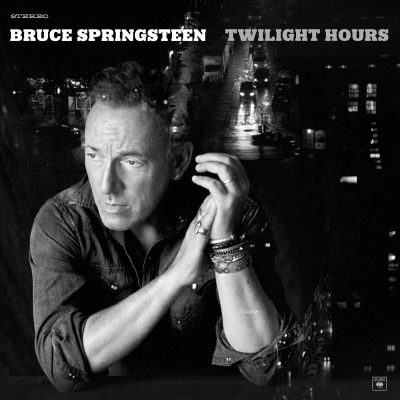
Twilight Hours (Recorded between 2010-2011 / 2017-2018)
One of the best albums to be found on Tracks II is Twilight Hours. At least for the majority of its running time. Written in tandem with Western Stars, the LP adopts that record’s lush, orchestral arrangements, but shifts the focus from the American West to inner city stories of love and loss, all sung in the first person. Springsteen is in full crooner mode for a lot of these tracks, even channeling a fellow New Jersey native who made Hoboken famous. The first three numbers all feature terrific vocal performances from the Boss as he professes love and longing with soulful conviction. These are accompanied by enchanting melodies and rich arrangements that really set the scene and establish the inviting mood. After a stumble on “Lonely Town” – a sparse, minimally-invested, show tune-like lullaby whose choruses end with a melody that recalls “Jungleland” – Springsteen rebounds with the chill and breezy atmosphere of “September Kisses,” the sexiest ditty of the bunch. Shortly afterwards, the stage is set for “I’ll Stand By You,” the point where the record absolutely peaks. Opening with a sweet yet haunting aura, the luscious orchestration eventually leads to a standout chorus where the word “always” is gently sung, yet lands with as much emotional force as when Jon Bon Jovi tried to do the same using the opposite approach. “I’ll Stand By You” is a genuine treasure by any measure and one of the best love songs in Springsteen’s enviable catalog.
With a sparse arrangement that is driven only by an acoustic guitar, “High Sierra” opens up midway through, and though the melodies are nothing special, the orchestration makes the story being told feel epic and tragic. “Sunliner” is one of the more up-tempo tracks and Springsteen once again brings out his falsetto for certain parts, while welcoming the presence of a pedal steel guitar. It also, however, signals the start of the record’s last third, which is clearly its most underwhelming. None of the tunes relegated to the back end are necessarily bad songs; it’s simply that they are just not particularly memorable or conceived and executed with the same passion as most of what comes before. Even though the final track, “Follow the Sun,” is a bit of a recovery for the Boss, it’s a shame that the album eventually loses steam when it does. Had it continued down the path already set, this would have ended up as one of his most rewarding LPs, and possibly the best one found in this collection.

Perfect World (Recorded between 1994-2011)
In a perfect world it would be perfectly fitting that Springsteen leave the best album of this exhaustive set for last. As it turns out, that’s exactly what he’s done. Recorded sporadically over the widest stretch of time of any of these, Perfect World reunites him with the E Street Band, and you can hear that and feel it out of the gate. The joyfulness with which this particular troupe always plays, and the rich tapestry of their sound is all over these songs. The first three – “I’m Not Sleeping,” “Idiot’s Delight” and “Another Thin Line” – were co-written by Pittsburgh singer/songwriter Joe Grushecky, on whose work Springsteen had collaborated before. These are upbeat, spirited rockers that aim to bring down the house. The dark, bluesy vibe of “Idiot’s Delight,” with its apropos organ and harmonica, is wickedly cool. Hip-hop drum loops launch “Cutting Knife,” but the full band kicks in at the one-minute mark and takes this ode to passionate love to another level. Even the lyrically-simple and repetitive “You Lifted Me Up,” a statement of ultimate devotion, is saved by the guys and gals in E Street and turned into something much livelier and more exciting.
The record breaths where it needs to, such as on midpoint offering “Blind Man,” with its infectious melody and easy, laid-back feel. The unexpected rockabilly nature of “The Great Depression” feels a bit out of sync with the rest of the album, but the melody and arrangement around it are something else and elevate it into so much more. “Rain in the River” sees Springsteen again singing with full gravel voice, and the band sounds particularly tight and bombastic here. In fact, the chorus feels like such a powerful prayer that a gospel accompaniment would not be out of place. But if there’s one song whose impact I felt throughout my entire body in the best possible way, it’s the romantic and utterly sexy “If I Could Only Be Your Lover.” On it, Springsteen’s voice sounds youthful and vibrant as he sings a ridiculously-catchy melody, especially on the chorus. The thoroughly uplifting track is an absolute gem. Fortunately, with a simple acoustic guitar and light instrumental flourishes that support a meditation on one’s mistakes, on the title tune the Boss chooses to go out on a masterful note. Perfect World really is the highest point of this release by virtue of being the one that comes closest to actually being perfect. It’s the most consistent and best-realized of all these lost LPs, and certainly a head-scratcher as to why on Earth he couldn’t have thought to unveil this before.
Tracks II: The Lost Albums is available in vinyl and CD formats, and also on all streaming platforms.
 Generation X Wire