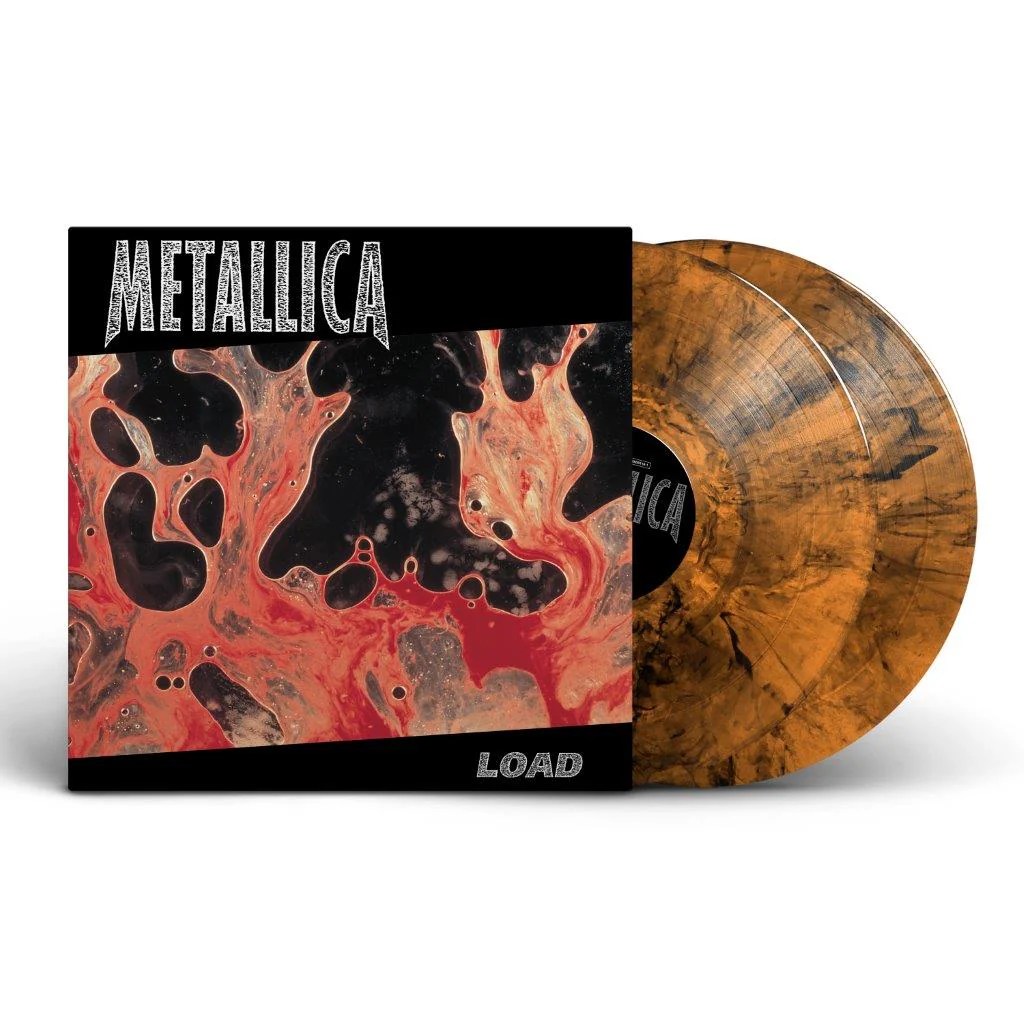
Metallica – Load (Remastered) Deluxe Box Set
By J.C. Correa
How much Metallica is too much Metallica? The legendary heavy metal outfit has made it a point to possibly provide that answer with the recent release of the gargantuan box set that serves to commemorate, of all things, their contentious 1996 LP Load. With over 240 unreleased tracks from that project, its creation, and that era overall, credit the group for doubling down on what is, to this day, one of their most divisive releases, especially among its hardcore fan base.
It’s worth remembering that after the enormous success of their self-titled epic (commonly known as The Black Album) in 1991, by the middle of the decade, Metallica was not only the biggest name in metal, but also one of the most popular and mainstream recording artists on the planet. Following up that level of commercial triumph would be a daunting task for anyone. But instead of doing it with a sure-fire replica of what worked on that record, the Bay Area thrashers bravely decided that this would be the time to flex their creative muscles in a way like never before; one that embraced a musical ambition that went way beyond heavy metal, and, in many ways, left it in the dust.
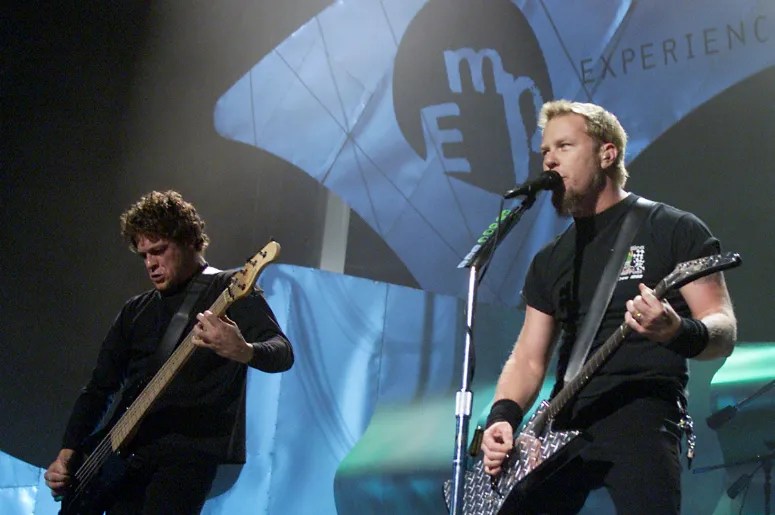
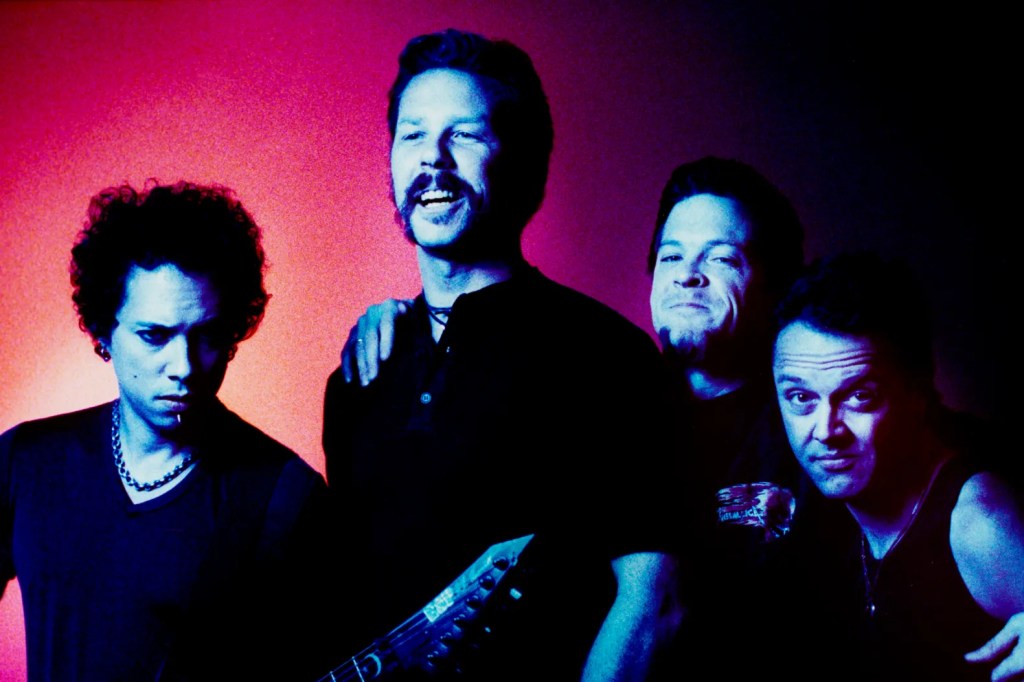
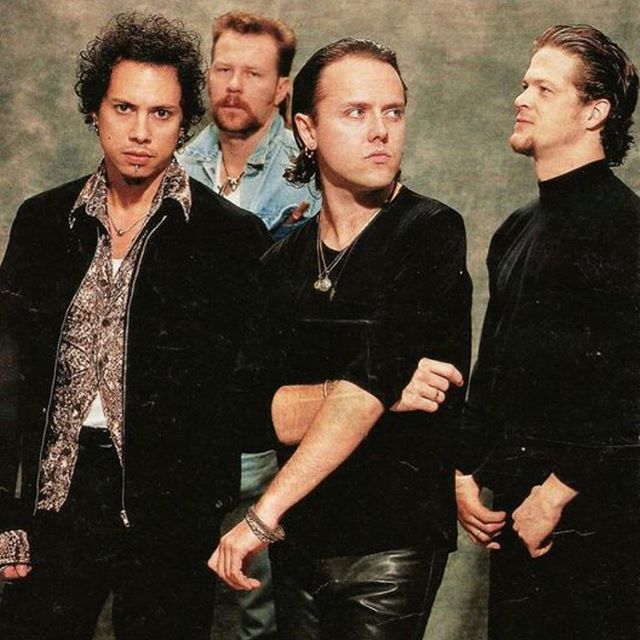
By experimenting with blues rock, southern rock, country, boogie rock, grunge, and traditional hard rock, the group dared to put its faithful sternly out of their comfort zone, even if singer James Hetfield’s lyrics stayed true to the usual doom and gloom. Let’s just say that it’s hard to imagine thrash metal brethren like Slayer or Megadeth pulling that stunt. But it’s precisely their musical curiosities (and, let’s be honest, the comfort of their success) that set Metallica apart from their peers. And they boldly went all-in on this reinvention by going as far as cutting off their hair and adopting a look reliant on makeup and eyeliner. They were clearly out to make a point, however awkwardly, and in that regard it’s easy to forgive the somewhat dubious decision of the latter (only guitarist Kirk Hammett, and, to a lesser extent, drummer Lars Ulrich made it look natural).
Metallica, particular Ulrich and Hammett, have since admitted that they took a cue from U2 when it came to this facelift; a point that is evident by the hiring of the Irish band’s long-time photographer Anton Corbijn as the person responsible for creating the visual campaign. It’s also worth remembering that some fans of U2 took significant issue with the fact that the group radically changed its own sound and image for the release of their groundbreaking album Achtung Baby in 1991. When Metallica did the same, however, a good portion of their loyalists literally went apeshit. The common narrative has always been that at least U2 had the tunes to back it up. But here’s the big secret: so did Metallica. At least for the most part. Diving into the treasures of this new release, however excessive, is a good opportunity to be reminded of that, or understand it anew.
In addition to a glorious new mix in Dolby Atmos, the set offers 15 additional discs that are littered with demos, alternate takes, individual riffs, different mixes, rehearsals, live performances, you name it. And that’s not counting a handful of DVDs devoted to more of the same. In other words, perhaps only a Metallica obsessive will find absolute value in all that is offered here. For most others, the listening experience may rightfully be a daunting one. The good news is that there is enough variety to let one choose which avenue to go down, depending on whether your poison is live recordings, or the need to do an archeological deep dive into the origin of these songs. If your interest is in the latter – as it mainly was for me – there is a plethora of treasures to unearth here, even as it requires an exorbitant amount of patience for a process of endless repetition in search of what holds all the answers: the details in the minimal differences.
Though some of the tracks feature riffs that are extremely crude-sounding, they serve to at least expose the general idea, and in some cases, its actual genesis. Most of these don’t make for a good listen – let alone for a rocking good time – yet their historical value is undeniable. When listening to them isolated, most of the riffs are not particularly great or memorable extricated from the songs and/or without the production. But that’s perfectly fine since it becomes clear that what Metallica was interested in here was constructing good tunes and recording them well. Conversely, the lyric-less demos allow for an appreciation of the instrumentation and general arrangements. Mostly devoid of words, the demo of deep cut “Ronnie” is particularly great and even bluesier than the final version. In a separate vocal demo for the same song, its southern country fried bona fides are left unquestioned by the actual mention of Mason Dixon. Unsurprisingly, the demo of Hetfield’s tender, meditative and heartbreaking confessional “Mama Said” is the one with the most complete lyrics. It’s clues like these that make this whole process a fascination excavation.
Fans may be amused to discover the working titles of some of the songs: “King Nothing” was actually called “Load;” “Hero of the Day” went by “Mouldy;” “Bleeding Me” was “Boss;” “Cure” was named “Believe;” “Streamline” was the moniker for “Wasting My Hate;” “Thorn Within” was referred to as “NC – 17;” and “Poor Twisted Me” was known as “Dusty.” The latter, for example, is not a great composition, yet its charm lies in the fact that it dares to be very different and is trying something entirely new; a point that is immediately evident in the earliest demo. Though “Ain’t My Bitch” teases at thrash in its chorus, the entirety of the project is the sound of a band bored with speed metal. Which makes it all the more frustrating that they still felt the need to shoehorn a pummeling outro into an otherwise beautiful assortment of melodies and instrumentation on a ditty like “Hero of the Day,” which results in a forced attempt to remind us that they were still a metal group. On the other hand, even early on, it’s clear that the most inspired moments are “Bleeding Me” and “The Outlaw Torn,” the two epics of the collection. Both are less about musical detours than a search for an engulfing atmosphere, and as such, they justify their length.
Interestingly, in the case of “The Outlaw Torn” – possibly the finished album’s finest moment – the band was forced to trim down its initial length for the original release 29 years ago due to the manufacturing limits of CDs. They have taken this opportunity to include the intended version as one of the tracks on this package (the double LP edition of Load substitutes the original for the new one), cheekily calling it “The Outlaw Torn (No More Manufacturing Limits!).” That said, the additional minute that is added just jams out the outro a bit more but doesn’t add much in the end to label it as superior. The biggest difference is that it concludes on a full stop as opposed to a fade out. In fact, besides both of these, there is yet another interesting alternate mix of the song with a cool vocal that accompanies the tune’s outro by actually repeating its title over and over.
On the topic of alternate versions, listeners can find a beautiful solo recording of “Mama Said” with just an acoustic guitar that allows one to appreciate Hetfield’s soulful, heartfelt vocals. It is one of the real highlights of the set. Less so are electronic club mixes of “Until It Sleeps” and “Hero of the Day,” as both might be enough to give some fans a few heart attacks. “King Nothing” gets a similar treatment, but in this case it’s actually kind of cool, even if unnecessary.
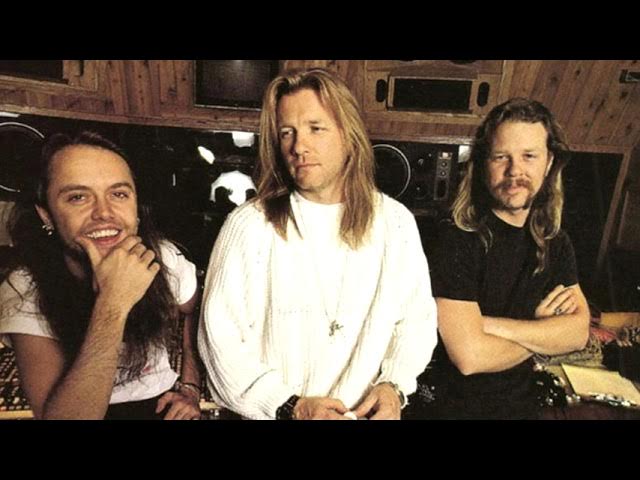
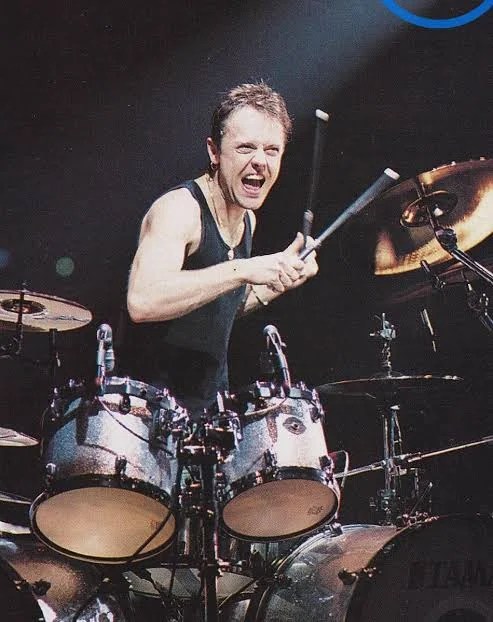
Ulrich, the pint-sized drummer with an in-your-face personality strong enough to will Metallica into existence and keep its operation running at such a staggering level for almost 45 years, is frequently the recipient of criticism with regards to his playing. The plain truth is that both the endless array of demos and the vast number of live recordings that are included only serve to verify those critiques through ample cases of evidence. His deficiencies, more often than not, are in the area of inconsistent tempos, seeing as they can wildly change at any given moment without a predetermined design. It’s to the band’s great credit that they have found a way to work around this and not let it hamper them. In fact, they have done so through their rare ability to lock into his unpredictable style.
Speaking of live recordings, as I’ve already mentioned, there is enough here to keep fans of that happy and satiated for a great many years. Included are nothing less than four complete concerts performed between 1995 and 1996, an additional abridged show recorded for radio, as well as a collection of cuts from the group’s 1996-1997 tour taken from all over the world and sequenced in a way as to replicate a basic set list from that era. These latter ones are sonically the least appealing, as they seem to be taken from soundboard recordings since you can barely hear the presence of a crowd. Much more effective and thrilling are the other aforementioned shows. Among these, highlights include terrific soulful renditions of epic ballad “Fade to Black” from both a 1996 Lollapalooza gig in Irvine, California and a headlining stint at the Monsters of Rock festival in Donington, England from the previous summer. The Donington appearance has historical significance for a few reasons, not least of which is the fact that Metallica used it as a respite from the studio while they were recording the album that eventually became Load, and thus seized on the opportunity to introduce two new songs to an unsuspecting crowd: Bluesy boogie rock stomper “2 X 4,” and doomsday-sounding, sludge metal offering “Devil’s Dance,” which would actually go on to feature on Load’s immediate follow up, Reload, a year and a half later. While the performance of “Devil’s Dance” is particularly good, it’s also not accurate to say that both compositions were given their official live debuts in front of the Donington crowd. That occurrence took place a few days before at a London club, and the set includes these as well. As such, it’s interesting to note how less impressive and unpolished they both sound there.

At the Donington show, the band also sneaks in the instrumental outro of “The Outlaw Torn” during the middle section of “Seek & Destroy.” You can almost sense that Metallica are not only measuring the temperature of the room but also trying to gauge if their new ideas have any chance of sticking. Amusingly, when referencing some of the other artists on that bill, some of the guys take a small dig at Slash, and particularly his then-still Guns N’ Roses cohort Axl Rose, as well as Skid Row (“youth gone mild”). Beyond this, Hetfield’s tendency to, as a whole, perform his frontman duties by uttering vulgar, childish remarks onstage was still very much prevalent then and is in sharp contrast with the pronounced maturity he was displaying as a songwriter on the very project he was then creating with his bandmates.
Which brings me to the foremost reason why anyone should want to consider taking this journey, and that would be the album itself. For folks not wishing to invest a good chunk of change and/or time into the contents of the box set, the newly remastered LP is available on its own for both purchase and streaming. The latter option offers the chance to hear it through the stellar Dolby Atmos mix that is absolutely worth it. Doing so, now more than ever, vindicates Metallica’s mid ‘90s experiment and reintroduces it as a bold, daring, adventurous record, impeccably produced and layered with inspired sonic touches. If you’re familiar with the album, did you actually know that “2 X 4,” “King Nothing,” “Ronnie,” “Wasting My Hate” and “Bleeding Me” each feature a shaker, or that these last two, at one point, actually use a synthesizer and bongos, respectively? This seems inconceivable for an outfit that once recorded Kill ‘Em All, but the Dolby Atmos mix leaves zero doubt as to these spirited flourishes. They are also undoubtedly the influence of producer Bob Rock, the man most responsible for the pristine, polished, and timeless sound of The Black Album that caused Metallica to not hesitate for a moment about working with him again. Among his many studio tricks, it is Rock who encouraged Hetfield to vocally harmonize with himself a lot on these songs, and the results speak for themselves.
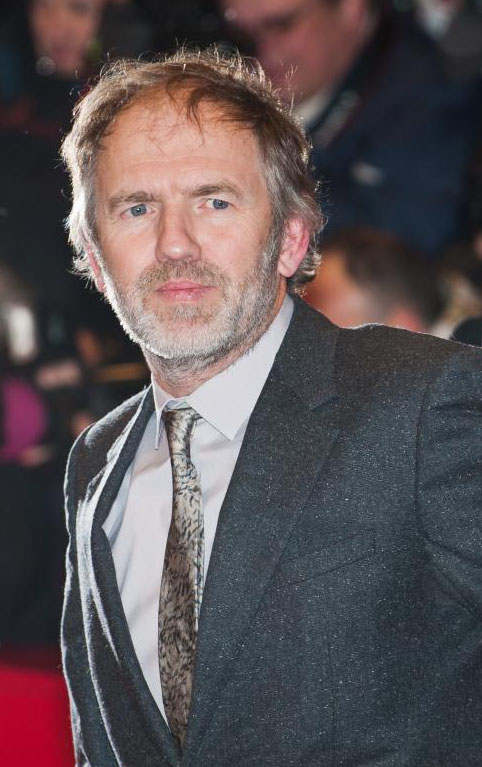
Most importantly, Rock seems to have clearly understood what Metallica was trying to do and greatly facilitated that journey; whether it was to channel Alice in Chains for “The House Jack Built,” tip the hat to Lynyrd Skynyrd on “Poor Twisted Me,” “Ronnie” and “Mama Said” (the latter with an infusion of country), or conjure up some serious boogie groves on “Cure.” “Ronnie,” in particular, features great guitar work with licks and solos that counterpoint each other during the verses, and an overall rich and clever instrumentation. This very point, as well as the album’s overall sound and vibe, is in large part due to Hammett playing a lot of rhythm guitar at Rock’s suggestion; a responsibility that up until then had mostly fallen on Hetfield. Furthermore, then bassist Jason Newsted’s instrument is comfortably present throughout the record, a benefit it did not at all enjoy on 1988’s …And Justice for All due to Hetfield and Ulrich’s immature stupidity when it came to mixing.
Understandably, not everything shines. The descending notes on the main riff for “Thorn Within” seem lifted from Stone Temple Pilots’ “Sex Type Thing,” but the end result is mostly uninspired back-album filler. What does work exceptionally well, and is probably the record’s ace in the hole, are Hetfield’s lyrics. He has not been this introspective before or since, and it’s clear that what was on his mind then clearly informed a lot of the new sounds he was chasing. His parents, or more specifically, the fraught relationship he shared with each of them, as well as the unhealed scars left by their respective passings, are a big lyrical theme on the album, and Hetfield successfully mines this to an applaudable degree.
At the end of the day, the very best thing about Load is the fact that you can smell and feel the freedom with which the band is working and relishing in. For any other rock outfit this may have been very acceptable. But metalheads are a touchy bunch and usually not keen on giving too much slack to their heroes. Which is unfortunate, considering that a group as musically talented as Metallica has as much a right to venture out and experiment as any artist from any genre. To their immense credit, they did just that on Load and did not apologize for it. A stubborn fan may, to this day, see it as a waste of time and a sort of brand betrayal. A more open-minded one, on the other hand, stands an excellent chance of being rewarded with some very compelling and challenging music. After listening to this reissue, it is my firm belief that this was the last truly interesting record that the band ever made, especially when considering that, not counting its companion piece Reload, everything they’ve released since has either been painfully misguided (St. Anger), or, in some form or other, a safe retread of tired formulas.
For those wondering if Reload will get a rerelease of this magnitude in a few years’ time, I suppose only time will tell. But it also does beg re-asking how much Metallica is too much Metallica?
The Load (Remastered) Deluxe Box Set, save for what’s on the DVDs, can be streamed in its entirety on all major platforms.
 Generation X Wire