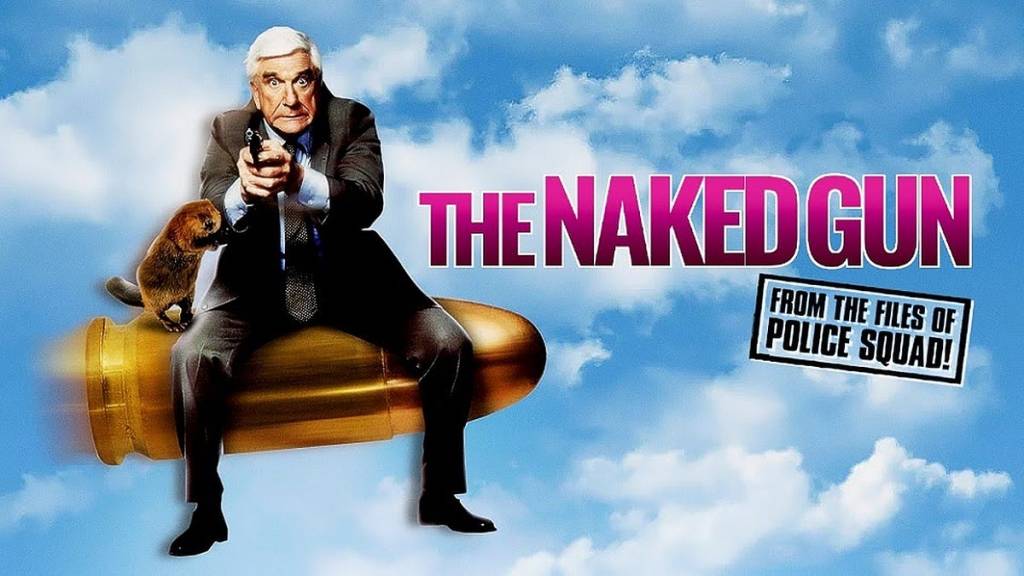
The Naked Gun: From the Files of Police Squad!
4 out of 5 stars
By J.C. Correa
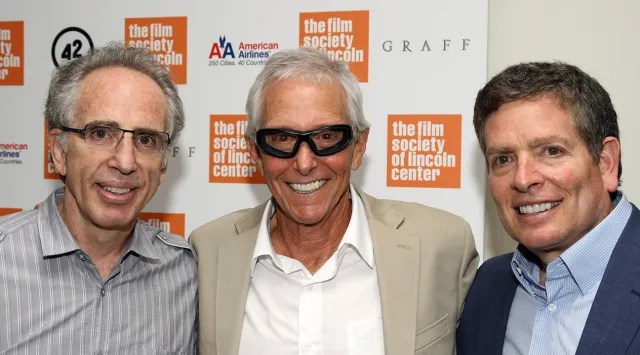
As you may have heard by now, there is a reboot of The Naked Gun dropping in cinemas later this summer. More specifically, it is apparently not a remake, but rather, a continuation of the beloved film series started in the 1980s by David Zucker, Jim Abrahams, and Jerry Zucker, the comedy team behind Airplane! and Top Secret! As it is, in the new offering, Liam Neeson will have the unenviable task of following in the revered footsteps of Leslie Nielsen when he straps on his shield and holster to play the son of Police Lieutenant Frank Drebin. In light of this imminent release, I took a recent look once again at the very thing that started this madness.
Released in the winter of 1988, The Naked Gun: From the Files of Police Squad! was an immediate hit. But this fact is somewhat surprising considering that, as the title itself suggests, the movie was an actual spinoff of the highly-acclaimed 1982 television series Police Squad! Unfortunately, this early Zucker, Abrahams, and Zucker creation was canceled after only one six-episode season, disappearing from pop culture as quickly as it arrived, though it went on to attain cult status just as swiftly. Much like the film it spawned, the show centered on the hilarious exploits of bumbling Detective Drebin, already then played to deadpan perfection by Nielsen.

To achieve a successful crossover onto the big screen, the filmmakers recast two of its major characters: Academy Award-winner George Kennedy replaced Alan North as Captain Ed Hocken, while the role of Drebin’s dimwitted partner Nordberg went from Peter Lupus to O.J. Simpson. They also added some star power by casting Priscilla Presley (then having only appeared on television) as Drebin’s love interest, and Ricardo Montalban as the main nemesis. Most importantly, they kept the story streamlined in a way that did not require viewers to have watched a single episode of Police Squad! in order to simply jump in on the fun. Though I imagine its fans surely got a kick out of seeing Ed Williams and Tiny Ron return in the small roles they originated on the show.
The trope of the idiot policeman was not a new one even then, and Zucker, Abrahams, and Zucker clearly modeled Drebin – as well as the entire movie – on what Blake Edwards had done decades before on his Pink Panther films, and more specifically, on his genius star Peter Sellers’ outlandish antics as the perpetually-inept Inspector Clouseau. Simply stated, there would be no Drebin without Clouseau, and Nielsen knew that well enough when he adopted Sellers’ straight-faced delivery in order to portray Drebin. In both cases it worked like a charm.
In the picture, Hocken tasks Drebin with investigating the mysterious maiming of Nordberg at the hands of drug runners. This leads him to Vincent Ludwig (Montalban), a suave tycoon whom Drebin begins to suspect might be behind an assassination attempt on Queen Elizabeth II during Her Majesty’s visit to the city of Los Angeles. Quickly embarking on a romance with Ludwig’s assistant Jane (Presley), and under the constantly-exasperated eye of the city’s mayor (Nancy Marchand), things culminate at a riotous baseball game where Drebin has to go undercover as both an opera singer and the game’s umpire in order to prevent one of the players from murdering the queen.
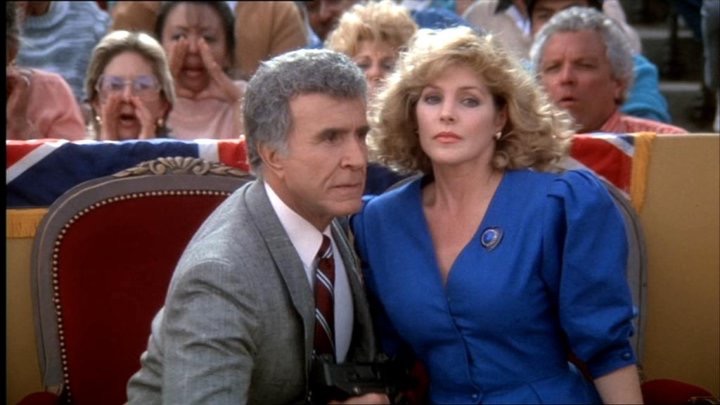
To be fair, the plot is absolutely irrelevant, and it shouldn’t have to matter much in this kind of picture anyway. What we are here for, and what provides the belly laughs, chortles and countless smiles, is the perpetual array of sight gags, spoofs (of both other films and pop culture as a whole) and slapstick on display. Be it the lively opening at a meeting of anti-American world leaders (Khomeini, Arafat, Gaddafi, Castro, and Gorbachev are all present, with the latter even sporting his trademark forehead birthmark, which is soon scrubbed off by Drebin), or an exorbitant amount of chewed tobacco spat onto the baseball field by not just every member of each dugout but the players’ wives as well, the spoof and satire are laid on thick.
In fact, the title sequence, which immediately follows the aforementioned prologue, perfectly sets the tone for everything. Also taking its cue from Police Squad!, we are treated to the infamous image of a police siren whose stationary camera follows it, and the moving car it’s mounted on, just about everywhere: the city streets, inside a car wash, a women’s locker room and adjoining shower, the tracks of a roller coaster. The sequence is scored to composer Ira Newborn’s boisterous, big band music, which immediately lets us know just what type of zany, wild ride is in store. In other words, it’s going to be a circus!
Humor is such a personal thing, and it hits all of us in different ways. One of the key things that makes The Naked Gun so successful as a comedy is its wide approach to it, its willingness to offer something for everyone. If, for example, spoof, satire and sight gags are not your preferred schtick, there’s fortunately plenty on hand in the form of irony, misunderstanding, puns (a character is called Pahpshmir), word play, and slapstick. One of the best scenes involving the latter is one in which Drebin breaks into Ludwig’s office late one night in search of evidence, and before long, finds himself on the building’s outside ledge – one that is adorned with naked sculptures – hanging on to a swiveling concrete penis for dear life. Another terrific example is the sight of Drebin, in a false-alarm effort to save the queen’s life, sliding down a banquet table with Queen Elizabeth’s legs wrapped around him.
Of everything on display, I am particularly partial to the flick’s verbal humor, and a standout example happens when Drebin and Ludwig first meet. After shaking hands, the sleazy businessman offers the detective a very expensive cigar by gesturing towards a case of them and asking, “Cuban?” Clueless as to the implication, Drebin replies, “No, Dutch-Irish. My father was from Wales.” Another banger occurs later on, after Drebin has been scolded by the mayor for having acted recklessly in the past. He defends himself by declaring with utmost seriousness, “When I see five weirdos dressed in togas, stabbing a guy in the middle of the park in full view of a hundred people, I shoot the bastard!” Marchand, as the incensed mayor, epically replies, “That was a Shakespeare in the Park production of Julius Caesar, you moron! You killed five actors. Good ones!”
Perhaps my favorite moment in the movie (and I imagine for many other viewers as well) is when Drebin, in the guise of renowned opera singer Enrico Pallazzo, butchers “The Star-Spangled Banner.” Clearly oblivious as to the lyrics, he improvises as he goes along with whatever words he thinks might sound like what he remembers, or thematically fit the anthem’s narrative. It’s a gut-busting scene that might resonate with the kid in all of us, especially if we recall the days when we, as youngsters in school, didn’t necessarily know the words either. Kennedy’s and Marchand’s individual reactions upon recognizing that Drebin is behind the outlandish stunt are absolutely priceless.

Whether you are a longtime fan of The Naked Gun and/or its sequels, or simply want to discover an uproarious, broad comedy from a time when O.J. Simpson was nothing more than an inoffensive former football player, this is one that’s most certainly worth diving into. And, like some of us, perhaps over and over again.
 Generation X Wire