
By J.C. Correa
In May of 1975, the mighty Led Zeppelin finished a tour for their hallowed Physical Graffiti double album at London’s Earl’s Court. That whole cycle represented a victory lap of sorts for a band that was then at the peak of its powers and fame. Five shows were performed there, each lasting a minimum of three hours, with the longest going just fifteen minutes shy of the four-hour mark. The concerts are hailed as legendary milestones in the band’s career and did their part to advance Zeppelin’s reputation as the baddest band on Earth, and most certainly of its era.
The set list of those famed performances was recreated on Saturday, April 26 at New York’s Gramercy Theatre by Lez Zeppelin, an all-female troupe that for the past 20 years has slowly built a reputation as one of the best tribute bands of the famed English quartet. Originated in New York by guitarist Steph Paynes, the group, currently comprised of Dana Athens (vocals), Joan Chew (bass, keyboards) and Hillary Blaze (drums), pulls out all the stops to bring fans as authentic a Led Zeppelin experience as possible. On occasion of the 50th anniversary of both Physical Graffiti and the Earl’s Court shows, the band has been touring the northeast recently, alternating between live renditions of the complete album and the London concerts. The hometown New York crowd was awarded the latter.
Though footage of those 1975 gigs exists on YouTube (in some cases in their entirety), Zeppelin never officially unveiled any material from them, save for performances of a few songs during an acoustic middle section of the show, which were included as part of a 2003 DVD release. All the same, there exists enough of a reference for anyone to understand what all the fuss was about. This would have surely served as the impetus for attending Saturday’s concert for enthusiasts, as well as a document by which everything would be judged. As such, the faithfully devoted should have likely concluded that Lez Zeppelin executed a high-caliber performance marked by solid musicianship, but one also mired by inconsistencies of tempo.
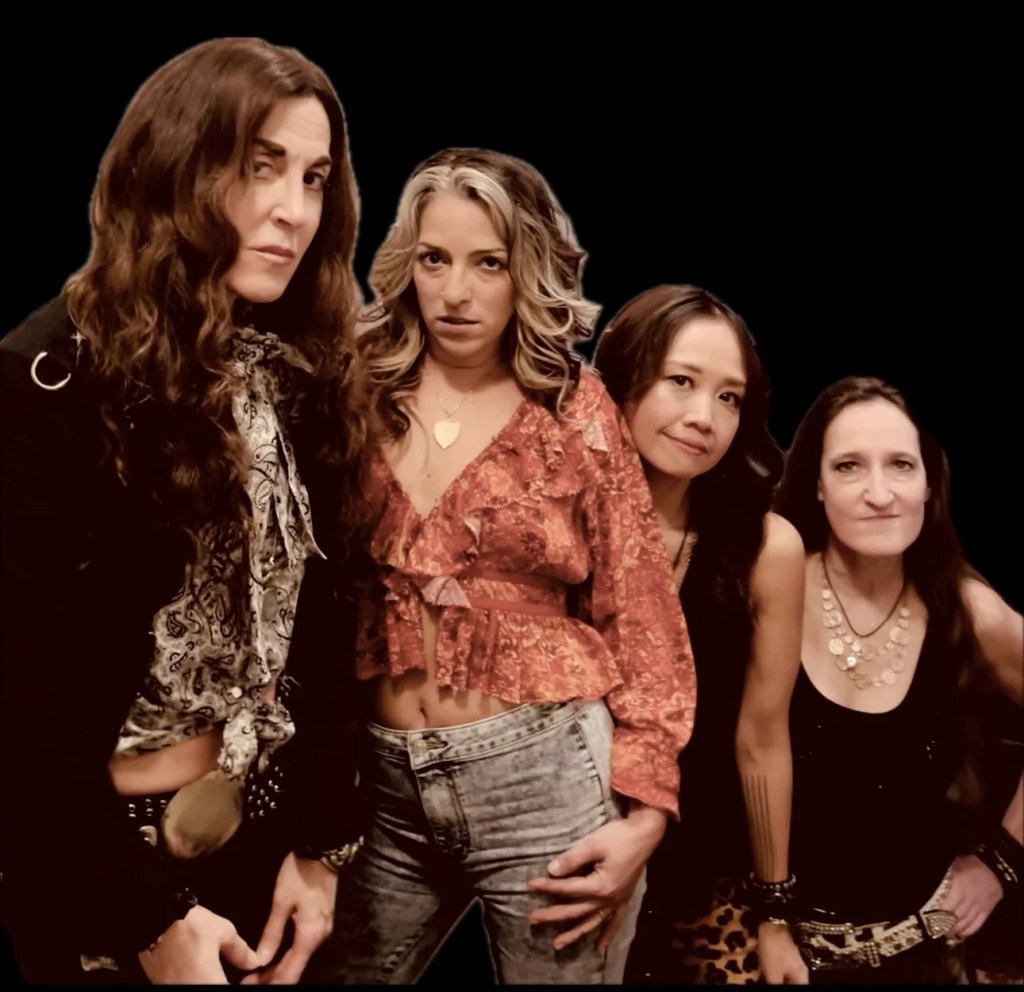
True to form, the ladies got things going with “Rock and Roll” in the same manner that Zeppelin did so fifty years ago. However, the tune lacked some of its inherent energy, at least one fitting for an opener. The reverence was immediately evident by how Paynes hung her Les Paul substantially below her waist in true Jimmy Page style. She and her bandmates sported flared pants reminiscent of those times, if not direct replicas of the outfits that the original members wore at Earl’s Court (some tribute acts prioritize details such as this). The pounding presence of the drums in the sound mix also indicated a faithfulness to purpose.
The band hit a better stride with the second song, Physical Graffiti closer “Sick Again,” and quickly locked into its groove. This was followed by “Over the Hills and Far Away,” one of Zeppelin’s most majestic compositions, in part because of the radical jump from its breezy acoustic opening to a groovy onslaught punctuated by drums that thunder slightly behind the beat. Blaze perfectly replicated John Bonham’s precise timing here, awarding the tune its signature heaviness, which followed singer Athens’ beautiful interpretation of the wistful opening. Unfortunately, though she hit all the notes in its second half, her vocals did not flow as well and lacked the oomph and swagger that Robert Plant brought to the recording.
It was not long before Paynes brought out a red double neck guitar identical to Page’s iconic one and launched into the back-to-back attack of Houses of the Holy’s first two tracks, “The Song Remains the Same” and “The Rain Song.” The latter provided a moment for the ladies to slow things down and positioned Chew on keyboards for the first time. She would stay there for the next two selections, including a terrific and epic 15-minute rendition of deep cut “No Quarter,” which was the evening’s undisputed highlight. Hampered only by an excessive wah-wah effect on Paynes’ guitar during the first few phrasings, the tune proved a showstopper all the same, in large part because of Chew’s efforts, which included an extended piano interlude in the middle section. This was capped off by the re-emergence of drums and guitar for a rousing jam that was only punctuated by the reintroduction of Athens’ vocals to bring it all home.

After playfully teasing “Stairway to Heaven,” “Tangerine,” the lovely ballad from Led Zeppelin III, got a little love with Paynes even asking the crowd afterwards if they like the song, clearly reflecting her own sentiments. Upon its conclusion the stools immediately came out and the band recreated the famous middle section of the Earl’s Court shows that most fans are probably familiar with. Chew switched to mandolin for the first two numbers, proving, just like John Paul Jones did in his day, that she is the best all-around musician of the band and rightfully the evening’s MVP. She reversed back to bass for the third and last tune, the thumping “Bron-Y-Aur-Stomp,” but its bite was unfortunately hampered somewhat by a case of slower tempo (more on that later) from Blaze’s kick drum.
What followed is what is possibly the best moment of those Earl’s Court performances: The funky, frenetic onslaught of Physical Graffiti highlight, “Trampled Under Foot.” Lez Zeppelin did an admirable job at recreating the track’s wicked energy and spunk, even if they fell short of the original band’s mesmerizing live take on it from back then.
Having not yet had an opportunity to showcase their individual talents, Blaze and Paynes got to do just that across the next two songs, respectively. The instrumental “Moby Dick,” famous for being Bonham’s signature moment behind the skins, allowed Blaze to faithfully replicate the revered drummer’s intricate and extended drum solo during the middle section, replete with open-palm hand strikes of cymbals and drums. Vintage footage of the kit master at work on this is usually nothing short of amazing, and Blaze, to her enormous credit, did astoundingly right by him, and the sold-out crowd let her know it. Paynes then took the spotlight to execute the iconic “Dazed and Confused.” Though the ditty was yet another victim of a slower-than-usual tempo, the guitarist made up for it by replicating Page’s infamous violin bow strikes with stellar precision and showmanship. Aided by a strong vocal from Athens, who veered off midway through to incorporate lines of Scott McKenzie’s “San Francisco,” the number was one of the evening’s true highlights.
What is a Led Zeppelin (or a Zep tribute band’s) concert without “Stairway to Heaven”? Arguably the band’s most iconic song, if not necessarily its best, it is a shame that the inevitable performance of it also fell slightly behind on tempo during the full-throttle outro and lacked the requisite punch as a result. Still, Athens sang it wonderfully, even incorporating Plant’s famous ad-lib, “Does anybody remember laughter?”
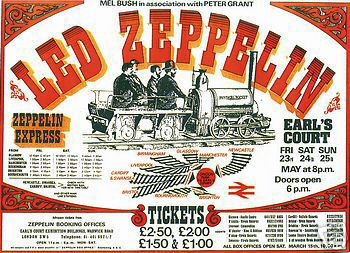
“Whole Lotta Love” and “Black Dog” served as the night’s encores, just as they did at Earl’s Court half a century ago. The first’s earth-rattling riff lost some of its groove somewhat from the evening’s frequent culprit: a sluggish tempo. Paynes employed a theremin to bring to life the sonic effects of the song’s avant-garde middle section, with Athens doing a good enough job to answer her vocally. “Black Dog” stepped it up a notch and closed things off with appropriate energy and some solid singing by Athens.
Physical Graffiti’s centerpiece, “Kashmir,” is also Led Zeppelin’s most epic recording. And it is a shame that it was the one most stunted by a frustratingly slow tempo that robbed it of its sprawling, cinematic power, despite Chew’s best efforts to keep it alive on synthesizer. Things picked up slightly near the end, but the overall effect was all but lost by then. Another standout from that album (and from the Earl’s Court concerts), “In My Time of Dying,” was also plagued, albeit much less so, by unusually delayed slide guitar phrasings during the bridge sections. Blaze was not to blame this time around as she handled the signature lazy beat quite adeptly, making this more a case of a chosen preference by Paynes. It was a detail that the average fan may not have minded (if realized at all), but one that still may have raised an eyebrow or two among purists. Fortunately, the overall execution of the tune was at a high level, taking off during the extended break and solo, and thus allowing the show to really pick up steam when it needed it.
Though the performance did not exceed the 3-plus hours of yesteryear’s lore, Lez Zeppelin still committed fully to a commendable 165-minute endeavor. Embracing an authentic-looking logo, along with visual iconography of an official nature that projected constantly on a screen behind them, the tribute act ensured to give the crowd whatever extra details it could to help legitimize their connection to Led Zeppelin. For many, this, along with the set list and overall excellent musicianship, may have been enough to deem the effort a complete success.
 Generation X Wire