
You Can Count on Me
4.5 out of 5 stars
By J.C. Correa
Though he had been acting consistently for five or so years, it was in You Can Count on Me, the Sundance breakout hit from 2000, that I first watched Mark Ruffalo perform. And he was largely the reason why, then, I placed Kenneth Lonergan’s dramedy in the top position of films that I loved from that year. I recently revisited the movie at a special screening at New York’s Paris Theater to commemorate its 25th anniversary. The event was attended by Lonergan, producer Jeffrey Sharp, and stars Matthew Broderick and Jon Tenney.
If you are unfamiliar with the picture, it is one I recommend with the same enthusiasm now that I did back then. It pairs Ruffalo with Laura Linney, who both portray each other’s siblings. After having lost their parents at a young age, the film jumps almost twenty years to find Sammy (Linney) as a hardworking single mom living in her parents’ former house in a small town in the Catskills. She balances her parental duties to Rudy (Rory Culkin) with her function as a loan manager for a bank.

Sammy’s life gets disrupted by the simultaneous arrival of two men. The first of these is the bank’s new manager Brian, deliciously played by Broderick as a by-the-book bureaucrat with a giant stick up his ass (he is not lying when he proudly exclaims that he likes paperwork). The other individual is her estranged younger brother Terry (Ruffalo). Terry is a drifter whose directionless life has gotten him into all sorts of trouble.
Desperately needing to get out of a financial jam, Terry pays Sammy a visit, and shortly after awkwardly rekindling his kinship with her, decides to stay at the house indefinitely. This gives him an opportunity to bond with Rudy while also freeing up his sister’s time in order to allow her to have some semblance of a life.
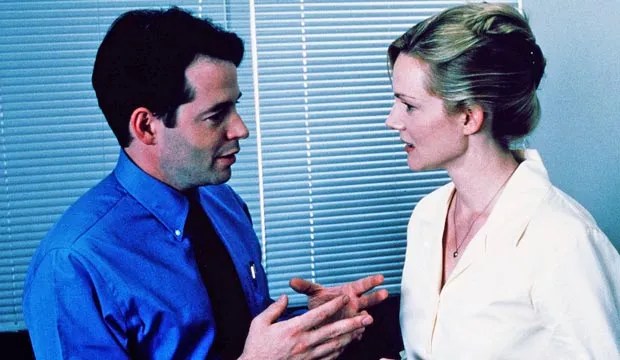
Lonergan positions Sammy and Terry as polar opposites in terms of just about everything. The movie’s last scene beautifully underscores this as they sit together on a bench; she with a pristine white office suit, he with baggy jeans and a scruffy brown jacket. The disparity of their hair colors and physical types also drive the point home. And it is these sharp contrasts between the siblings that serve as a direct source of the film’s drama and comedy.
Some of the funniest, most tender and overall wonderful scenes are those that Ruffalo shares with Culkin. Lacking a father figure, the precocious little boy is given a chance to bond with the uncle he never really got to know; one who is enough of a badass in his eyes for the lad to quickly idolize him. Culkin is very expressive in the part, but in a natural, unforced way. The tenderness on display in the scenes between Terry and Rudy is unquestionably a highlight.
Linney, who was rightfully nominated for a Best Actress Academy Award for the role, is terrific as a woman dubiously straddling the line between being a responsible mother and giving in to her wildest tendencies. Sammy has a complicated relationship with an on-again, off-again boyfriend (Tenney), and develops an even bigger one with her demanding and unreasonable new boss. Linney is tasked with playing the straight woman to Terry’s rascal, but Lonergan awards the character enough mischief of her own to let us laugh, along with Sammy, at the irony of her own shenanigans.

Catholicism makes its presence felt (Martin Scorsese was an executive producer, so go figure), and is best represented by Ron, a friendly local priest played by the filmmaker himself in a disarming and funny turn. Considering that Lonergan examines Catholic themes from an ironic standpoint by setting up scenarios that involve double standards, it seems perfectly fitting to have him take on the role. The movie is constantly funny throughout – partly due to the excellent chemistry between everyone – but this intentional surveying of morality gives the humor a lot of its oomph.
The film uses Johann Sebastian Bach’s famous “Cello Suite No. 1 in G Major” to create a feeling of unease during certain moments. As a general rule, the movie is constructed in a way where we frequently get the sense that we are being dropped into the middle of a scene and exiting it before its expected conclusion. A cop showing up to visit Sammy on two occasions without getting to utter a word are great examples of this. During the post-screening discussion, Lonergan, who is also a playwright, carefully elaborated on this method by explaining that he intentionally went for it with his editor, Anne McCabe, as a way to clearly separate the cinematic medium from the stage one. The approach gives the picture a wonderful rhythm that only helps to keep viewers on their toes by not spoon-feeding them anything.
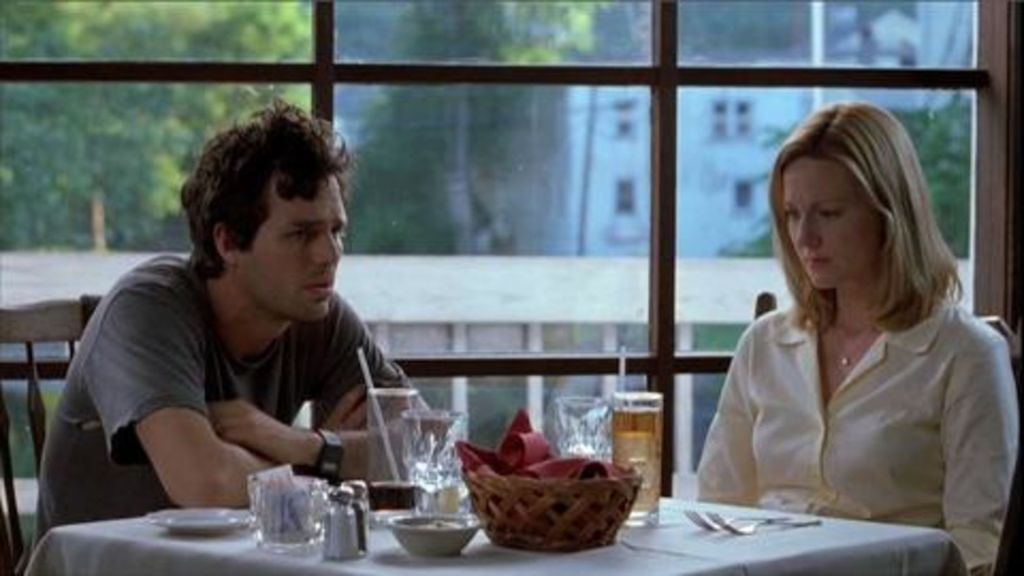
I would, however, like to circle to back to Ruffalo. In a film rich with excellence, his participation is still its greatest and most watchable asset. Nervous, fidgety, and constantly looking lost despite the huge chip on his shoulder, Ruffalo embodies Terry with a raw, unpredictable energy comparable to that of a young Marlon Brando. His first scene with Linney at a restaurant is a masterclass of acting by both performers. It is no secret that he has gone on to have a highly distinguished career ever since, navigating with ease between popular fare and more prestige parts, the latter of which have earned him four Oscar nominations. Still, Ruffalo has never been better or more dynamic than he was in You Can Count on Me, making his lack of a nomination for it one of the most monumental snubs of my lifetime. He, along with the picture, are simply magnificent.
 Generation X Wire