By Joe Puccio
Supporting players in the various art forms of entertainment are just as integral as the leading parts they correlate with. Without William Zabka as antagonistic bully Johnny Lawrence, Ralph Macchio’s popular underdog character Daniel LaRusso wouldn’t have been nearly as effective in The Karate Kid. If Rob Reiner, as left-leaning son-in-law Mike Stivic, wasn’t cast opposite bigoted Archie Bunker (Carroll O’Connor), the dynamic on All in the Family wouldn’t have been remotely close to as successful as it was. And if superstar professional wrestlers like Hulk Hogan, Bret Hart, and Randy Savage didn’t have proficient opponents such as Steve Lombardi, Mike Sharpe, and Mario Mancini to “defeat,” the aura of the revered athletes would feel quite a bit different than it did.
“Not everybody can be Jon Bon Jovi,” acknowledged veteran grappler Barry Horowitz, during a recent conversation with Generation X Wire. “Look at Hollywood. There are the top-billed leading men like Sylvester Stallone. But there are also so many others in his movies who are just as important in making them work.”
The Tampa Bay-area native, known primarily for his multiple stints in the World Wrestling Federation (WWF, now World Wrestling Entertainment, or WWE), has amassed an astonishing career spanning over 40 years. Officially retiring only two years ago following an Impact Wrestling victory over Johnny Swinger, the accomplished mat man admittedly has much more experience on the losing end of the three count. Horowitz’s role for the majority of his tenure was that of an enhancement talent, otherwise known as a wrestler who is perennially booked to lose matches, often against more established performers. Certainly not as glamorous a role as that of his peers, it’s one that is equally as significant. “(Professional) Wrestling is about more than wins and losses. It’s about locking up and knowing how to execute the moves, apply submissions, and connect with the people. It’s about psychology,” Horowitz clarified. “We’re not in the Olympics and there’s some show business but we still have to take it seriously.”
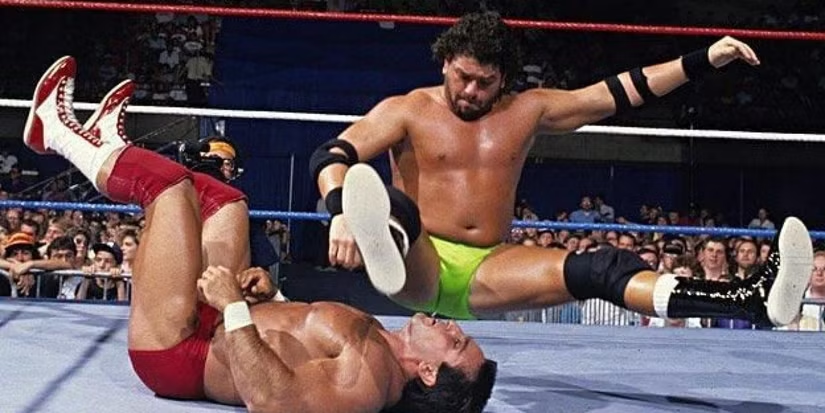
Horowitz’s longevity in the dog-eat-dog wrestling industry is a testament to not only his technique, but to his willingness to always “do business” or “put over” his foes (in other words, lose to them), his amiable disposition, and his reliability. “There were lots of guys with egos who didn’t want to do it,” he contended. “If you stayed home because you didn’t want to do what was asked of you, you’re a fool. To think of all the times I could’ve done that and if I had, I wouldn’t have lived my dream. I’m grateful.”
The venerable athlete cut his teeth in the sport in 1979, following an 18-month training regimen under the knowledgeable Boris Malenko, an afficionado of the game known for mentoring an elite array of students, including Bob Orton Jr., Glenn Jacobs (Kane), Buddy Landel, and Perry Saturn. Initially honing his skills throughout the vast Florida independent scene, Horowitz saw action in a variety of territories, from the National Wrestling Alliance (NWA) Mid-Atlantic promotion to the Global Wrestling Federation (GWF) to World Championship Wrestling (WCW). “Working for Global was great. They really took care of me there,” he remarked. Based in Dallas, Texas, the location was ideal for Horowitz, who was billed as “The Winner” in the company. “I’m a big country music fan so it was perfect. And wrestling at the iconic Dallas Sportatorium was fantastic. Although, that ring was hard! Taking a suplex or a body slam in it was like taking them in a parking lot,” he laughed.
Horowitz’s time in WCW, while clearly not as memorable as his other travels, was notable for sharing the ring with names like Brian Pillman, Disco Inferno, and even Bill Goldberg, becoming a number in Goldberg’s high-profile undefeated streak in 1998.

But it was in the aforementioned WWF where the Jewish born entertainer became a household name despite his underdog persona. “Having guys like Chris Candido and Owen Hart as dance partners, if you will, was a pleasure. They’re my type of wrestlers and I really thrived with them,” he stated. “They were so technically sound, and I had great matches with them. I think I worked with Owen more than anyone else.”
While the bulk of Horowitz’s WWF career was spent as an enhancer, he received a well-deserved push in 1995 with a win over Candido (Bodydonna Skip). “Kevin Nash (Diesel), who was the World Champion at the time, came up to me one night in the dressing room and told me that management was planning on doing something with me. Because I’d been around the business for so long, I thought he was playing a rib (prank) on me,” he chuckled. “Sure enough, I had a meeting with Pat Patterson (booker) later on and he told me they were giving me the opportunity and that it was up to me and the fans on how it would play out. I wound up becoming the captain of a Survivor Series team, nominated for a Slammy Award, and was at WrestleMania and all the pay-per-views that year.”
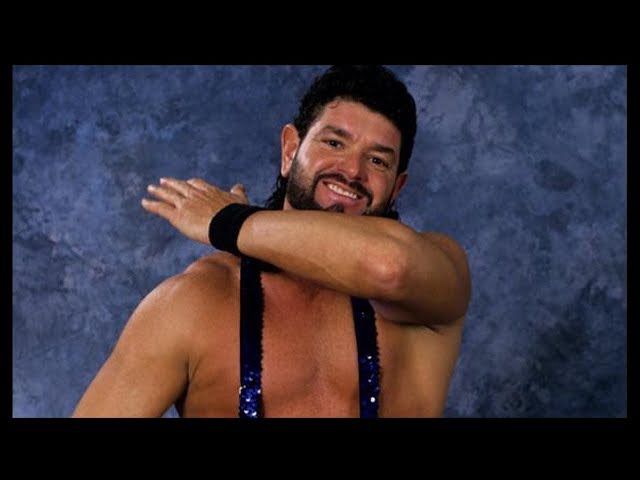
Even Horowitz’s Jewish heritage became a key part of his gimmick as the WWF played it up considerably, introducing a Star of David on his trunks and producing an upbeat version of the religious folk song “Hava Nagila” as his entrance theme. The always amenable performer took it all in stride. “I actually thought it was an excellent idea,” he insisted. “It wasn’t fake. Both of my parents are Jewish so I’m the real deal. I’d do meet and greets, and the Jewish fans appreciated it. I embraced it.”

Another fondly remembered aspect of Horowitz’s character was his penchant for patting himself on the back during his ring introductions – a clever habit for a heel (bad guy), which he was, to embrace. The origin of the practice, however, is surprising. “I was an amateur wrestler when I was in school. In the 11th grade, I don’t know why other than being cocky, but I did it,” he shared. “Unfortunately, I was reprimanded by my coach and got deducted a point. But I put it in my back pocket and knew even back then that I was going to be a pro wrestler one day and use it.”
Horowitz’s amateur background combined with a family knack for athletics (“My dad was a boxer”) surely helped in his journey to the grueling world of wrestling. An abundance of injuries, with a broken neck at the top of the severity list, plagued the resilient combatant. But a stellar work ethic along with a consistent workout routine has always provided him with the will to trudge along through the many difficult times. “It’s just the way I was taught,” he exclaimed. “I’ve always tried to be a professional and I’m still in the gym five or six days each week.”
In addition to keeping his body in shape, Horowitz has made it a point to keep his mind sharp as well. Wrestling Is My Gimmick: My Life on the Wrong Side of the Three-Count, Horowitz’s compelling autobiography, written with Jason Norman, was released six months ago with an audiobook version on the way and includes a plethora of fascinating tales beginning with the future star’s upbringing and all the way to his current ventures. “It was a five-year project,” he revealed. “I finally found the right author in Jason and my son, Joshua, who wrote the foreword, helped me out a lot too. I’m really proud of it.”

Even today, Horowitz has a lot to offer. The lifelong magic fan, who names David Copperfield, Criss Angel, and David Blaine as a few of his favorites, would cherish an opportunity to be an agent, or coach, in a major company. “I have lots of fresh ideas and I’ve wrestled all over the world,” he attested. “I don’t want to be the head guy or anything but I’m ready to work. I can add some flavor to the soup.”
An upcoming action figure line from KWK Kayfabe Heroes, featuring four different Horowitz variants (Star of David, suspenders, hand pat symbol, and lime green) is also on the horizon for the squared circle legend. “I still have that passion,” he reassured. “It’s just how I’m wired and will always be in my DNA.”
Order Wrestling Is My Gimmick: My Life on the Wrong Side of the Three-Count from McFarland
Order Wrestling Is My Gimmick: My Life on the Wrong Side of the Three-Count from Amazon
Order Wrestling Is My Gimmick: My Life on the Wrong Side of the Three-Count from Barnes & Noble
 Generation X Wire