
By J.C. Correa
When you listen to the bluesy solo on Aerosmith’s influential early hit “Last Child,” the lead guitar work of their 1993 rocker “Fever,” or the assaulting guitars and piercing solos on 1976’s deep cut “Nobody’s Fault,” you would immediately think that they offer further proof of how indispensable a lead player Joe Perry has always been for the iconic Rock & Roll Hall of Fame quintet. Except, of course, that it is not Perry who are you listening to and to whom those licks should be credited. That sublime work, along with literally dozens of other examples, belong to his fellow axeman in the band, guitarist Brad Whitford.
Formed in Boston in 1970, Aerosmith, from the onset, adopted a two-guitar player approach, inspired by bands like The Yardbirds, The Rolling Stones and Peter Green’s version of Fleetwood Mac. Though the duo of six-stringers was initially comprised of Ray Tabano and Perry, the former lasted only a year before being replaced by Berklee College of Music-educated Whitford. Most significantly, this allowed Whitford to be slotted into the group’s line-up before the recording of their first album, thus allowing him to appear on every LP of the band’s career, with the exception of 1982’s Rock in a Hard Place; a distinction he also shares with Perry due to a momentary hiatus from the outfit they both engaged in during the early part of the ‘80s.
As fate would have it though, and as Aerosmith’s career began to pick up steam in the mid ’70s, two of its members quickly rose to become its faces: Perry and vocalist Steven Tyler. Dubbed the “Toxic Twins” for their notorious affinity for hard drugs, both were natural fits to assume the mantle of stars, partly because of the dark-haired, effortless cool they each possessed. In this dynamic, Tyler’s flamboyant attitude wonderfully counterpointed Perry’s uber masculine, no-nonsense persona; each representing one side of the same showmanship coin. By also emerging as the two principal songwriters, they essentially became the Jagger/Richards, Lennon/McCartney, Page/Plant of the group, and have remained as such ever since.

But as many of us know, it usually takes more than two to tango in a rock and roll band. For one thing, Aerosmith was blessed from the start with the gifted rhythm section of drummer Joey Kramer and bassist Tom Hamilton. All of which left Whitford, surely in the eyes of some at least, as the odd fifth member who didn’t necessarily fit into one camp from a visual angle, nor into the other from a strictly functional standpoint. Just about everyone has always assumed that he was nothing more than a rhythm guitar player, one relegated to the background, while his flashier cohort ran circles around a limelight worthy of his brilliance. And while Whitford’s quieter, still demeanor has never made him a natural fit to be a star, nothing could be further from the truth with regards to the quality of his playing, or the importance of his musical contributions.
In all fairness, it is a virtual losing battle as a rock guitarist if you are trying to out-cool Joe Perry. For decades, Perry has oozed the confident, relaxed swagger of a gunslinger; a point he has always underscored with his stylish outfits. And if truth be told, he has earned his too-cool-for-school attitude, having written some of the most monstrous and memorable guitar riffs in rock history. But his identity has also always been reflective of his playing style. He is a self-taught guitarist; a musician whose emotions inform his approach, resulting in a loose form reliant on feel that sometimes even borders on sloppiness. Whitford, on the other hand, is the exact opposite: A technically schooled player who incorporates theory and precise phrasing into his playing. How perfectly they complement each other has always been, bar none, the most important contributor to Aerosmith’s sound, and the band’s true ace in the hole.
The irony of all this is that Perry actually shines better as a rhythm player because his timing and sense of flow are outstanding, whereas his counterpart is arguably the more accomplished and inspired soloist of the two. Whitford’s tone also possesses an incredible sustain, which he has never used in ways that are anything less than thoroughly tasteful. These particular traits are just something that no one, save for musicians, or those who have taken the time to carefully observe this, has bothered to figure out.
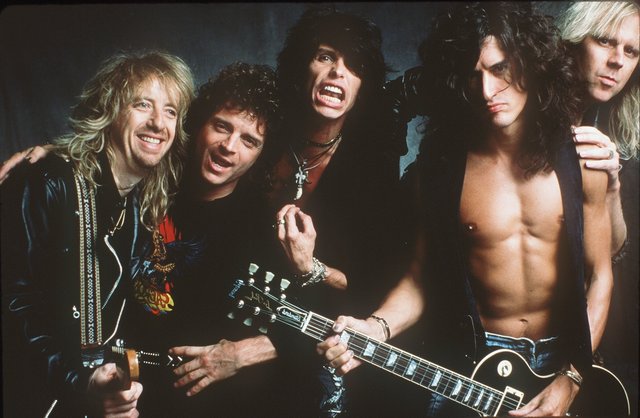
The two recorded examples that best illustrate the sharp differences between both players, particularly their soloing styles, can be found, ironically, on opposite ends of the band’s storied discography. “One Way Street,” the groovy and lengthy blues shuffle from Aerosmith’s debut album, features an extended instrumental section that showcases guitar solos from both players. Whitford’s begins at around the 3-minute, 30-second mark, while, after an 8-bar break, Perry’s starts shortly after the 4-minute point. While both embrace the blues nature and structure of the song, the first of these is tighter and more entrenched in blues tradition and phrasing, whereas the second is looser, more melodic and allows for bigger spaces. (As a general rule, Whitford’s guitar tracks are usually panned to the left channel of their recordings’ stereo mixes while Perry’s are on the right.)
Fast-forward then 40 years to the group’s most recent album, the entirely forgotten Music from Another Dimension!, and hone in on deep cut “Street Jesus” (these guys clearly loved their streets!). The song was written by Whitford, Tyler and Perry, and is a standout on an otherwise mixed-bag record, in large part because it is a throwback to their gritty and assaulting barn burners of the ’70s. Shortly after the 3-minute, 30-second mark once more, the track breaks into an extended 32-bar solo that is really two different ones, with the second solo directly following the first. Whitford again plays the first of these, comprising the first 16 bars. Expectedly, it is filled with piercing, bluesy notes mired in precision, exhibiting an overall sense of restraint. In contrast, Perry’s licks that follow scream as they push and pull all over the place, carefully trying not to fall off the rails entirely. Everything about what each player does perfectly complements the other, resulting in a whole that exudes genuine excitement.
Whitford’s signature song with Aerosmith will forever be “Last Child,” mainly because it is the most popular and well-known of the ones he had a hand in writing. His work on the solo for it that I referenced earlier is undoubtedly terrific. But beyond what he recorded for the original version on the Rocks record, an even richer example of his soloing dexterity is his take on it from the live album A Little South of Sanity. His bluesy, 2-minute outro solo for the track is a true thing of beauty. Elsewhere, he can be heard soloing on many of the band’s early songs like “Lord of the Thighs,” “S.O.S. (Too Bad),” “Seasons of Wither,” “Round and Round,” “You See Me Crying,” “Back in the Saddle,” “Sick as a Dog,” “Home Tonight” and “Kings and Queens” – all of them standout tunes. He continued to do this throughout the group’s catalog across the decades, including on some of their bigger MTV-fueled radio hits, where when he wasn’t soloing, he was frequently playing co-lead with Perry.
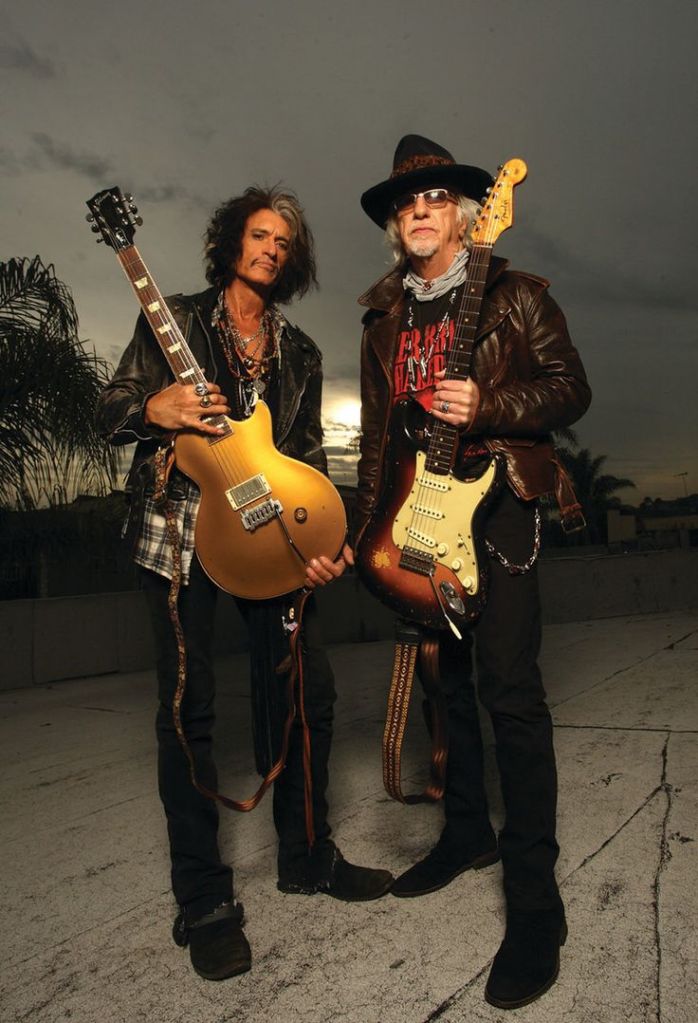
It is in the songwriting department that Whitford fell behind his fellow six-stringer, at least in terms of prolificacy. This was by intention, as he has admitted that he sees himself more as a guitarist than an actual songwriter. However, the dozen or so tunes that are credited to him include a handful of doozies. Besides “Last Child,” the aforementioned “Nobody’s Fault” is his second contribution on Rocks, and is such a sludge-driven, heavy song that it became a favorite of the likes of James Hetfield, Slash, and Kurt Cobain. In fact, you can argue that it has its roots in what is actually its direct predecessor: The Toys in the Attic cut “Round and Round,” arguably the heaviest and most doom-sounding of all of Aerosmith’s compositions. The sprawling, gloomy epic “Kings and Queens” also bears his name, as do the sunny title track from 1987’s Permanent Vacation and the moody blues number “Voodoo Medicine Man” from its follow-up, Pump.
In the eyes (and surely ears) of some of us who consider ourselves serious Aerosmith fans, Whitford will always be the band’s unsung hero. However, it is a role that he has always felt comfortable playing, preferring instead to avoid the spotlight unlike some of his bandmates or other accomplished guitarists across the rock spectrum. On a personal note, that last point is one that does not surprise me, as it perfectly lines up with the friendly, kind, soft-spoken and unassuming impression he gave me upon personally meeting him a few times during the late ‘90s. He was an easygoing, laid-back gentleman during every encounter and conversation, and not at all embodying the personality and expected traits of a rock star.
Here is a 12-song playlist to help you experience Aerosmith from the fingers of Brad Whitford:
 Generation X Wire