By J.C. Correa
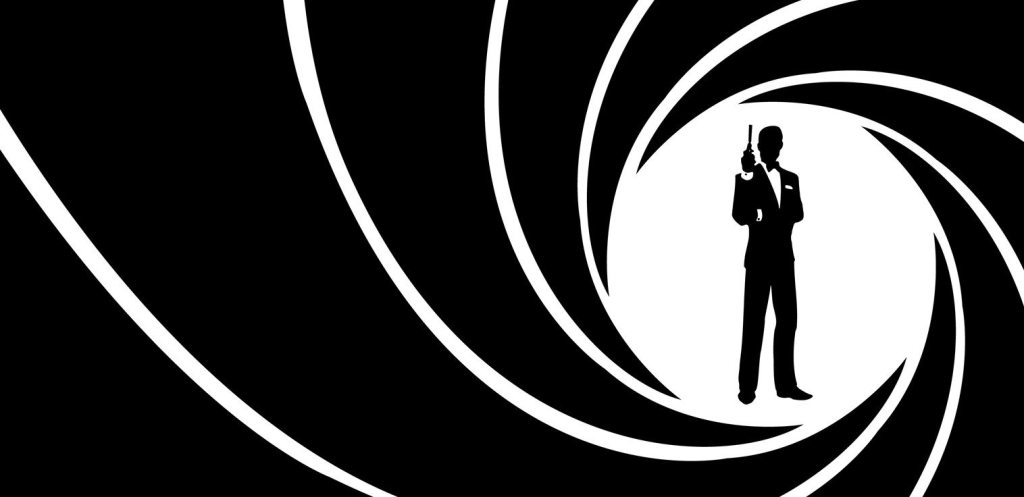
It is very hard to believe, but after more than 60 years, the James Bond films finally belong to entities other than those who have always and exclusively made them. I’m referring, of course, to the recent seismic deal that effectively removes creative control of the storied franchise away from EON Productions (and its producers Michael G. Wilson and Barbara Broccoli) and places it in the untested hands of corporate giant Amazon. To many loyal fans of the fictional spy’s cinematic exploits, it is probably an inconceivable reality that likely has not yet fully sunk in in the two weeks since it was announced.
Though created by English author Ian Fleming, the character of Bond was thrust into the pop culture stratosphere by the film series that began in 1962 with Dr. No. The movies were the spawn of Queens-born producer Albert R. “Cubby” Broccoli and his Canadian partner Harry Saltzman. Both were, initially, the two people most directly responsible for their massive success. For the next 27 years and across 16 films, Broccoli in particular dedicated his life and career to the series and personally captained it through its ups and downs, always with a firm eye on the changing trends in the hope of keeping his product relevant. Along the way, he groomed his stepson (Wilson) and daughter (Barbara) until they became his natural heirs and successors upon his retirement in the early ‘90s.

As such, the Bond films have always been a family-run business, and one that its owners were forever skeptical about inviting others into, let alone extremely protective over. Letting go of it seemed like an absolute impossibility. And yet, that is precisely what this recent shakeup and deal with Amazon comes to signify. As a result, 2021’s No Time to Die will stand as the last Bond movie to ever begin its famed title sequence by announcing the name of Albert R. Broccoli.
In light of this historic change, it is a fitting time to look back at the family’s extraordinary legacy. Instead of highlighting the best 007 pictures, I would prefer to do this by drawing attention to the ones that have actually been the most instrumental to the franchise’s durability; the ones that, in the long run, have basically proved to be the most important. What they all have in common is that they were the product of great risks taken by a producing team that was brave enough to gamble when it mattered most. And in the end, that is the true legacy of EON Productions and the Broccoli family.

GOLDFINGER (1964). What is considered by many to be the best James Bond film is also indisputably the most iconic. After two fairly serious and, some would argue, better Cold War thrillers, this third outing adopted a lighter approach and injected a genuine sense of fun into the spy’s escapades. This was, in a large way, the result of Broccoli and Saltzman opting for a different director than the more grounded Terence Young, who had helmed the first two pictures with a Hitchcockian flair. In Guy Hamilton, the producers instead found a filmmaker who had the keen insight to suggest that the relationship between Bond and beloved Mi6 gadget master Q be one of humorous contempt rather than respect. In this manner, it established a long-running joke that would continue through the duration of the series.
Furthermore, Broccoli and Saltzman commissioned a screenplay that allowed Hamilton to take a larger-than-life approach to the story and treat 007 almost like a comic book for adults.
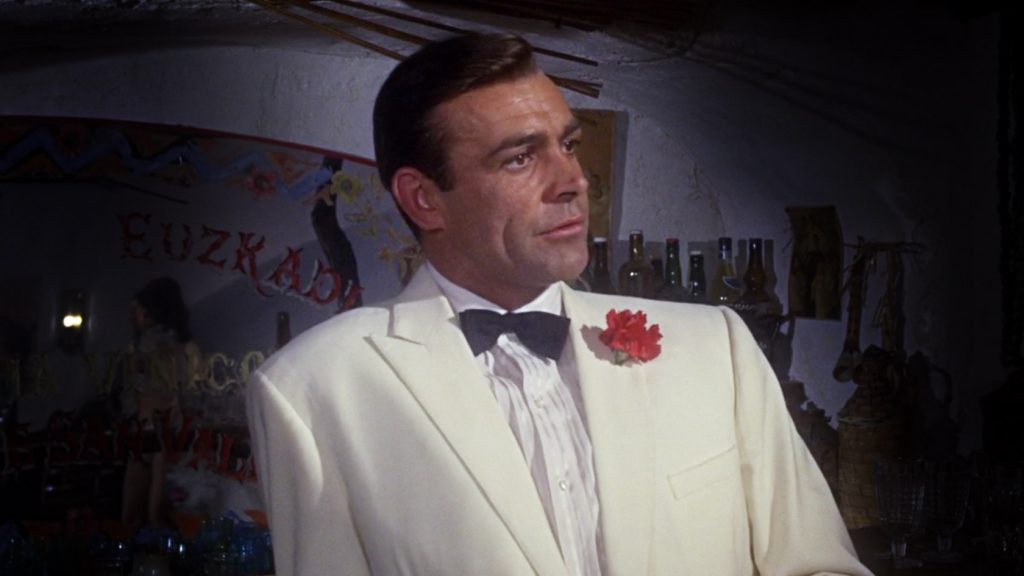
By breaking from what they had already established in the first two movies, the filmmakers hit box office gold and sent their dashing agent into the upper echelons of the zeitgeist, essentially providing the Beatles with a comparable cinematic counterpart for their British Invasion. More importantly, Goldfinger instituted the formula that, in some way or other, every subsequent Bond film has since tried to copy.
THE SPY WHO LOVED ME (1977). Replacing Sean Connery in the role of Bond was not an enviable job for EON Productions. But the prospect seemed initially hopeful when Roger Moore’s first outing was a hit in 1973. The following year, however, the lackluster and misguided The Man with the Golden Gun failed to connect with audiences and critics. For all intents and purposes, the series was dead in the water, enough to even make Saltzman sell his shares of ownership to United Artists and bail out. This left “Cubby” Broccoli as the sole producer and with the daunting task of having to figure out what to do next. By the mid ‘70s, 007 was no longer the gold standard for action and genre innovation that he had been during his maiden decade. As such, was Bond even worth rescuing at this point?
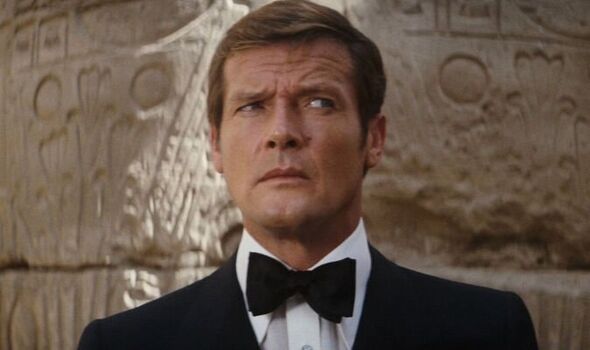
To Broccoli’s immense credit, he doubled down on his hero’s potential and went on to fashion a true epic in The Spy Who Loved Me. Though he fundamentally recycled the plot of 1967’s You Only Live Twice – a point he acknowledged by hiring the same director, Lewis Gilbert – the aim was to improve upon it at all costs. Fortunately, the end result was a big and bold spectacular that delivered on all fronts and made Bond cool again. Its success reaffirmed the character’s bankability and firmly established Moore’s debonair and easier-going interpretation as a viable one for that time. In a symbolic gesture that served as a calculated statement of intent, Broccoli chose to release the film in the U.K. on 07/07/77.
GOLDENEYE (1995). Nearly two decades after The Spy Who Loved Me, James Bond once again found himself on the brink of irrelevancy. And this time perhaps the situation was more dire than ever. Partially due to Welsh thespian Timothy Dalton’s commercially disappointing two-film run in the late ‘80s, not to mention the sudden end of the Cold War, the franchise found itself in the midst of a true existential crisis. This was further exacerbated by the fact that there were no new pictures made during a then unheard-of six-year gap as a result of legal issues, and “Cubby’s” impending retirement due to age and poor health. In the interim, however, he passed control of his life’s work to Wilson and his daughter Barbara. In the midst of all that uncertainty, it has been widely reported that he gave his heirs a critical bit of advice: “Do not let temporary people make permanent decisions.” In addition, he apparently also offered the blunter version of that sentiment: “Don’t let them fuck it up!”
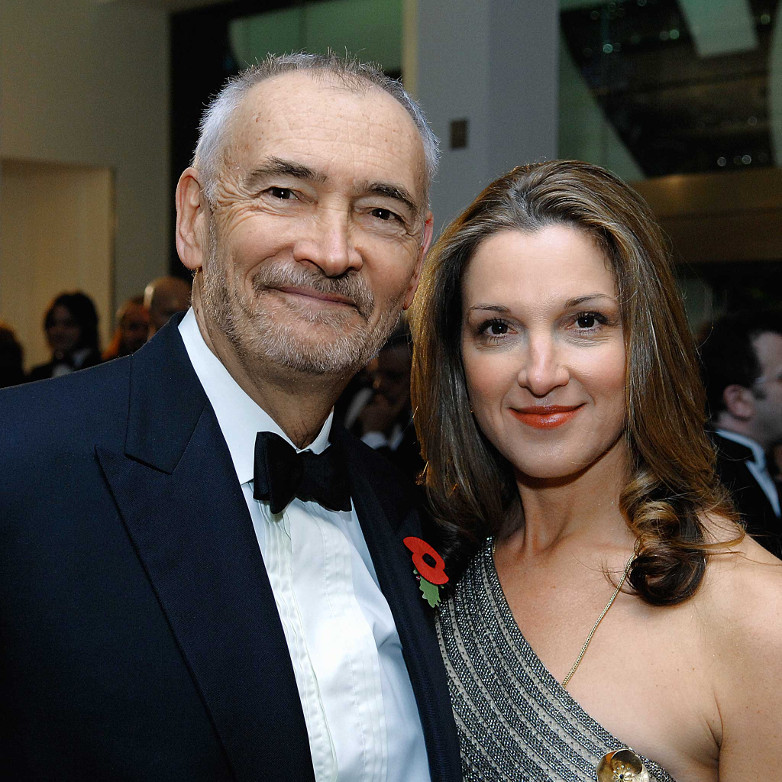
Thankfully, they did not. As their first order of business, the new producers cast popular television star (and fan wish list topper) Pierce Brosnan to replace Dalton, while also making the bold choice to have 007 now report to a female boss, a role they filled with the inspired choice of Judi Dench. Smartly, they commissioned a contemporary script that directly addressed the geopolitical climate in the aftermath of the Cold War and made every effort to place the character of Bond very much in that moment. Perhaps most importantly, they employed a brilliant marketing campaign that went out of its way to single out the elite sophistication of the brand. It paid off handsomely in that GoldenEye was not only a hit, but it basically gave Bond a reason to exist in the ‘90s and renewed his cachet through the turn of the century.
CASINO ROYALE (2006). Even though 2002’s Die Another Day was a widely successful triumph at the box office, everyone, not least of all the producers, knew they had jumped the shark with its overblown and self-parodical aesthetic. Brosnan had proved to be a popular and commercially viable Bond during his four-film run, so continuing with him was, at the very least, a safe option. But the team of Wilson and Broccoli instinctively knew they had to shake things up and were able to find the answer when they landed the rights to Fleming’s first novel, Casino Royale, the only one of the author’s books that their company had never been able to properly turn into a movie. Banking on the novel’s chronological placement in Fleming’s oeuvre, they decided to take a chance and do something that even their father had proved reluctant to attempt – reboot the franchise by virtue of an origin story.
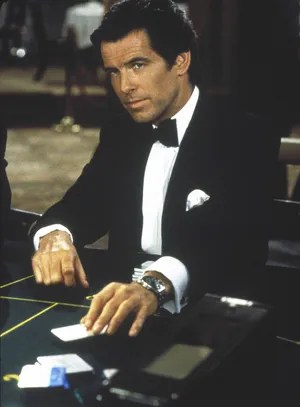
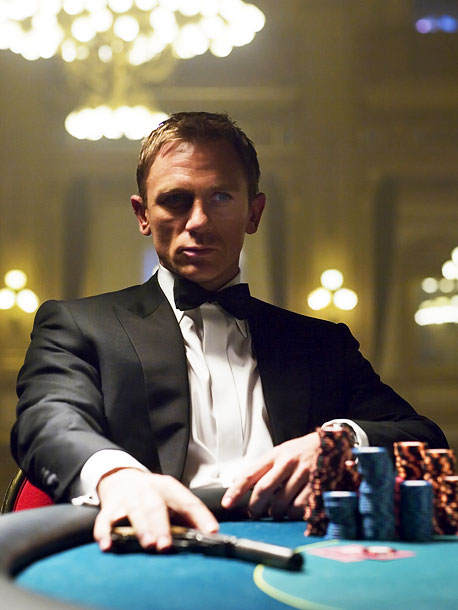
To accomplish this, they knew they had to recast and did so with Daniel Craig, a choice that was then viewed by many as somewhat unconventional. A smart move on their part was entrusting Martin Campbell, the director of GoldenEye, to once more introduce a new actor into the role. Working off a terrific script, Campbell improved on his previous work and delivered a complex and emotionally adult story that resonated not only with audiences, but also with critics to an unexpected degree. Yet the biggest reason for its success was the fact that Craig’s efficiency in the role caught many by surprise. Considering that he had been an unpopular selection when his casting was first announced, the gifted actor blew past expectations and delivered a welcome iteration of the character that proved to be the most three-dimensional and relatable one to date.
SKYFALL (2012). After squandering the magnificent potential of Casino Royale by following it up with a rushed and unfocussed offering two years later, Wilson and Broccoli felt a strong urge to course-correct and redeem Craig’s tenure by exploiting it to the fullest. Making the shrewd move of hiring an arthouse, Academy Award-winning director in Sam Mendes, the producers bet on the idea of creating a Bond movie with prestige aspirations; one that would subvert the character and essentially reconstruct him from scratch right in front of our eyes through a bona fide character study. It was a very risky gamble because it made the infallible agent as vulnerable and workmanlike as we’d ever seen him.
The gamble paid off, and then some. Skyfall went on to become the biggest commercial success in the franchise’s history, a feat that it fittingly achieved on its 50th anniversary. It also was the recipient of industry love in the form of two Academy Awards (the most ever for a Bond movie), and two BAFTA Awards, including one for Best British Film. The latter, as well as its overall success, might have had something to do with the fact that the movie embraced the Britishness of the character more than any other series entry ever had by setting the majority of its story not in the usual exotic locations, but rather, across Britain. As the cherry on top, it did this not only during Bond’s golden anniversary, but during a year in which the country was celebrating Queen Elizabeth’s Diamond Jubilee while also hosting the Summer Olympics in London. Capping it all off with an epic title song by England’s newly crowned queen of the charts, Adele, Skyfall launched James Bond back to not only the zeitgeist for the first time since the ‘60s, but also to new heights he had never reached before.
Fans can only hope that Amazon will now handle such a revered and iconic intellectual property with the same level of love, care and reverence bestowed on it by the Broccoli family. Theirs will be a very tough act to follow. For during those 63 years, quite simply, nobody could have done it better.
 Generation X Wire