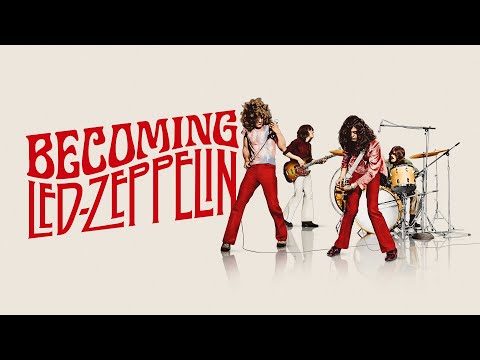
Becoming Led Zeppelin
3.5 out of 5 stars
By J.C. Correa
In early 1969, after having already played a few dates in America, Led Zeppelin, then opening for a band called Vanilla Fudge, delivered a triumphant show at San Francisco’s famed Fillmore Club. It was considered so because up until then, though buzz was slowly building across the western states, the group had yet to explode. But that night they did just that, as evidenced by the crowd reactions from that gig in footage that has been included in Becoming Led Zeppelin, the new documentary which has just opened in cinemas worldwide, and exclusively on IMAX screens in the United States.
In spite of their American breakout performance in San Francisco, the English rock band comprised of Jimmy Page (guitar), Robert Plant (vocals), John Paul Jones (bass guitar) and John Bonham (drums) had gotten no traction whatsoever in their native Britain. In fact, their debut album, which had already dropped stateside, had yet to be released in the UK. There was simply hardly any awareness of them throughout their home country. And yet, almost a year to the date of that celebrated showing at the Fillmore, Led Zeppelin played a sold-out concert at the renowned Royal Albert Hall in London. Such a feat is indicative of a career trajectory with a level of propulsion seldom seen and is also one of the key topics explored in this long-overdue documentary film on the legendary outfit.
So much has been written about Zeppelin over the years so as to exhaust the mechanisms of a small printing press. Far less has been made available with regards to visual documents. Part of this is due to the fact that the band was notorious for keeping a tight lid on their proceedings, in part perhaps with the aim to successfully create an enigma around them. Aside from The Song Remains the Same, the somewhat chaotic 1976 concert film, the only other official visual media content that the band has made available is a 2003 DVD containing a rare treasure trove of live performances. Strictly from a footage standpoint, Becoming Led Zeppelin is much more in line with that release, and, if anything, begs the question as to why it took so long for so much precious material to finally see the light of day.
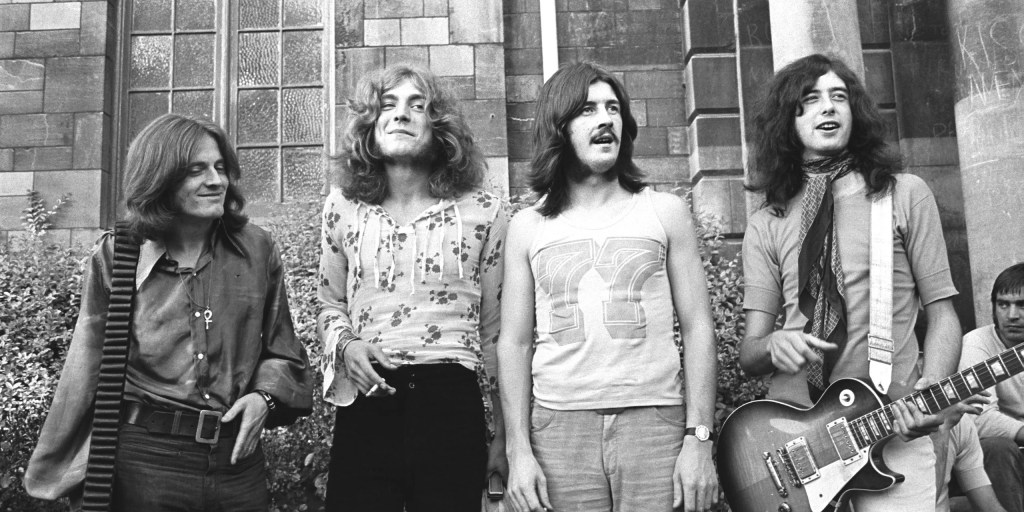
Filmmaker Bernard MacMahon has assumed the arduous task of putting it all together. Understandably, he has gone straight to the source and enlisted the participation of the band members, all of whom are interviewed individually in an apropos setting. Page, Plant and Jones all display a noticeable joviality in being part of this as they recall what it was like working together. Jones in particular proves to be an amusing, if somehow surprising (his role was that of the quiet bassist) raconteur. In the case of the long-deceased Bonham (himself a mostly reticent person in his day), a few rare interviews he gave in the 1970s are extracted to fill the narrative collective. Most significantly, these are not only heard for the audience’s benefit, but they are also played in front of each of his band members. A smile transmitting a poignant affection instantly materializes in each case upon listening to his voice. These, along with a snippet in which Bonham admits to how much he personally liked each of the three men, are the movie’s most affecting moments.
Taking a cue from its title, MacMahon’s main objective here is to illustrate precisely what led to the formation and, if you’ll pardon the pun, eventual takeoff of Led Zeppelin. Forgoing any kind of narration, the filmmaker lets the band members paint the entire picture and colors in the rest with photographs, newspaper clippings, footage of the group and newsreels of the time. A lot of emphasis is placed on the fact that both Page and Jones were proper session musicians who were very much in demand in England throughout the 1960s (a little-known fact that they both played on Shirley Bassey’s recording of “Goldfinger” is given due screen time). As such, it is briefly shown (if not already implied) that both men knew how to read music. This particular characteristic may not seem peculiar unless you take into account just how many prolific members of the rock community over the years never possessed that qualification. In any case, it is not only congruent with the level of musical sophistication that went on to adorn Zeppelin’s body of work, but it makes one speculate on just how different the face of arena rock would have been had the two men actually kept their already-appealing day jobs.
Robert Plant best highlights the significance that America held for the foursome, both as a commercial opportunity and as a mythical frontier waiting to be conquered. Not unlike a lot of their English contemporaries, the band members elaborate on their deep love of American music, specifically that which was performed and recorded by black musicians. These early portions of the film that focus on each man’s individual musical roots, the bands they were part of and what ultimately brought them together as a unit, are the sections that will likely be most appealing to viewers who may be best described as uninitiated. From a historical standpoint, they are also the chapters bestowed with greater heft when you take into account the consequence of it all.
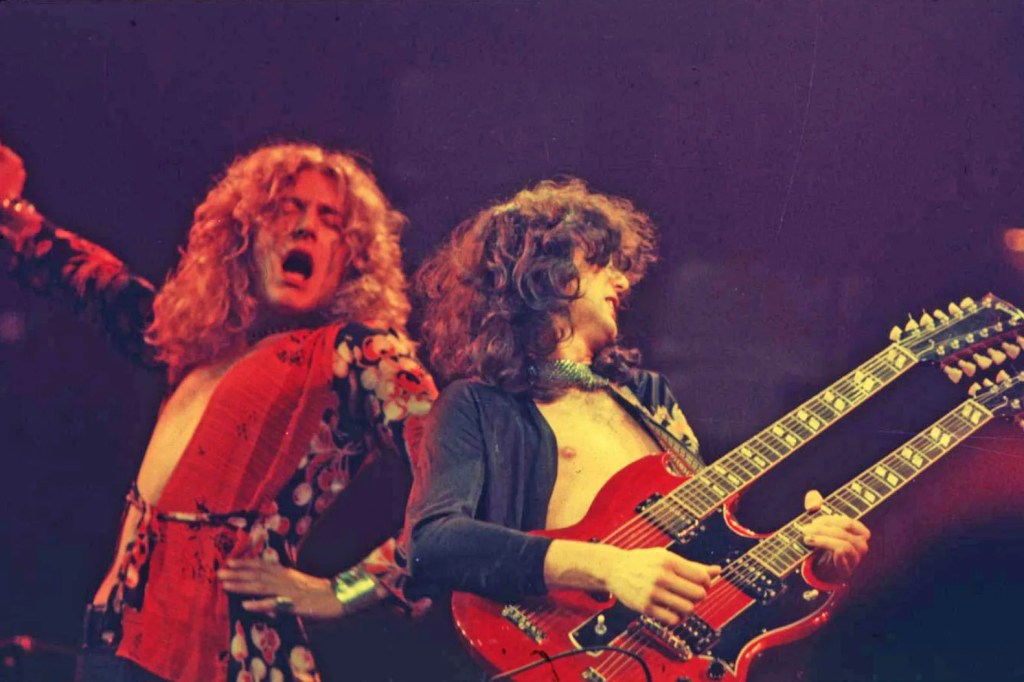
Once the band was formed, the movie inevitably unearths a lot of performance footage from that time; namely, from some early gigs they played in England as well as from their first American tour. The first thing we are treated to is a blistering rendition of “How Many More Times,” which does nothing if not showcase the group’s raw, gut-punching power and inimitable groove. Shortly afterwards, we witness them perform “Communication Breakdown” at an English theatre where a few younger attendees (and at least one mother) are seen covering their ears as a result of the unexpected volume. Despite watching Page run marathons across his fretboard on a scorching take of “Black Mountain Side,” the highlight for most fans will likely be an absolutely epic version of “Dazed and Confused,” the track made famous for Page’s use of a violin bow over his guitar strings. Unsurprisingly, the bow is on full display on this particular performance, and we are left to only marvel at the dexterity with which the virtuoso guitarist implements it.
Page himself is widely known to have been the leader and visionary behind the Zeppelin enterprise. In his interview portions, he expands on this at great length, detailing just how clear he was from the beginning about what he wanted. Having learned a lot of recording tricks by carefully paying attention to engineers during his session days, he makes it known that he very specifically desired Led Zeppelin to be an album band, one that didn’t have to rely on singles, and whose LPs would be structured and recorded in a way that would demand the listener’s attention. He also reveals his shrewd decision to work backwards and have the group’s first album fully finished before shopping it around to a label, thus ensuring that the A&R suits couldn’t alter the work in any way. For those in the know, there has always been a shroud of mystery surrounding Page. And even though for a long time it was commonly reported that he was a devoted admirer of notorious English occultist Aleister Crowley, neither he nor the movie make any mention of this whatsoever. The Jimmy Page seen here simply comes across as a charismatic and buoyant fellow who passionately preaches the value of following one’s dreams and seeing them through.

Being that MacMahon has specifically chosen to make his documentary about Led Zeppelin’s origins, he has seen it fit to conclude it at the start of 1970, mere months after the release of the band’s lauded second album. A great deal of the songs from this iconic record are played across the soundtrack, but in their original album versions as opposed to actual live performances. They accompany a montage of images of all sorts from the band’s studio and touring careers (concert ticket stubs display the $5.00 admission price, if you can believe that), giving an impression not dissimilar to the one found in music videos. This choice is somewhat dubious because it doesn’t do much to advance the narrative, and rather, comes across as celebratory and self-indulgent. Aficionados of the band will undoubtedly eat it up – partly because of the rare nature of most of the visual material on display – but I do wonder if this is the point in the picture where more casual moviegoers might find themselves starting to get disconnected.
The one thing that cannot be disputed is that the sound quality of the film is stellar and should give fans a real thrill at the chance to hear the band’s music blazing from theatre speakers that offer such a superb sound mix. These same loyalists will likely take umbrage at the fact that the documentary omits the hallowed decade of the group’s career that followed the events that are chronicled here. In all fairness, there would be validity to that point as it was indeed throughout the 1970s that Led Zeppelin truly forged its legend. Something other, as it turns out, is clearly what the filmmakers had in mind. In that regard, the movie is very successful as an origin document. Though I will admit that addressing what shaped the myth of the band would have rounded out the portrait that much more. By restricting the accounts to only its members, this opportunity is relinquished, and a more one-dimensional product is achieved instead.
Becoming Led Zeppelin is now playing in theaters.
 Generation X Wire