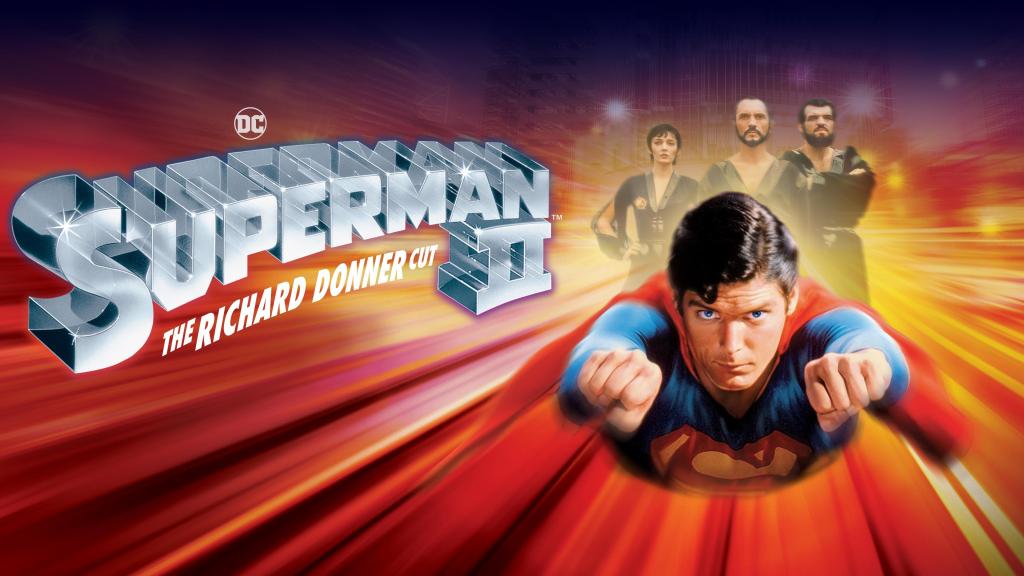
Superman II: The Richard Donner Cut
2.5 out of 5 stars
By J.C. Correa
Imagine you wake up one day only to learn that a movie you very much loved as a child is not necessarily the definitive version of that story, and that somewhere out there exists a potentially better rendering of it that is even more in line with the creator’s original vision – one you never got the chance to see. Until now. That is precisely the scenario that was afforded to folks who grew up with the Superman movie franchise when, in 2006, Warner Bros. finally unleashed the rarest artifact from its Kryptonian Pandora’s box: Superman II: The Richard Donner Cut. As it turns out, said edition will soon be screening at the Museum of the Moving Image in Astoria, Queens as part of its See It Big: Let It Snow series. But first, a little backstory for those who require it…
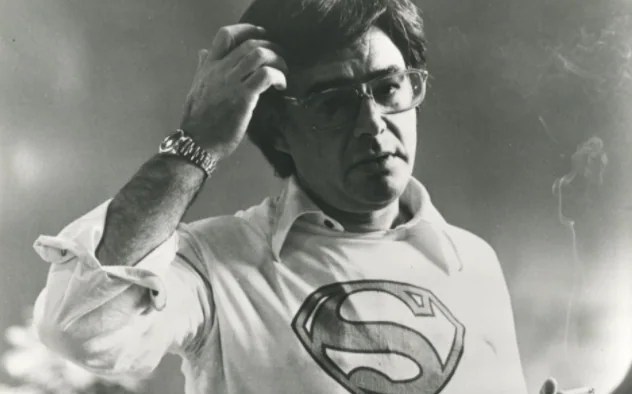
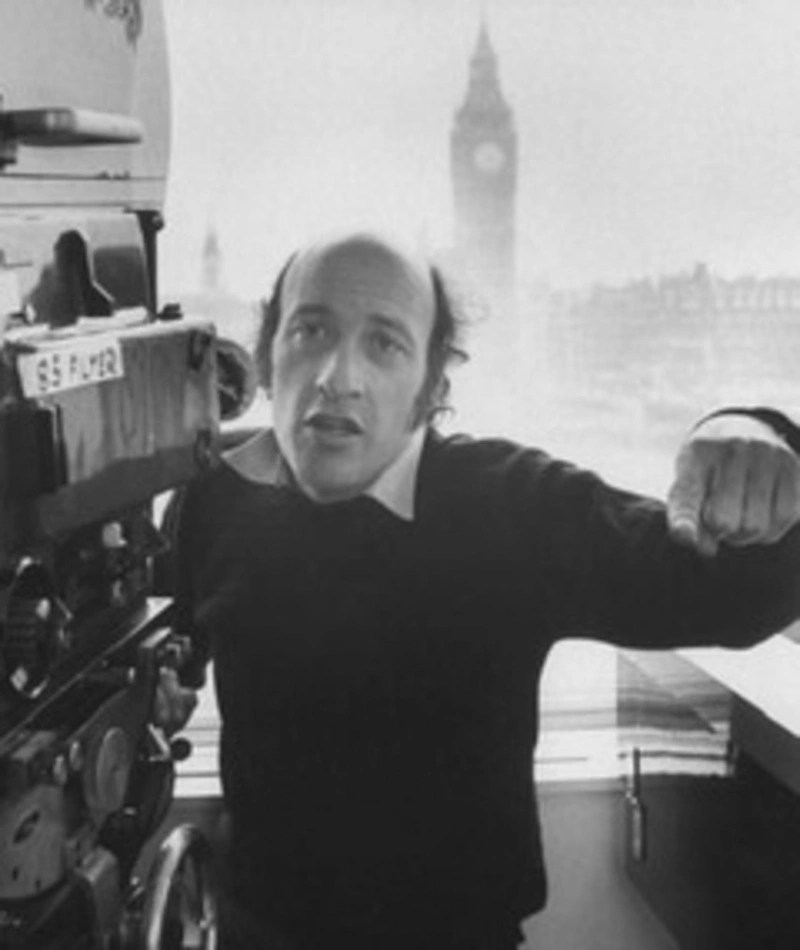
In 1977, the late director Richard Donner was hired to bring the character of Superman to cinematic life via a propulsive and assured vision. His film, Superman, was a monstrous hit the following year, and it assured Hollywood of the bankability that lied in transplanting comic book characters onto the big screen. However, in spite of the success, the producers and the studio were not celebrating in a manner that would be befitting for such a good turn of fortune. Behind the scenes, they had been heavily clashing with Donner over how much the filmmaker’s approach was costing them. At the time of its release, the director was still very much under their employ as he was in the midst of trying to complete the movie’s sequel, which he had designed as a companion piece right from the onset.
As fate would have it, Donner was ultimately let go during its production and replaced by Richard Lester, who went on to finish (and in many cases, re-shoot) what would eventually become Superman II. Though a smashing triumph in its own right, the sequel understandably bore somewhat of a different tone than its predecessor, one more in line with the sensibilities of the filmmaker who had taken over. The complicated details of this artistic battle are the stuff of Hollywood lore, much like the fan belief for many years that enough footage shot by Donner existed in a vault somewhere so as to allow his original vision for the movie to be restored, should the studio wish to do that. After almost 30 years – and a good deal of fan petition – they relented and gave Donner a little money to put his stamp on his rescued footage in the manner he saw fit.
On the surface, this may sound like a great victory tale about an artist who eventually came ahead against the ruthless forces of corporate bureaucracy. In some ways perhaps, that is actually true. But the details of this palaver are much more complicated as to simply say that The Donner Cut is precisely what he would have released had he been allowed to complete the film in the late ’70s. The simple truth is that, though Donner did in fact shoot 70% of the picture, he could not exhibit that material alone and have it make any coherent sense as a feature without the additional 30% that the screenplay demanded. As such, The Donner Cut is basically the footage he captured edited together with screen tests he directed of a scene he did not get around to shooting, as well as with material shot by Lester that, begrudgingly for Donner, is essential to filling in the narrative gaps. Minor additional footage produced in 2006 was also included, along with some new visual effects that are occasionally subpar due to the restoration project’s limited budget. What we were finally given as a result of all this is an often jarring, at times truncated, sporadically-improved, frequently-enlightening, fascinating mess. In its final form, it is far less a proper work than it is an experiment. Could it be any other way though?
It is important to consider all of the aforementioned details in order to appreciate, or at the very least, evaluate this version of the movie. Therefore, those who go into it expecting a fully-functional, polished and decisive product will be gravely disappointed. It is best to view it as a rough draft in which some elements are far more realized than others. Viewers who approach it as such will have at least a decent chance to understand what Donner intended, and more specifically, the ways in which he wanted it to fit in with the first chapter.
Let me start by readdressing the issue of tone. As evidenced by the first film, Donner’s approach to this material was very serious, dramatic and epic. And while the movie was also endowed with wit, it never once made fun of itself. However, if you are familiar with the works of Richard Lester – which include Superman III – then you likely know that that filmmaker’s sensibilities have always been much gauzier, as evidenced by his penchant for satire and sight gags. Some of this already crept into his version of Superman II, but not enough to opaque the grander, more operatic vibe that had been previously established by Donner. Still, it is no surprise that Donner’s first order of business in his movie’s reconstruction was to eliminate as much as he could of the lighter tone. He was able to accomplish this in large part because most of the footage used was his material to begin with. Furthermore, the Lester scenes that he was forced to include are trimmed down to their bare essentials, leaving as little trace of the sillier flavor as possible. To that end, The Donner Cut definitely gives off a more somber vibe than the one the movie previously had, and I commend him for having made that a priority. But, as I mentioned earlier, all of this did come at a cost. Specifically, in the areas of pacing and overall flow.
Perhaps to distance himself even further from Lester’s product, Donner’s version uses a fair amount of alternate takes from some of his own shots that actually made it into Lester’s movie. While this approach does improve some scenes, others are worsened as their dramatic impact from the first time around is somewhat lessened. The humor itself, though in the same witty spirit as in the first film, is sometimes not as sharp, and its occasional corny leanings tend to make it feel like the first draft of a script. Another big problem lies in how Donner is forced to incorporate music. Understandably, he wanted nothing other than to reprise the epic score that John Williams contributed to the first picture. In this case, however, he is forced to reuse a plethora of the composer’s cues from that film, and since Donner did not commission Williams or anyone else to assist him with his revision three decades later, this version suffers from not having music in some places where it practically begs for it.
It is worth acknowledging that the curious project is not without its high points. The two biggest of these involve Jor-El and Lois Lane – two major characters within the Superman mythology. The former, Superman’s Kryptonian father, was famously played by Marlon Brando in the original film, but completely excised from Lester’s sequel. That was, however, never part of the plan, and only done so to prevent the producers from having to pay the actor a large sum of money had he been featured. With the benefit of so much time having passed, Donner rectified this and once again made Jor-El a major player in his follow-up, arguably even more so than the first time around. The restored footage makes his role fundamental to a central plot point in the film involving Superman’s powers, and the way that it pays off is not only a definite dramatic improvement over the original version, but also perfectly ties in with what Donner set up in the first movie. In the case of Lois, there are new scenes near the end between her and Superman that really bring a wonderful closure to the arc of their relationship set up throughout the film. Lester’s version did a fine job at this already, but Donner’s surpasses it.
Although The Donner Cut was always bound to elicit some form of controversy, no element in it may be as contentious as the director’s decision to repeat the ending of the first film. I am specifically referring to Superman’s ability to turn back time by flying around the Earth with the simple intention to bring Lois back to life. It was an insane, yet still effective way to conclude the first picture. As it turns out, that ending was to only appear in Superman II. It had to be transferred to the first movie, however, once the producers insisted it be completed first. And yet, Donner has tacked it on here anyway to ensure that we know what he had been thinking all along. Unfortunately, doing so not only makes no sense whatsoever with regards to the first film as it stands, but also, by virtue of how it is handled here, renders the entire story of the sequel completely moot. Much more effective, on the other hand, is the scene that Donner has chosen to actually end the film with. It is a better way to bow out than how it originally was, and much more in line with Donner’s touch across the two movies.
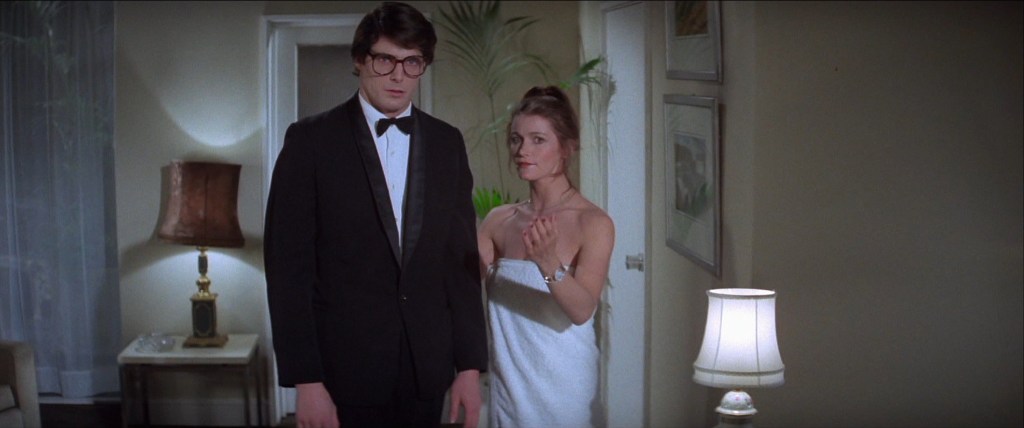
When all is said and done, the point worth debating is whether or not Superman II in its original theatrical form ever needed to be improved upon. My honest belief is that it did not – it worked just fine as it was. If you share this outlook, then you are likely to view The Donner Cut as simply being the experiment I previously described; as a novelty, and not necessarily as a revisionist upgrade. It is an instructional manual better suited at telling us what could have been, rather than showing it, which it does less frequently. Perhaps because of this, even though it has widely been available on home video for almost twenty years, it never actually received a proper theatrical rollout. The truth of the matter is that there is no definitive version of Superman II, at least not with regards to execution and availability. The two existing interpretations, coupled with others that aired on television back in the ‘80s that bizarrely combined deleted scenes with elements of both, make identifying the ultimate one practically an impossibility. Richard Donner, however, was certainly one person not flummoxed by that. The recent release of the excellent documentary on Christopher Reeve, Super/Man, as well as James Gunn’s own upcoming iteration of the last son of Krypton are convenient coincidences that might serve to bolster some interest in what Donner had to say on the matter.
Superman II: The Richard Donner Cut is playing at the Museum of the Moving Image on December 30 and 31.
 Generation X Wire