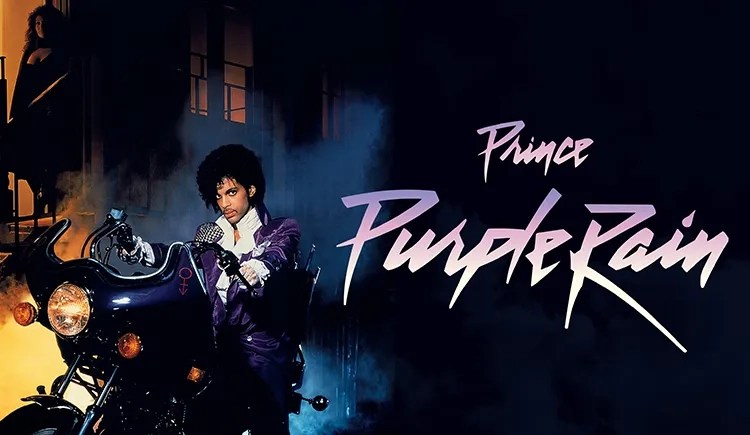
Purple Rain
2.5 out of 5 stars
By J.C. Correa
Recently, Rolling Stone magazine awarded the top spot to Purple Rain in a list it compiled of the 100 greatest movie soundtracks in history. The choice was not necessarily unsurprising, in part considering the enduring appeal of many of the tunes in Prince’s 1984 masterpiece. Furthermore, the work itself, unlike most film soundtracks that tend to be a compilation of recordings from various artists, is in this case a carefully-constructed album by a creative genius at the apex of his career. However, its selection forced me to think about the movie itself, especially with regards to how separated from it the music seems to be by this point, four decades on. As such, of the millions who love and still consume the LP, I began to wonder just how many have actually watched the film that was intrinsically tied to its creation? I will confess that up until now, I myself was among the group that never had. Rolling Stone’s list, coupled with the project’s 40th anniversary, gave me as good a reason as any to dive into it for the first time.
If the album Purple Rain really is a microcosm of the sound of the 1980s, then the film itself also effectively serves as a visual representation of such. And while both are very successful in how much they each convey that overall aesthetic, it would be a mistake to say that artistic goals are achieved on par with each other. If anything, time has already shown that the music of the film has not needed its cinematic counterpart to survive in the least. The same simply cannot be said for the flick, as its topless and sweaty male torsos (an ‘80s film trope) are basically screaming for the music.
The first thing that struck me about Purple Rain, the movie, is the overload of kitsch found in just about every corner. While this was surely, if you’ll pardon the expression, a sign of the times, the intention to make it prevalent seems very much there. It begins with, unsurprisingly, a musical number, that has a plethora of close-ups in it of lips, mouths, makeup and all sorts of crazy outfits. It is all very vibrant and extremely heightened. The fact that the song in question also happens to be the iconic album opener “Let’s Go Crazy,” perhaps helps to make some sense of it all.
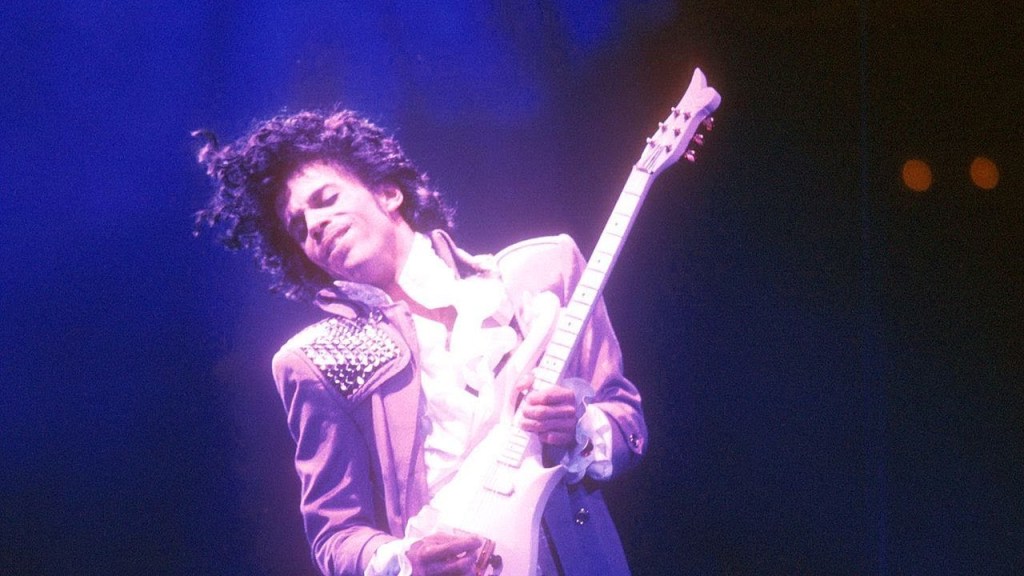
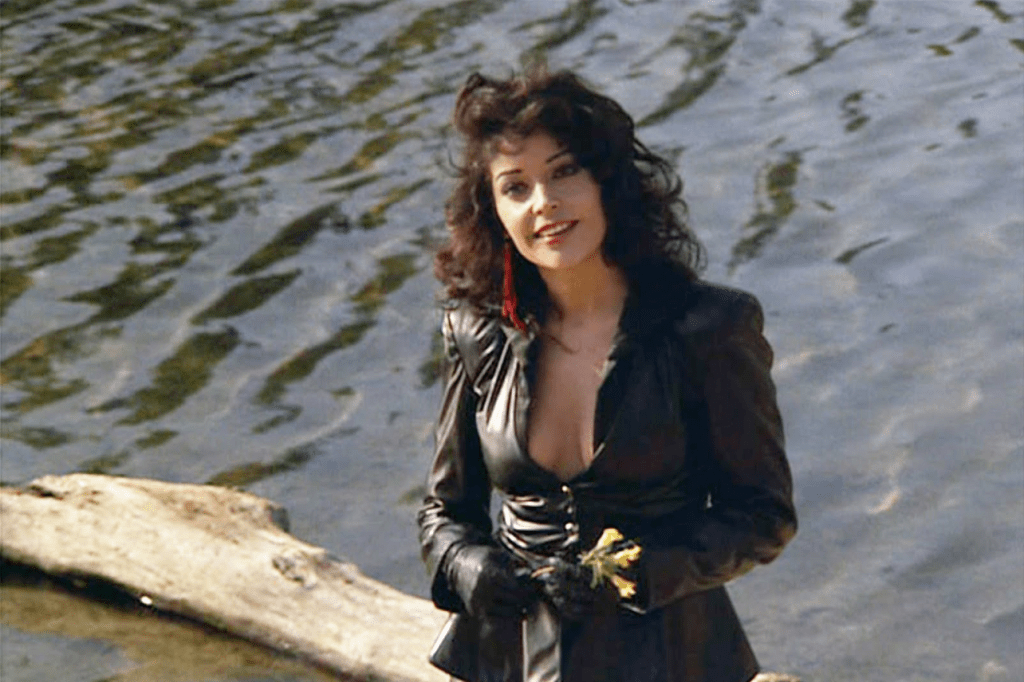
Amidst the barrage of ‘80s performance clichés, there is a story there desperately trying to get our attention from time to time. Prince plays The Kid, a frustrated band leader looking to make a name for himself in the Minneapolis club scene. The domestic violence he constantly witnesses from his parents at home keeps him in a perpetual state of anger, while also fueling his creativity. His world is further turned upside down upon meeting a sexy upstart singer named Apollonia (Apollonia Kotero), and through a constant rivalry with Morris (Morris Day), a fellow musician who is also pining for the same girl.
I will state upfront that a great deal of what is depicted in the story has not aged well in the slightest. There is rampant misogyny throughout, most of which would actually seem more serious if it weren’t so laughably absurd. When not shooing a waitress away with a martini glass, the film in effect is showing us a woman unceremoniously being thrown into a dumpster. Yeah, it’s real high-class stuff.
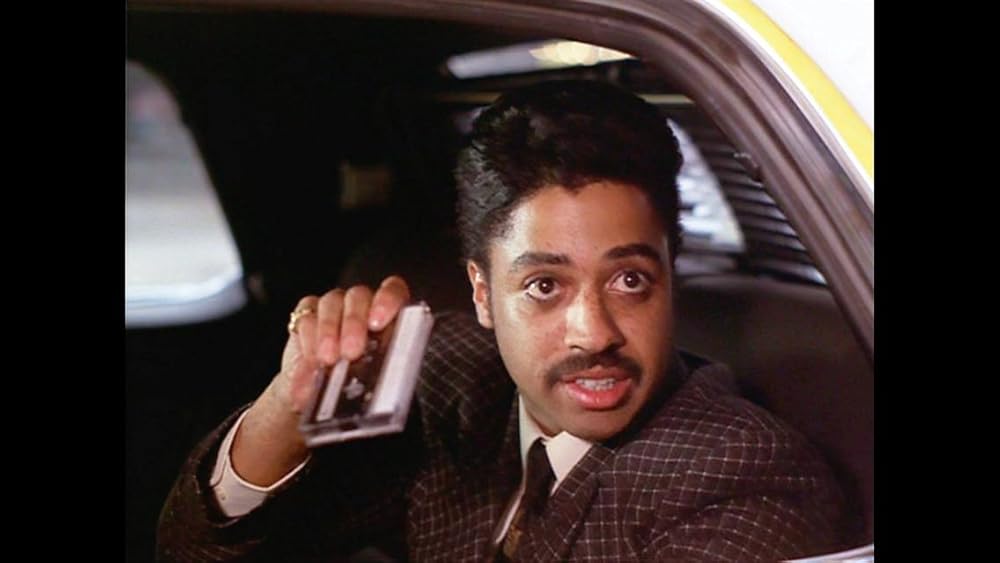
Morris, the antagonist of the picture, is designed to be a real creepster, but Day plays him in such a goofy manner so as to render his threatening demeanor fairly moot. A perfect example of this is his alleyway seduction of Apollonia, one meant to be menacing on the surface. Day, however, handles it in such a way that what actually unfolds is so ridiculous that it only comes off as comical. Because of this and his many other shenanigans, Morris – though a scumbag at heart – practically ends up being the movie’s sole source of humor. Of his many bizarre moments, the highlight is probably a “flight” number he performs with his band (and boosted by audience participation, no less) that is downright hilarious because it simply cannot be taken any other way.
As directed by Albert Magnoli, for a while one does not really get a clear idea if Purple Rain is supposed to be intentionally campy or is simply a frequent failure at its serious aspirations. Part of the reason for this is the movie’s schizophrenic qualities when it comes to depicting certain scenarios. While most of the stuff with Morris is silly and satirical, the scenes at home between The Kid and his folks (and the violence on display) are deadly serious. As is the manner in which The Kid physically unleashes his anger on Apollonia, enough times to make us feel uncomfortable. The portrayal of their relationship is painfully superficial, enough to render her basically inconsequential by the story’s end. None of this is helped either by some very forced and staged acting, usually on the part of Prince. In life, he was a performer blessed with a manic energy. Here, he too often places it into The Kid’s tantrums, and thus robs the character of much dimension. And yet, in the parts of the story that do not take place on a stage, there are occasional and random moments of dramatic brilliance and tension that sometimes creep in all the same.
Amidst the thematic chaos and tonal inconsistencies, there is a scene about halfway through in which The Kid, while locked away in his room, listens to a demo of a song composed by two of his bandmates, whose creative contributions he had ignored up to this point. Now, firmly placed at the emotional end of his rope, he decides to give it a whirl and is surprisingly blown away by what he hears. The demo in question is for “Purple Rain,” and The Kid raises the volume on the tape player as he listens, as much to lose himself in the emotion of the song as to drown out the sounds of the familial war that is occurring in the adjacent room. It is in this simple, yet powerful scene that the movie finally announces its true intentions and gets on the track that we had always hoped it would.
“The stage is no place for your personal shit,” an angry club owner tells The Kid. Anyone with even the most remote passion for music will rightfully beg to differ.
Based on much of what I have described, you would be forgiven for thinking that Purple Rain is a complete mess of a movie. If it is, it is one with much glory in any case. Above all, the film was designed to be a showcase for Prince (the musician and performer, not the actor), and in that regard it succeeds quite marvelously. It is not really a musical in the traditional sense, but rather a film about music. Anytime Magnoli strategically places his camera so as to make Prince come across as a god of the stage, the movie is very much alive and in its element. There is a performance of “Computer Blue,” featuring a shirtless Prince singing and playing guitar with a silk strap over his eyes, that very much underscores this point. It oozes sexiness and sexuality in equal measure. For its part, the climatic staging of the epic title track is so strong, dramatic and indelible so as to almost redeem all of the doltish and questionable antics sprinkled elsewhere across the narrative. It further proves that, without question, the picture is strongest when it works as a vehicle to promote Prince as an artist as well as his overall enigma.
Knowing what we know of the late phenom, perhaps Prince’s image and magnetism were supposed to be enough in his mind to warrant this cinematic exploit. Surprisingly, more often than not, they are. The Kid himself is a nondescript character who is hard to root for beyond the sympathy elicited from his parents’ conflict. In a way, he ceases to be that character once he is onstage and effectively transforms into the legend we all know. And perhaps that is the entire point. Viewers new to the film who grew up in the ‘80s will likely recognize many of its concert scenes as most of that footage made its way onto several of the album’s music videos. Still, for those curious to discover it anew, it is not without interest or reward to view these sequences in their entirety and in their original context. The story they support may be wishy-washy and trite, but the core message underneath it all is still worthy of the highest decibels.
 Generation X Wire