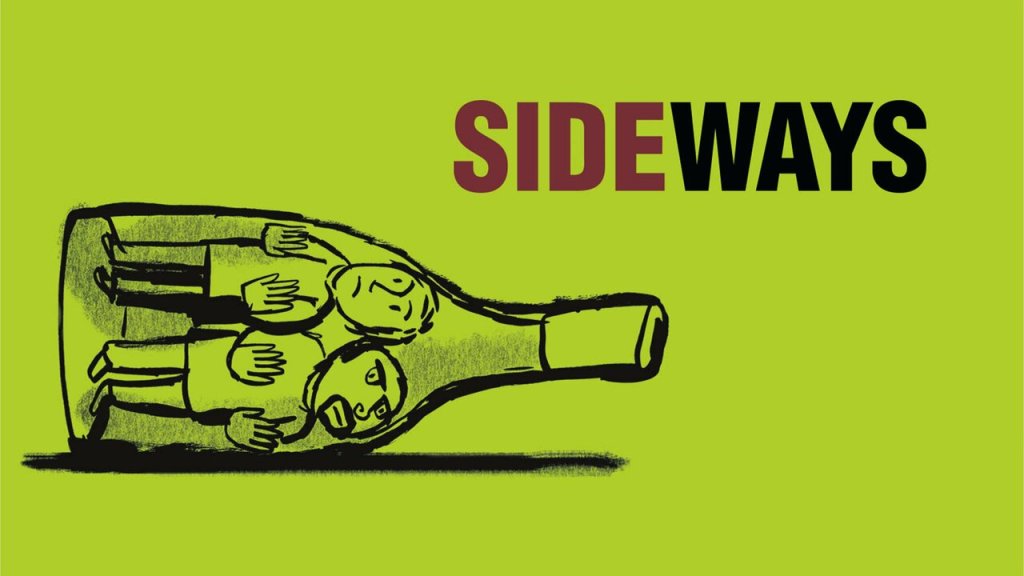
5 out of 5 stars
By J.C. Correa
“If anybody orders merlot, I’m leaving! I am NOT drinking any F@&#ING MERLOT!” With those immortal words Paul Giamatti inadvertently disrupted the mojo of an up-until-then profitable wine grape, the diminished sales of which were felt all over Northern California. At least that is what a winemaker in the region personally told me in 2014 upon my visit to her winery, ten years after the release of Sideways. “Since that movie came out sales of merlot have dipped ninety percent around here,” she exclaimed. With a mixture of laughter and bemusement, I could not believe my ears, especially because of the time that had already passed since the film had debuted. But then, just as quickly, I remembered that movies have a power like few things in our culture. Cinema, like all great art and the highest forms of expression, has the ability to change the world. At the very least, the right film at the right time in the right place can surely cause quite a ripple.
For many filmgoers who were fairly ignorant as to the world of wine, Sideways was precisely that movie. It was an instructional manual into that sphere, a crash course in viniculture packaged as a fun and lively dramedy. Francis Ford Coppola once acknowledged that he tried to sneak a tomato sauce recipe into The Godfather to ensure audiences would at least have something to take home with them should they not care much for the drama on display. Sideways takes that same approach, and in doing so it gifts itself a property essential to all great art: The ability to work on multiple levels. It is a wondrous trait that I was joyously reminded of upon revisiting the film the other day for its twentieth anniversary.
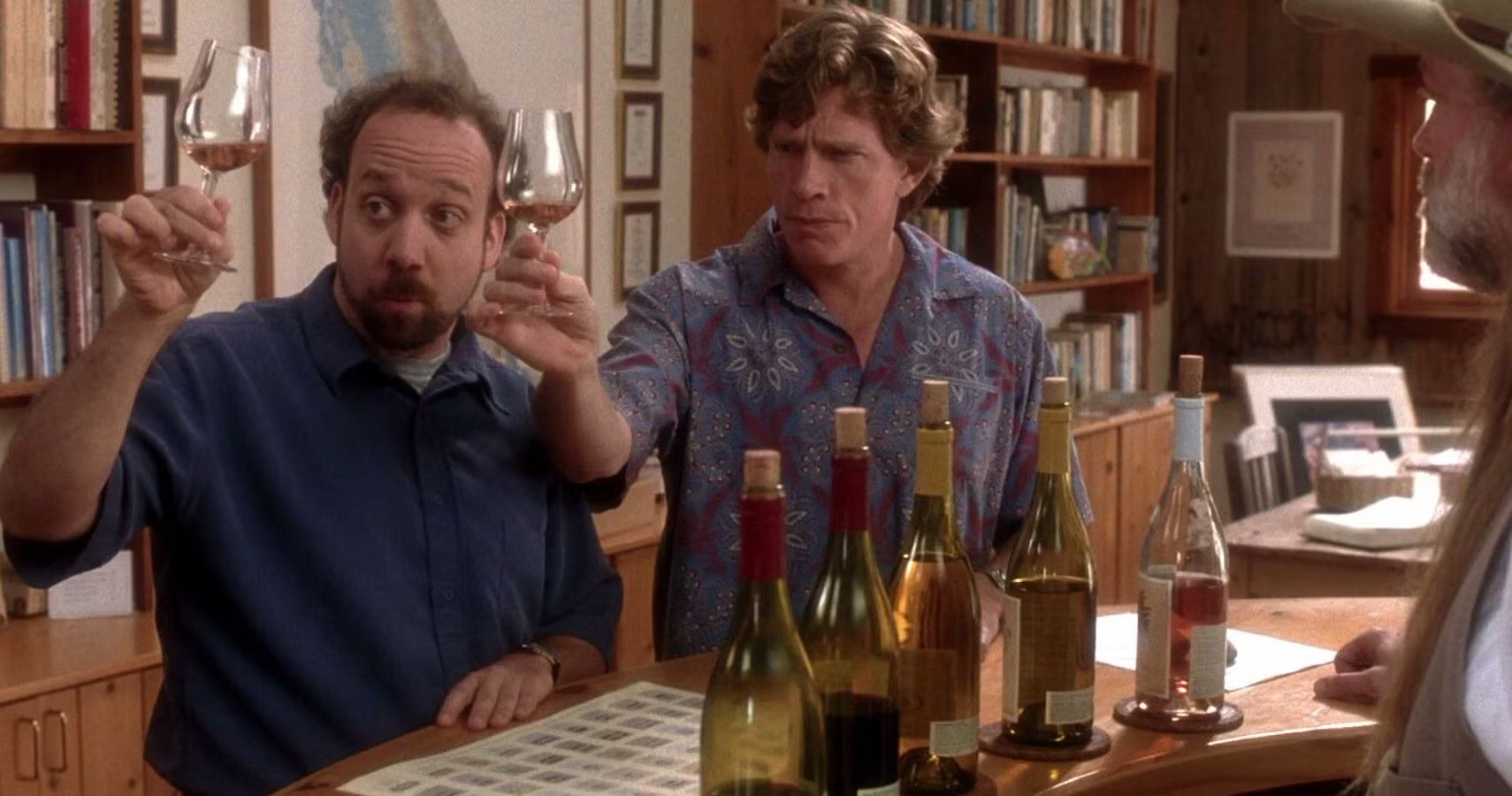
No scene better exemplifies the aforementioned quality than one in which Miles, an insufferable snob indelibly played by Giamatti, is giving his buddy Jack (a hilarious Thomas Haden Church) all the essential pointers that go into the tasting of a glass of wine. Miles is a recently-divorced failed author who moonlights as an eighth-grade English teacher. Wine, however, is his Xanadu. Relaying to Jack the importance of tipping a glass, swirling it, sniffing it (he inhales its aroma with a possessed intention worthy of Frank Booth in Blue Velvet), Miles is completely in his element here. On the other hand, Jack, a lovable frat boy type stuck in the body of a forty-something, is completely clueless as to anything having to do with wine (“It tastes pretty good to me” is his default response to everything he samples), but still quite in awe of his friend’s expertise on the various steps that lead up to a tasting. As Miles presents his two-minute lecture, Jack and the audience are given an introduction to the basics, while also learning a lot about Miles. It is all very serious business, until Miles notices that his friend has been chewing gum the entire time. Thus, the lead balloon is deflated spectacularly, causing the viewer to erupt with laughter just as the scene brilliantly comes to a close on that note. In those brief minutes the film has firmly established its tone, while telling us so much about its two main characters and the dichotomy between them, and about the world that the story inhabits.
Sideways is based on a 2004 novel of equal name by author Rex Pickett. It was made into a film that same year by acclaimed director Alexander Payne, who adapted the screenplay with frequent collaborator Jim Taylor. In a highly regarded filmography that includes Election, About Schmidt, Nebraska, and most recently, The Holdovers, it is Sideways that remains Payne’s finest and most timeless achievement. He and Taylor rightfully won the Academy Award that year for their terrific, metaphor-laden script. It was one of five Oscars that the movie was nominated for, including the one for Best Picture. Though Church and co-star Virginia Madsen were also nominated for supporting turns, the Academy, in one of its most criminal oversights in recent memory, inexplicably passed on nominating Giamatti for Best Actor. In spite of that, he has since gone on to become arguably the finest male performer of his generation, displaying an astounding versatility across projects of pretty much every ilk. It was, however, his tour de force work in Sideways that firmly set him off on that path.
For those new to it, the story of the film is quite simple and easy to get behind: Two men on the cusp of middle age take off on a wine-tasting trip across California’s Santa Ynez Valley, which also serves as a de facto bachelor party for one of them. Jack, an occasionally-working actor whose best career days are behind him, has, against his natural instincts, convinced himself that he has to get married. As such, he plans to make the excursion far less about the wine and much more about his libido. His buddy Miles, on the other hand, couldn’t care less about the celebration as the only party he is interested in can be found in a bottle of pinot noir. Because of his failed marriage and the inability to get published as an author, Miles is one step shy of hitting emotional rock bottom. But wine is his life, and his snobbery of it is so extreme that the contempt it generates towards any person he considers inferior to him threatens his relationships with just about anyone. Both men are losers to a large extent, even though they approach life with completely different attitudes. If this dynamic sounds a bit like the basis for the endearing 1996 indie hit Swingers, that is because Sideways is in some ways the spiritual sequel to that earlier film, just substituting young adults for men in their 40s. Should that description not resonate, then simply think of it as The Odd Couple in wine porn/road movie form, with the trimmings of an existential drama.

While the depiction of wine culture as an attractive lifestyle is very thorough and inviting, the film is about character first and foremost, and it cruises on the strength of that. Both Miles and Jack are highly memorable for entirely different reasons. Miles (the name says enough) is a walking contradiction: Completely at ease when discussing wines but falling apart at the seams whenever he recalls his failed aspirations, or when in a conversation that simply leads to anywhere other than the love he feels for his bottled poison. His carefully-groomed beard betrays the supreme self-contempt evidenced by the nerdy clothes he wears or the beat-up clunker he drives. When things don’t go his way – which is frequently the case in this movie – he turns into a petulant child desperately in need of comfort, which he usually finds in a bottle of wine (or a winery’s spit bucket if need be). To underscore this previous point, marvel at how Miles tilts his head as he walks away from Jack after the latter has just given him some bad news. For his part, Jack is a smooth-talking, agreeable man-child just looking to have a good time in any way that makes him feel youthful again. He flirts shamelessly with any woman he comes across, tapping into the minuscule fame that his career as an actor has afforded him, when needed. And yet, his cheerful demeanor also serves to cover up deep insecurities and doubts as to his place in the world. He tries to constantly set an alpha example for Miles, until he gets to a point where he realizes that it is his friend who may actually be on the higher plane.
Payne and his cinematographer, Phedon Papamichael, bathe the picture’s image in an ethereal glow throughout that only serves to further present wine country as a place of dreamlike pleasures. Composer Rolfe Kent contributes a jazzy score that is equally adept at underlining the joie de vivre found in the pastoral beauty of a sunset picnic as it is in augmenting the poignancy in scenes of deeper reflection and introspection. One such example is a brief sequence in which Miles, at the end of his rope, finds solace by gently cradling a branch of pinot noir grapes as if it were a baby’s head, if not the edible manifestation of his own heart. At other points in the movie, Kent’s breezy music effectively accompanies a montage that Payne uses to introduce us to the complex, yet seductive world of winemaking, all told through a clever use of split screens that not only expand the breadth of the backdrop, but also visually resemble pages in a book; no doubt a nod to the film’s literary origins. Elsewhere, the director opts for the use of wipes for some of his scene transitions which, though not essential, are nonetheless a welcome throwback to a more old-fashioned filmmaking style.

Perhaps Payne’s most inspired decision is the manner in which he utilizes dissolves within a scene. Observe how he shoots a dinner double date in which Miles recklessly gets himself more inebriated than the other three people at the table; each close-up of a bottle of wine dissolving into that of another, all the while interspersed with shots of Miles’ quickly deteriorating mug gradually falling out of focus as the scene progresses to its inevitable drunk dial conclusion. On a very different phone call later on, Payne repeats the coup in how he photographs Giamatti delivering a monologue into the receiver; dissolving between alternate angles of the actor’s face as he distressingly spits out the words. Whether it is examples like those, or his decision to discretely capture a first kiss behind the door frame of an adjacent room, all of these directorial choices in his approach to the material allow these scenes to land as painfully as they do. In the end, the film is as good as it is precisely because of how expertly it is directed; a point that extends beyond the filmmaking technique and into all other areas including casting, and the performances that those inspired decisions bore fruit.
If you are familiar with the films of Payne, then you know that a common thread across his body of work is the depiction of an undercurrent of sadness behind his characters and the scenarios they find themselves in. Payne has consistently bet on this as his ticket to relatability, and seldom has he been wrong. In his stories, nothing stays good for too long. Similarly, there is always something slightly askew and off-kilter in his movies; elements entering from left field that the audience may not see coming, but that feel very authentic to life all the same. He is not quirky for quirk’s sake in the way that Wes Anderson chooses to be, but rather, likes to throw organic curveballs at the viewer in much the same way life frequently does. It is these very traits, along with the shortcomings of his protagonists, that the director has also repeatedly mined for his biggest laughs. In Sideways, a sudden car crash into a tree and the desperate retrieval of a wallet during a sex romp are textbook examples of two scenes that encompass both. If the belief holds true that all great comedy stems from some form of tragedy, few artists have understood this as well as Alexander Payne. His principal preoccupation has always been the human condition, and his keen insight into that glorious mess has paid equal dividends for him in both comedy and drama.
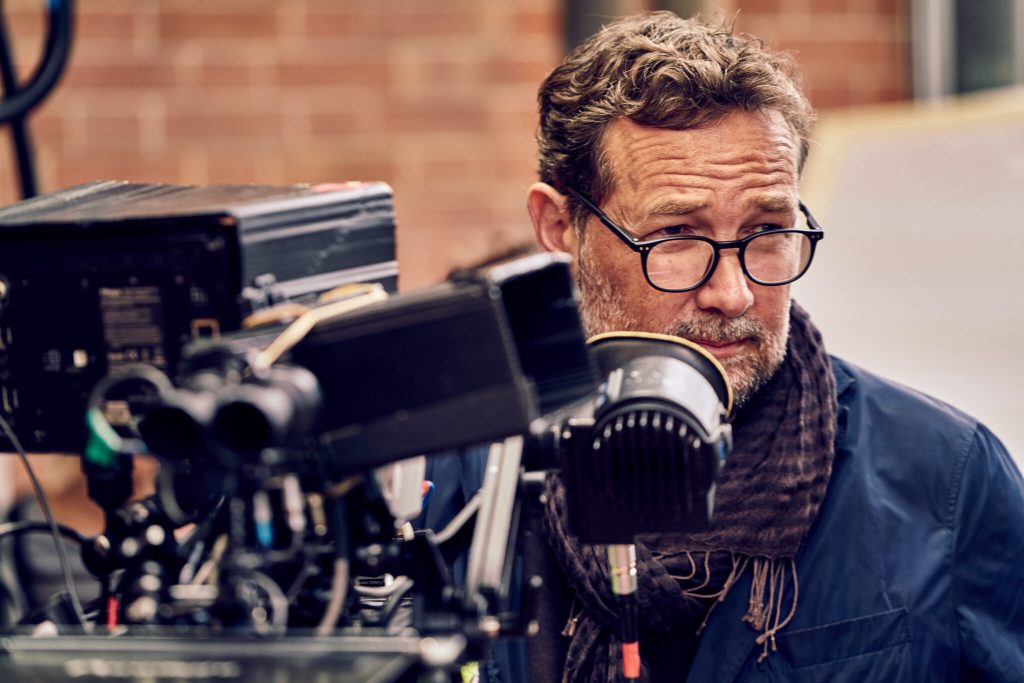
In 2004, Sideways proved to be the ultimate coalescence of the filmmaker’s considerable strengths. Two decades later, that reputation has not diminished. Much like your favorite bottle of wine, I can vouch that the true pleasures of the movie can be reaped from repeated viewings. I will spare you the cringeworthy cliché of having to say that the film has aged like a fine vintage for the simple fact that time could not improve something that was already quite perfect out of the gate. Even after twenty years it continues to offer convincing proof that visual artists do not need a crazy concept, overblown budgets or state-of-the-art effects to create a timeless classic. More often than not it is the simple things that carry a magic strong enough to intoxicate you for life.
 Generation X Wire