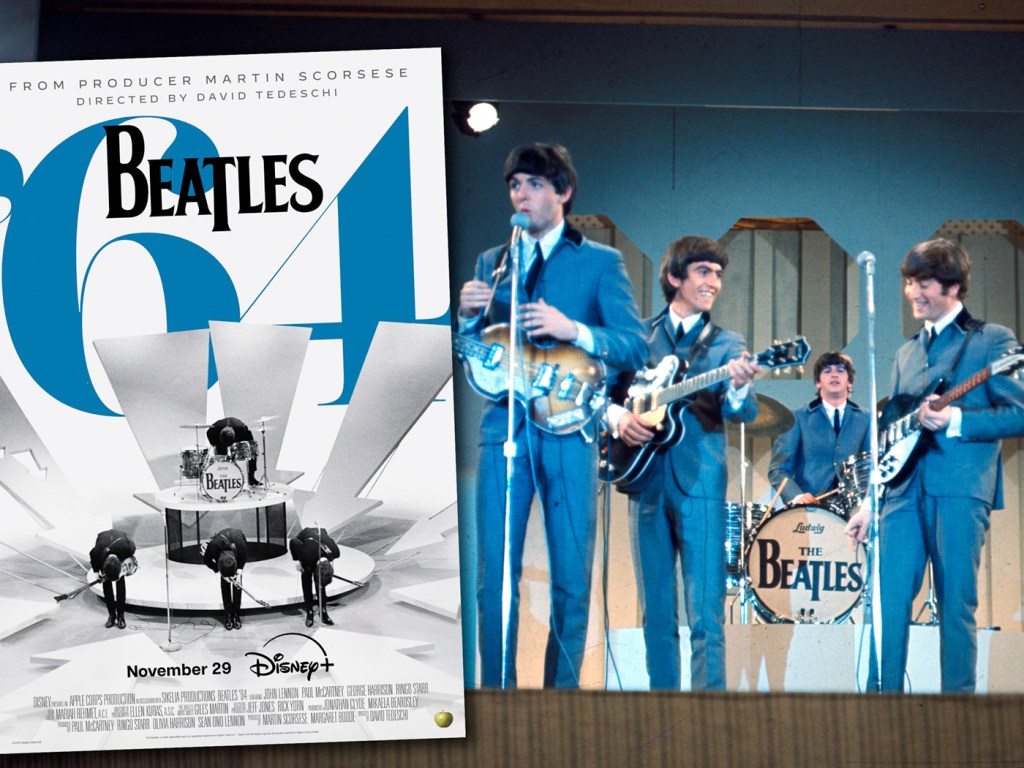
Beatles ’64
3 out of 5 stars
By J.C. Correa
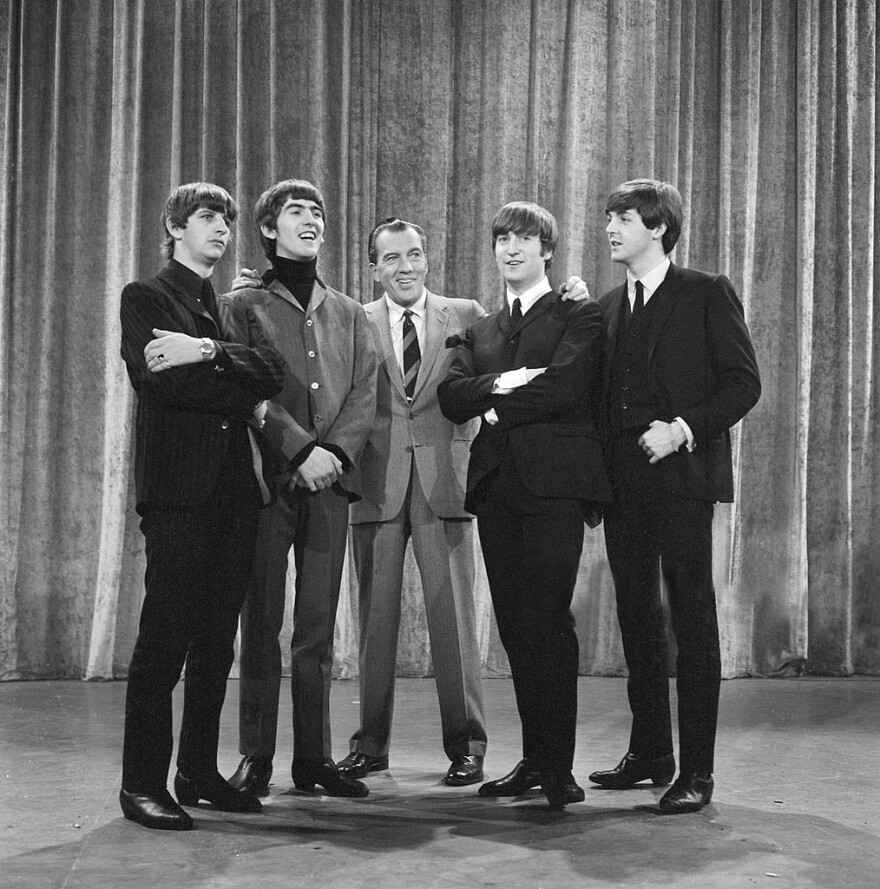
Albeit several months late, Beatles ’64 arrives perfectly timed to coincide with the 60th anniversary of the illustrious English band’s first trip to the United States. It was a two-week foray that saw them play The Ed Sullivan Show twice (first in New York, then in Miami); a concert at the Coliseum in Washington, D.C; and two shows on the same day at New York’s Carnegie Hall. The fortnight stint (especially the first Ed Sullivan Show performance, which drew a then record-breaking television audience) effectively kicked off Beatlemania in America and the world instantly became the Fab Four’s oyster, never to be the same again. As is, you need not watch this new Disney+ documentary to learn any of this, since the topic has been covered ad nauseam in all forms of media for the past six decades.
What the film aims to do, however, is present the audience with a great deal of footage from the sojourn – material that expands upon what has already been widely seen – and then recontextualize it through various contemporary interviews with notable names from the entertainment industry (including, obviously, the two living Beatles), as well as with some fans who actually lived it. Produced by Martin Scorsese and directed by David Tedeschi, the overall effect of Beatles ’64 is occasionally fascinating and never dull, but also a case of been there, done that. Before this, Scorsese and Tedeschi had worked on at least a handful of music-themed projects together (including the superior documentary George Harrison: Living in the Material World), so this specific one is a natural fit for the filmmakers. And while highly enjoyable – especially for fans – we do inevitably get a sense that, at least to some extent, we have seen this before.
Fittingly, the movie opens with John F. Kennedy. The effect of this is twofold and its impact cannot be overstated. It is important to remind viewers that The Beatles landed in America while the country was still in a state of deep mourning, having just lost its beloved president a mere two and a half months before. The nation badly needed a reawakening, something to shake it out of the doldrums, and as such, the Liverpool band’s arrival at just that precise moment is as great a case as has ever been made about the importance of timing. However, the JFK thematic thread continues by reminding us that New York International Airport was quickly renamed after the fallen president one month after his assassination. It was here that The Beatles first touched down on February 7, 1964 and received one of the most famous and ecstatic receptions in modern history. The film works hard to imply that, at least symbolically, no one greeted the band with arms more open than President Kennedy. Dramatically speaking, it is a very effective start to the picture.
From there, the documentary proceeds mostly in sequence as it goes on to chronicle the itinerary that The Beatles undertook during their stay. The majority of the footage shows the four young musicians either holed up at New York’s Plaza Hotel or in various modes of transportation. What we essentially see are four lads having the time of their lives, constantly joking and clowning around, and never in a foul mood. They come across as witty and charming individuals, but also somewhat childish. If anything, we don’t get the sense that John Lennon and Paul McCartney marched to their own elite drum, as we see them cavorting with their other two bandmates on a plane of equal joviality. The cynicism and resentment (particularly with Lennon) had yet to set in, and the four young men were clearly making the most of this experience in every way. Though entertaining, these extended sequences of the band in their safe spaces do get a little monotonous.

It should be acknowledged that Beatles ’64 only exists as it does because of the ample amount of footage that filmmakers Albert and David Maysles captured of the entire trip in a cinema verité style. Though snippets of it have been seen in various forms throughout the years, this is the first time that viewers have had a chance to examine it at this great length, and Tedeschi allows it to form roughly fifty percent of his narrative. Duly, the movie is dedicated to the memory of the late brothers.
Of everything that these filmmaking troubadours were able to document, few instances are as interesting and historically rich as a scene depicting a random family watching the first Ed Sullivan Show performance on the TV of their living room as it was unfolding. We glimpse two young sisters anxiously sitting on the edge of their seats, their faces expressing a high level of contained emotion. All the while their father watches as well, but with greater detachment from further back in the room, more curious than anything as to what has his daughters so entranced. The footage of this scene is brief, but it no doubt gives viewers who were not alive then an accurate portrait of what would have likely been witnessed in most living rooms across America on that fateful night.
Of the many folks interviewed, Ronnie Spector of the Ronettes shares an amusing anecdote in which she tells us that because The Beatles, while in New York, were basically prisoners in their private quarters, she made it a point to take them to Spanish Harlem as a means of escape. It was a stunt that apparently worked and ended up being one of the few moments during their stay where the Fab Four were not accosted by crazed fans. To complement this, the documentary includes period interviews with several Black residents of Harlem at the time, each of whom has varying different opinions about the group, which range from very complimentary to extremely resentful of. From a sociological standpoint at least, it is a fascinating account.

Esteemed record producer Jack Douglas contributes some of the most insightful and entertaining bits as he recounts that his relationship with The Beatles goes beyond the band and into the city of Liverpool itself. With nostalgic delight, he tells us that he and a fellow American colleague forcefully made it to the English port city during the ’60s, only to get themselves deported in spectacular fashion; an effort that eclipsed even The Beatles on the local newspaper headlines. His eventual professional collaborations with John Lennon are embalmed with a heftier poignancy upon learning this. Elsewhere, notable musicians like Smokey Robinson, Sananda Maitreya, and Ronald Isley all describe the sizable contribution that The Beatles had on exposing America to a music that was initially thought of as exclusively Black. While accurate, these ruminations tend to be more about the legacy of the band and their place in history than they are about what really went on during those magical two weeks in 1964. Considering The Beatles’ unequalled influence on popular culture, I suppose those two things really are inextricable from each other.
Though long-since deceased, Lennon and his fellow fallen bandmate George Harrison do enhance the narrative via fragments from several interviews that both gave during their post-Beatle days. There is similar footage used of McCartney and Ringo Starr throughout their individual careers from comparable periods, though the film benefits by having both also contribute to the story from a contemporary perspective. Logistically-speaking, Starr occasionally provides compelling insight into what it was like playing for American crowds those first few times. For his part however, much of what McCartney has to say you have likely heard him utter a thousand other times in one hundred other places.

Tedeschi’s documentary does not revolutionize our understanding of the subject in the way that I hoped it would, in part because, as I alluded to before, a great deal of this story has already been told, albeit more sparingly. For my money, a far richer experience can be had by watching Ron Howard’s excellent take on a very similar topic: The Beatles: Eight Days a Week – The Touring Years. I also find it somewhat frustrating that Tedeschi’s movie hardly has any footage of Brian Epstein, the then enormously-influential manager of The Beatles, and the person most directly responsible for their journey to America in early ’64. Small as it may seem, that detail would have certainly helped paint the complete, essential picture. That said, if you are the type who spends every 8th of December spinning The White Album or Imagine, or simply someone with a faint interest in the history of pop culture, there is enough in Beatles ’64 to make it a worthwhile viewing experience. At the very least, you are likely to enjoy the performances of some numbers that are featured here in their entirety. As we all know, swooning for pop stars has not exactly been the rarest of occurrences in the six decades since the Fab Four touched down at JFK Airport. And even though every generation surely has its pop heroes, perhaps even the most ardent Swifties might not make it a point to purchase their idol’s face on a bottle of talcum powder.
Beatles ‘64 is now available to stream on Disney+.
 Generation X Wire