
By Joe Puccio
Good casting is paramount to the quality of any television series. While many factors, such as script, plot, and direction are equally important, the painstaking process of selecting the right mix of performers can be just as difficult to cultivate. Attempting to visualize All in the Family without Carroll O’Connor and Jean Stapleton or trying to imagine Breaking Bad sans Bryan Cranston and Aaron Paul sufficiently illustrates this point.
Admittedly not quite as revered as the aforementioned critic darlings was a quaint Western historical drama set in the late 1800s that aired for a whopping nine seasons on NBC. Little House on the Prairie, which premiered in 1974, brought viewers into the modest home of the Ingalls family as well as the lives of the townsfolk of Walnut Grove, Minnesota.
Loosely based on Laura Ingalls Wilder’s best-selling collection of Little House books, the beloved show prided itself on its flawless construction of actors in each integral role, such as creative force Michael Landon as the pioneering Charles Ingalls, Karen Grassle as maternalistic, yet independent, wife Caroline, and Melissa Gilbert as spirited daughter Laura. In addition to these core characters were a host of supporting players throughout the series’ run, including Victor French as Isaiah Edwards, Kevin Hagen as Dr. Hiram Baker, Dabbs Greer as Rev. Robert Alden, and of course, Dean Butler as Almanzo Wilder.
“My casting for Little House was like it was for so many others – you walk into a room and you have to make a certain impression on other people that is, interestingly enough, out of your own control,” opined Butler, in a recent conversation with Generation X Wire. “Thankfully, the producers perceived that whatever I had during the audition was what they were looking for. I’m very grateful for the impression I made not just in that room, but on the audience as well.”
Butler, a novice thespian at the time, joined Little House in its sixth season, providing a much-needed popularity boost for the long-running production. Although still a ratings draw in 1979, the challenges for television programs to remain fresh become increasingly difficult as the years go by. This especially held true for Little House, as the printed works of Wilder had long been exhausted by that point, and Gilbert’s Laura had rather quickly physically and emotionally matured in front of the entire viewing audience.
Cue Butler.
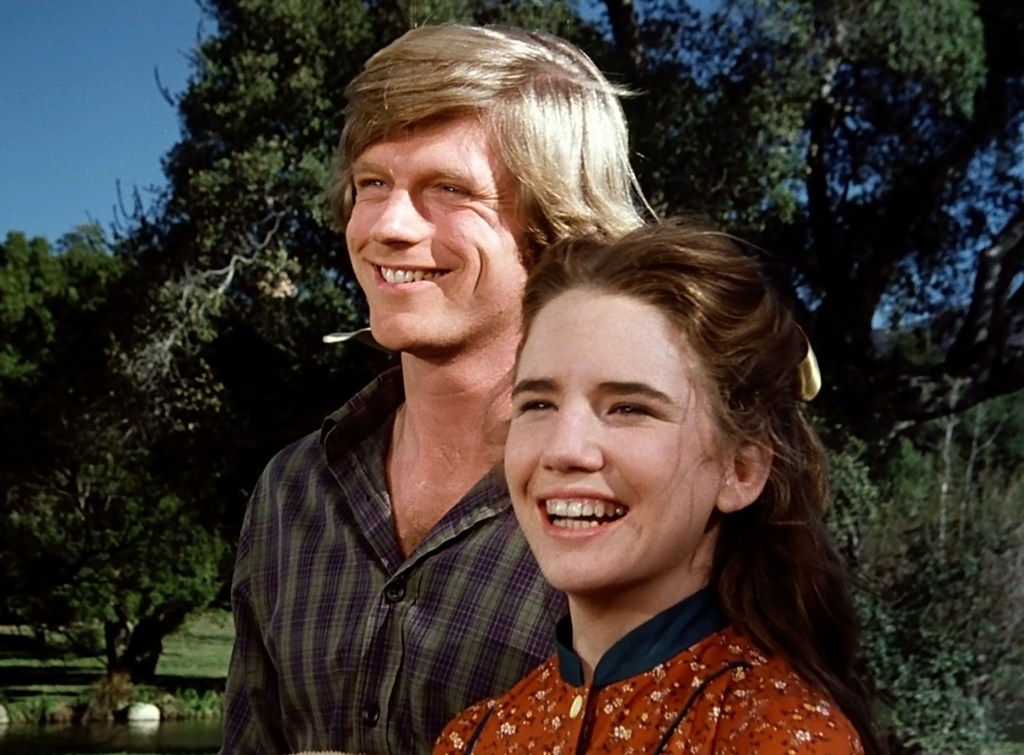
The part of Almanzo was created as the inevitable love interest and future husband of Laura, which seems innocuous enough on the surface. However, the significant age difference between the two (Laura was 15 and Almanzo was in his mid-20s) created a bit of a stir among not only Charles, Laura’s protective father, but for fans of the show as well – even though such age discrepancies were not uncommon in the 19th century. Despite the awkwardness, Butler never questioned the direction, in large part because of Landon.
“In less capable hands, that relationship could have been really tricky. Michael handled these things really well and Melissa was so capable and she could run circles around everybody with her talent,” Butler noted. “Michael was such a strong leader and he was so confident in his vision in not only this but with everything. I never once saw a moment of doubt in him.”
Butler’s admiration for Landon, who passed away from pancreatic cancer at just 54 in 1991, is unequivocal. “Michael’s genius was all-encompassing. He always made you feel like however a scene went was the way he expected it to go,” Butler recalled. “He was constantly writing scenes, editing, thinking about the music, and thinking about the mood, all at once.”
Occasionally, a finished episode would end up a little short. It didn’t faze Landon. “He’d simply sit down with his yellow legal pad, write out notes, send them to his secretary to type up, and the actors needed would come in the next day to shoot the added scene,” Butler said. “Sometimes, that scene was one of the best in the episode because he picked a moment that he wanted to amplify. He was very special.”
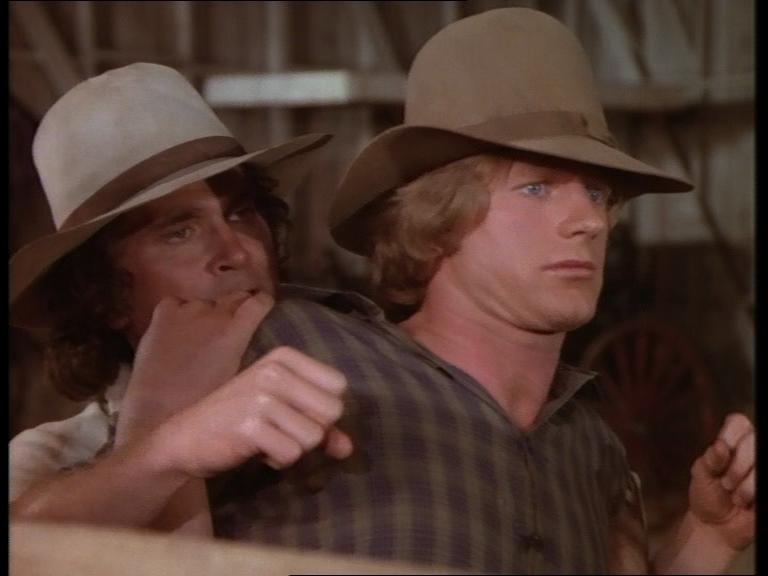
The aforestated keen selection of the cast is an aspect of Little House’s success that Butler is fully cognizant of. And while Edwards, Baker, and Alden were key roles, every compelling drama requires a conflict and in the case of Little House, it came in the form of the town’s irritating, affluent general store owner Harriet Oleson (Katherine MacGregor) and her insufferable, spoiled daughter Nellie (Alison Arngrim).
“We needed villains and they were the haughty shopkeeper and her snooty daughter,” he surmised, matter-of-factly. “You always knew what they were capable of and that they were going to get what was coming to them. But what’s important is you were also able to forgive them – they were redeemable. They could come back next week with a clean slate to do it all over again. The trajectory of their characters and how they evolved was important.”
Butler credits both actresses’ prodigious talent for making it work. “Katherine had an enormous capacity to handle everything given to her and she had a huge appetite for her work,” he raved. “And Alison was remarkable. To be consistently voted one of the most beloved and effective villains in the history of television when you also have J. R. Ewing and Joan Collins (Alexis Colby on Dynasty) in that category is an amazing accomplishment.”
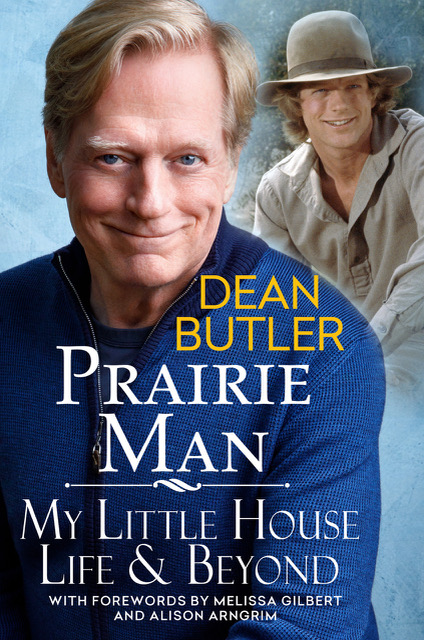
Incredibly, this year marks the 50th anniversary of Little House on the Prairie’s TV debut. To mark the occasion, the Canadian-born artist has released Prairie Man: My Little House Life & Beyond via Citadel Press. The autobiography, written completely by Butler himself, is a fascinating examination of not only his journey on Little House, but of his time on projects like The New Gidget and Buffy the Vampire Slayer as well. In addition to his stellar show business career, Butler delves into his thought-provoking upbringing and complicated relationship with his Air Force-enrolled father. “I owe everything to my family and the way I was raised and the education I had,” Butler reflected. “There was a lot of luck involved too.”
Although the golden anniversary was a primary motivation for Butler, he was also driven to tell his life story due to the simple fact that all of the Little House inspired publications have been written from female points of views – Bright Lights, Prairie Dust: Reflections on Life, Loss, and Love from Little House’s Ma (Grassle), Prairie Tale: A Memoir (Gilbert), Little House in the Hollywood Hills: A Bad Girl’s Guide to Becoming Miss Beadle, Mary X, and Me (Charlotte Stewart), The Way I See It: A Look Back At My Life On Little House (Melissa Sue Anderson), From Arkansas To Grammy Nominated Love Letters to Little House on the Prairie (Ketty Lester), and of course, Confessions of a Prairie Bitch: How I Survived Nellie Oleson and Learned to Love Being Hated (Arngrim).
“There hasn’t been a male perspective until now,” Butler explained. “I’m really the senior male survivor other than Stan Ivar (John Carter), who’s older than I am and is still with us. That’s astonishing to me. I’m 68 years old now and felt this was the time to do it.”
In the current modernized era where audiences can easily stream their favorite content whenever they desire, it’s not difficult to forget just how different times were at Little House’s peak, when television was appointment viewing. “It was a Top 10 show with between 15 and 22 million viewers each week,” Butler enthused. “You had to be watching Monday nights at 8pm to see it and that’s what so many people did.”
“Michael created an idyllic little hometown that America and the world embraced each week to feel safe, connected, and like they belonged there,” he beamed. “It was an incredible gift that he shared with everyone and was a life changing experience for me.”
To order a signed copy of Prairie Man: My Little House Life & Beyond from Book Soup, click here
To order Prairie Man: My Little House Life & Beyond from Amazon, click here
To order Prairie Man: My Little House Life & Beyond from Barnes & Noble, click here
To learn more about Dean Butler, click here
 Generation X Wire