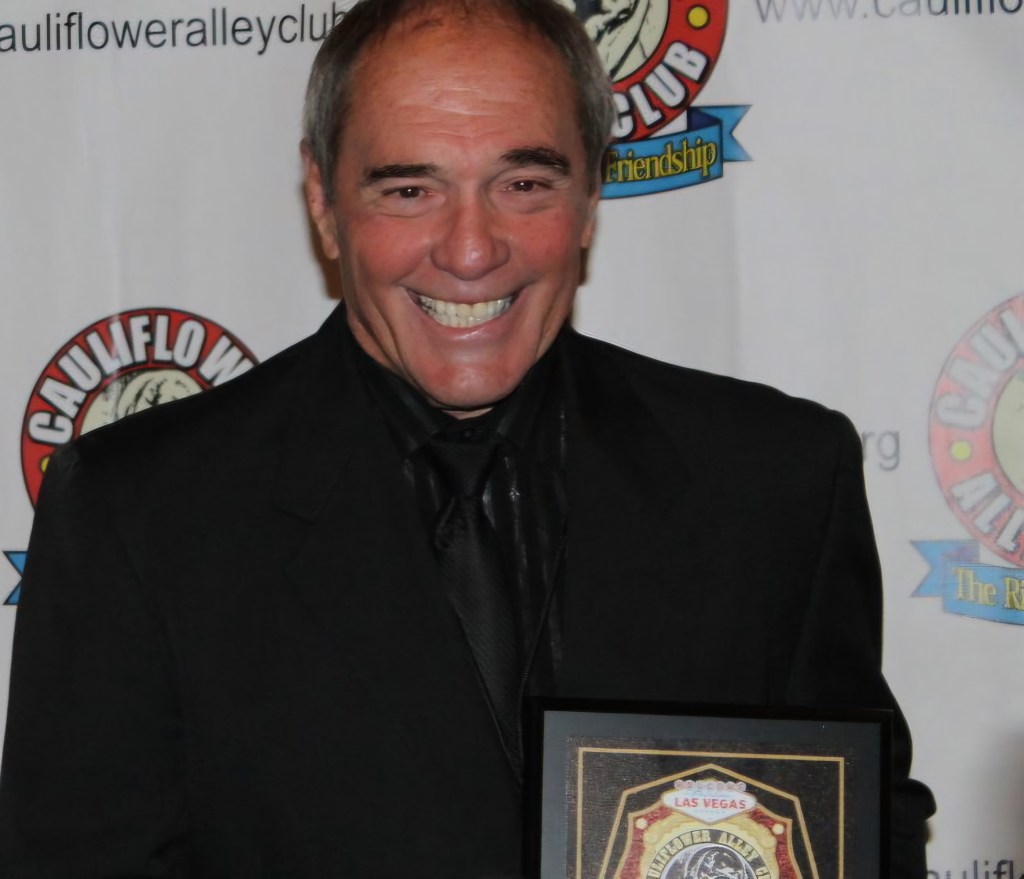
By Joe Puccio
As notable aspiring authors are keenly aware, merely getting one life story passed the developmental stage in the form of a written autobiography is impressive enough. Having an extended second volume, north of 400 pages, is utterly astounding. Yet for retired professional wrestler Steve Keirn, it was never in doubt.
“My career spanned almost 40 years so you don’t tell all of that in one book,” Keirn laughed, in a recent chat with Generation X Wire.
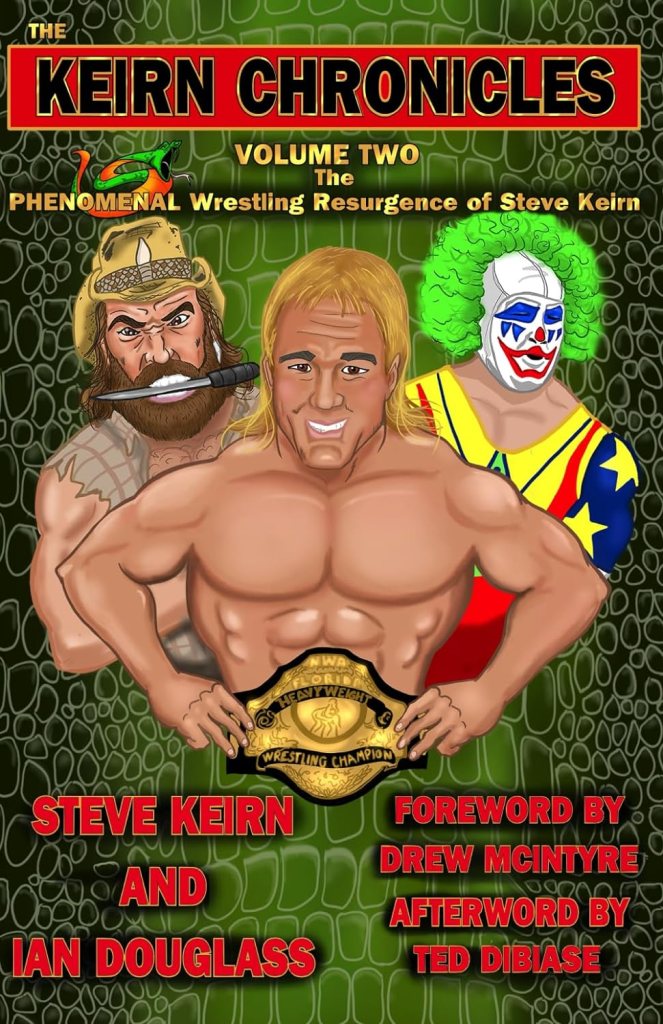
The Keirn Chronicles Volume Two: The Phenomenal Wrestling Resurgence of Steve Keirn, released in April, is the eagerly anticipated sequel to The Keirn Chronicles Volume One: The Fabulous Wrestling Life of Steve Keirn, and it’s been receiving rave reviews from both readers and critics alike.
Perhaps best known for being half of one of the most influential tag teams in the sport’s history, The Fabulous Ones, the Tampa native got his start in 1972 in Eddie Graham’s Championship Wrestling from Florida (CWF), partnering with an elite array of performers such as Bob Backlund, Jimmy Garvin, Brian Blair, and Eddie’s son Mike, who doubled as a friend since childhood. But make no mistake about it – Keirn’s connection to the promoter and his offspring had no bearing on his position.
“I had a montage of trainers, from Jack Brisco to Harley Race to Dory and Terry Funk,” Keirn recalled. “I actually started under Hiro Matsuda for the first six months and he practically beat me to death everyday. It was tough.”
The mat isn’t the only area where Keirn paid his dues. His father Richard was a colonel and fighter pilot in the United States Air Force who had the inauspicious distinction of being a prisoner of war in both World War II and the Vietnam War – one of only two U.S. service members to be POWs in the two conflicts.
“My dad’s B-17 was taken down in Germany when he was 19. He was the co-pilot; the pilot got his head blown off. He broke both of his ankles when he jumped out of the plane and then he was caught,” Keirn explained. “He was there for ten months until the Russians liberated him.”
Vietnam was notably worse. “Pop was captured by the Vietnamese when his aircraft was shot down near Hanoi and he was there for seven and a half years, from when I was 13 until I was 21,” he noted. “He was certainly mistreated in Germany but in Vietnam, he was brutally tortured. It was a totally different game for him.”
With his father not being around for a significant period of his childhood combined with living in a rough section of Tampa, Keirn lucked out in connecting with the Graham family, and ultimately entering the squared circle. “I didn’t have any intention of getting into the business,” he clarified. “But Eddie mentored me and was sort of like a second father.”
The Fabulous Ones were a dominant force for about ten years, primarily throughout the game’s grandiose 1980s era, as Keirn and teammate Stan Lane worked with some of the decade’s most formidable duos, including The Midnight Express (Dennis Condrey and Randy Rose), The Sheepherders (Luke Williams and Jonathan Boyd), The Moondogs (Rex and Spot), and The Road Warriors (Hawk and Animal).

Although the pair are regarded as revolutionary due to being one of the first teams to adopt a “pretty boy” gimmick as well as employ the use of music videos to popularize them with fans, Keirn is remarkably humble. “Everyone has an opinion on who were the greatest or who were their favorites but it’s all about the experience of what they grew up with and how we were promoted,” he offered. “That being said, I’m thankful for the compliments and I accept them. We were in the right place at the right time.”
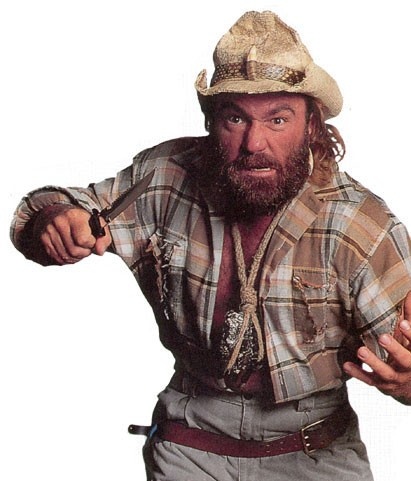
When Keirn signed with the World Wrestling Federation (WWF, now World Wrestling Entertainment, or WWE) in 1991, his transition into Skinner, a tobacco-chewing alligator hunter from the Florida Everglades, was such a 180 from his previous male model persona that even his mother didn’t recognize him.
“I told her when I was going to be on WWF television and what channel it was on before my first appearance aired. I rose up out of the swamp with a knife in my teeth, a full beard, my hair black and grown out,” he remembered. “When it was over, she asked me why I wasn’t on. I laughed and explained who I was. She said, ‘Oh honey, tell me that wasn’t you; I won’t be able to tell anyone at church.’”
Keirn, who names Randy “Macho Man” Savage and Mike “IRS” Rotunda as two of his closest pals during his WWF tenure, eventually portrayed the polarizing Doink the Clown, a job that didn’t exactly thrill the grappler because of the hour-long makeup preparation that it took to create the character. A forgettable World Championship Wrestling (WCW) stint in the mid-1990s was the beginning of the end of his big league career, officially retiring in 2001 after a tour for New Japan Pro Wrestling (NJPW). “I always vowed never to be an old wrestler,” he declared. “I know some of my friends stayed around but that wasn’t for me.”
After hanging up the tights, Keirn’s focus landed on his “Professional Wrestling School of Hard Knocks,” where the gifted athlete helped train a number of wrestlers, including Roman Reigns, Dustin Rhodes, Diamond Dallas Page, Tracy Smothers, and Dennis Knight.
While both of Keirn’s books are rife with fascinating occupational anecdotes, somber family tales, and behind-the-scenes drama, one thing you won’t find is unnecessary denigration. “I don’t trash people – it doesn’t do me any good to run anybody down,” he warned. “You’re going to get lots of funny and interesting stories from a guy who had a long career in wrestling.”
Keirn isn’t exaggerating. Featured are vivid descriptions of his penchant for pranking, or ribbing, colleagues like Curt “Mr. Perfect” Hennig (who, incidentally, Keirn believes is the greatest wrestler he’s ever seen), who he had falsely arrested for statutory rape, as well as Joe Malenko, who turned the tables on Keirn via an embarrassing mail delivery to his home.
Considerable credit should be given to co-author Ian Douglass, newly inducted into the Pro Wrestling Authors Hall of Fame. Douglass has penned critically acclaimed tomes for an eclectic mix of matmen, including Bugsy McGraw, Dan Severn, and Dylan “Hornswoggle” Postl, and has even received the seal of approval from leading wrestling journalist Dave Meltzer (“Every Ian Douglass pro wrestling book is good.”) “Ian really pulled everything together and made it so interesting,” Keirn remarked. “I’ve gotten so many great compliments about him and how the books flow.”

Endorsements from the sport’s upper echelon like Drew McIntyre, CM Punk, Natalya Neidhart, and Ted DiBiase are nothing to take lightly and the praise is deserved.
“I’m very fortunate for my time in the wrestling business,” Keirn maintained. “I’m so blessed that I even had the opportunity.”
Order The Keirn Chronicles Volume One: The Fabulous Wrestling Life of Steve Keirn here.
Order The Keirn Chronicles Volume Two: The Phenomenal Wrestling Resurgence of Steve Keirn here.
 Generation X Wire